
-
 Enlarge
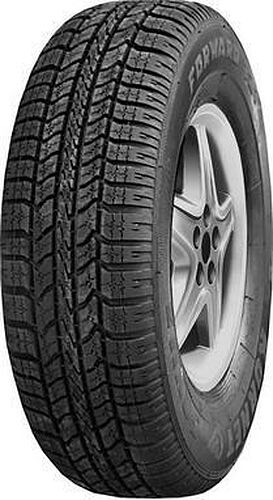
 БШЗ Forward 121

Description БШЗ Forward 121
Summer commercial tire BSHZ Forward 121, despite its English-language name, differs in excellent adaptability to operation on domestic roads, demonstrating on them, in addition to reliable and stable traction, a very high level of reliability. This is due, first of all, to its robust design, which is distinguished by increased resistance to any aggressive external influence.
Tread pattern that saves fuel and increases service life
The design of the tread pattern of this model is characterized by an S-shaped arrangement of blocks. This solution allowed domestic tire manufacturers to improve the properties of the tire. Most of them are a direct consequence of the increase in the size of the contact patch, the provision of uniform distribution of external pressure on it, as well as the reduction of rolling resistance. It is these qualities that characterize the S-shaped tread pattern of this tire, as well as the tire itself.
Increased stability at any speed
To give this tire reliable and stable behavior when moving at high speed, its developers equipped it with a tread with a rigid continuous rib, located exactly in the middle of it. Due to increased resistance to deformation, this model demonstrates good directional stability and fast accurate reactions to steering wheel turns, regardless of the speed of movement.
Improved traction on wet roads
Another characteristic feature of this tread is the increased content of traction edges. Not all of them are formed by numerous blocks. Many more traction edges are formed when the slits cut into them are opened. This allows the tire to demonstrate improved traction on wet roads.
Main features of the BSHZ Forward 121 tire
- excellent fuel efficiency and long service life of the tread, thanks to its S-shaped design, which reduces rolling resistance and prevents uneven wear;
- reliable and confident behavior on wet roads is ensured by the traction edges formed not only by the tread blocks, but also by the numerous slits that form them when in contact with the road surface.