
-
 Enlarge
 Barum SnoVanis
Description Barum SnoVanis
The winter non-studded tire Barum SnoVanis is designed primarily for commercial vehicles of small tonnage, such as minivans, light trucks, and vans operated in urban conditions. This model is distinguished by an exceptionally wide range of sizes for its category, with 17 names, starting from 165/70R14 and ending with 196/60R16. Some sizes are marked with the speed index T (up to 190 km/h), which indicates the model's unusual capabilities.
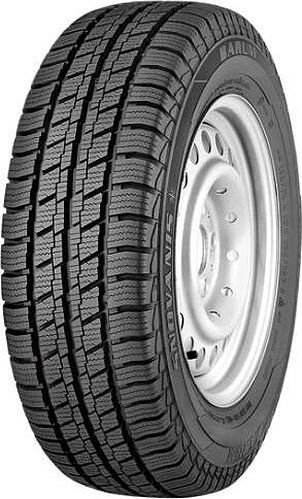
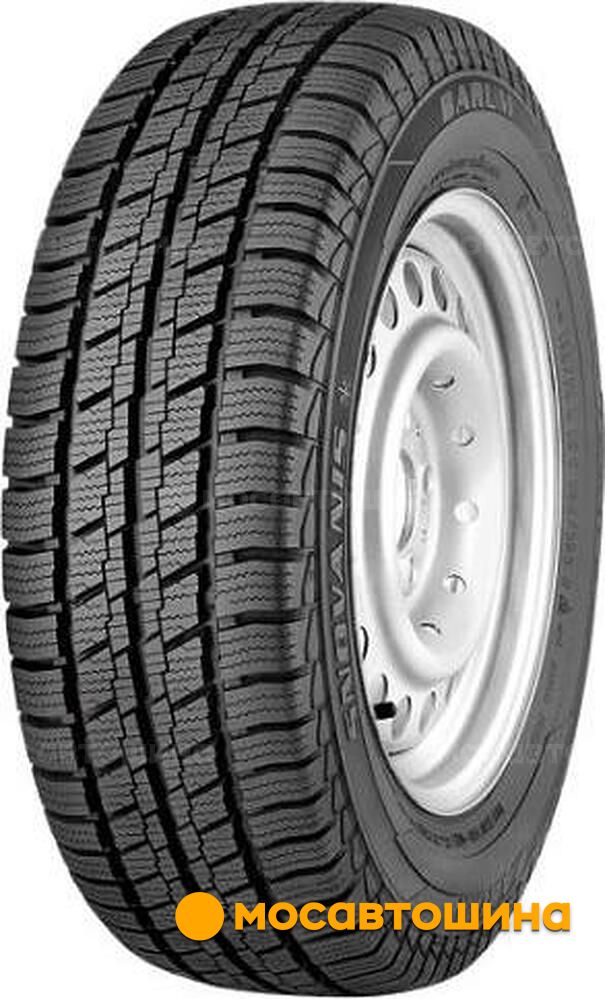
The tire is equipped with a tread featuring an S-shaped symmetrical non-directional pattern. In the center of the tread, there are two rows of very small blocks spaced at a minimum distance from each other. These blocks form a double longitudinal ridge, which provides excellent directional stability for the Barum SnoVanis tire.
The tread blocks located in the central part of the tread are massive in size and have a quadrangular configuration. These blocks are arranged at an angle to the direction of movement, which significantly improves the traction and adhesion characteristics on slippery surfaces.
The shoulder areas of the tread also consist of individual blocks arranged transversely to the direction of movement, which significantly improved the braking efficiency. Additionally, the shoulder areas have a small-radius profile, which allowed increasing the contact patch area while providing optimal load distribution, thereby increasing the tread's resistance to uneven wear.
The main features of the Barum SnoVanis model
- Excellent grip on snow and ice, thanks to the large number of sharp edges formed by the numerous tread blocks and lamellas;
- Wide longitudinal grooves hold more water and snow, which improves handling on both wet asphalt and snow;
- The double longitudinal ridge, consisting of many rectangular blocks, provides excellent directional stability;
- The flat tread profile allowed achieving a large contact patch area and optimal load distribution, which significantly improved traction and tire life;
- Low noise level, thanks to the S-shaped arrangement of the tread blocks.