Tyres and wheels for Wey Latte, wheel size on Веу Латте

Другие модели Wey
Wey 03, Wey 05, Wey 07, Wey 80, Wey Blue Mountain, Wey Coffee 01, Wey Coffee 02, Wey Gaoshan, Wey Latte, Wey Macchiato, Wey Mocca, Wey Mocha, Wey P8, Wey Tank 300, Wey Tank 500, Wey V9X, Wey VV5, Wey VV6, Wey VV7,Параметры дисков на Веу Латте
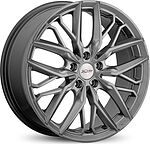

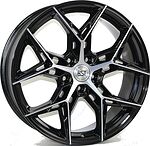

Tires on Wey Latte
- Tyre size from R19 to R19, width from 235 to 235 and profile from 55 to 55.
- Minimum tyre size: 235/55 R19, maximum: 235/55 R19
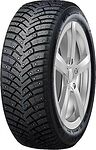


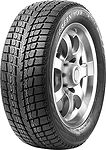


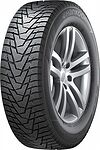

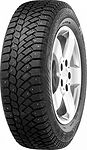

Tires on Wey Latte (Веу)
The compact crossover debuted in the lineup of the Chinese brand in 2021, becoming one of its key models within the framework of a development strategy change with a transition to electric traction. The concept of the car is a technological family transport with a hybrid power unit and equipment characteristic of more expensive models. Compared to its predecessors, it differed in a more conservative design and wide possibilities of the new modular DHT platform of its own design, which allowed the installation of a large number of electronic systems. In terms of positioning, this model was forced to compete with analogs from Toyota and Hyundai, not only in the Chinese market but also beyond, including Europe.New Platform
The crossover became one of the first models to use the DHT platform. It was initially designed for electrified power units. The traction battery compartment is part of the power structure, which not only reduced its size but also increased the body's rigidity and torsion, allowed the center of mass to be placed as low as possible and within the wheelbase.
The key element of the power unit was a gasoline engine in conjunction with a transmission that allowed it to connect to the wheels at high speed, when the efficiency of the "electric" part became low. In early versions, a 213-hp 2-liter turbo engine was used, operating according to the Miller cycle in pair with a 9-speed robotic gearbox with two clutches. The main emphasis was placed not so much on dynamics as on efficiency and reducing fuel consumption when driving on the highway. Later, the range was supplemented with plug-in hybrids with a 1.5-liter turbo engine with the same transmission. The front-wheel drive version develops 326 hp and 530 Nm of torque, and the all-wheel drive version - 437 hp and 762 Nm. It is also distinguished by the absence of a mechanical connection between the axles. The traction on the rear wheels is supplied by a separate electric motor, thanks to which the process of redistributing torque is distinguished by greater speed and accuracy. The traction battery with a capacity of 1.6 to 45 kWh provides a range of up to 184 km on electric traction. Fast charging allows replenishing the charge from 0 to 80% in about half an hour.
On the road, the model makes a bet on comfort. The chassis with McPherson struts at the front and a multi-link rear scheme is set softer than most of its "classmates". The crossover confidently filters out small irregularities, and the high level of noise insulation is especially noticeable on the highway.
Body Design
Another difference from its predecessors was the body design. In terms of dimensions, the model turned out to be a "giant" of the compact SUV segment, competing with mid-size models. The Latte design is noticeably different from the previous WEY. The body design has fewer aggressive elements and pseudo-sporty details. The front part received a large radiator grille with vertical bars, narrowed LED optics, and a complex air intake structure. The aerodynamic drag coefficient has decreased compared to previous models, which has had a positive impact on economy and acoustic comfort.
Differences in the Salon and Equipment
The salon is focused on creating a feeling of a more expensive crossover. The front panel is almost devoid of physical buttons, and most functions are integrated into the multimedia system. Depending on the configuration, a central display with a diagonal of 14.6 inches, a digital instrument panel with a diagonal of 9.2 inches, and a projection screen are used. The quality of noise insulation deserves special attention: here, multi-layer glazing and additional sound-absorbing materials in the wheel arches and floor are used.
The crossover was initially positioned as the flagship of the "coffee" line, so the list of equipment turned out to be significantly wider than that of its other representatives. Already in the basic versions, adaptive cruise control, lane keeping, automatic braking, and blind spot monitoring are available. In the top version, it is equipped with cameras with a 360-degree view, automatic parking, ventilation, and massage of the front seats, a premium audio system, and intelligent voice control. Many functions are integrated into a single software complex, focused on constant updates "over the air". As a result, in terms of "digitalization", the crossover turned out to be much closer to its "classmates" from Li Auto and Aito than from Japanese and Korean brands.
For Wey Latte, wheels with a diameter of 19 to 21 inches are used. For the heavy plug-in hybrid, it is especially important to use tires with high carrying capacity, resistance to wear during longitudinal accelerations, and low rolling resistance. The range of the "Mosavtoshina" online store allows you to select tires with exactly these operational properties, with the possibility of adapting the behavior of the crossover, both for calm city driving and for trips on highways.
Advantages of selecting tires for Wey Latte on our website:
- the catalog is constantly changing due to the appearance of new products from the world tire industry, specially created for crossovers with powerful electric and hybrid installations;
- a wide selection of disks allows you to choose options with an optimal ratio of mass and strength;
- the automated search system on the site gives the user the opportunity to quickly select compatible sets without deep knowledge in this field;
- with the help of employees, you can not only determine the selection of wheel products but also get information on various aspects of their operation.