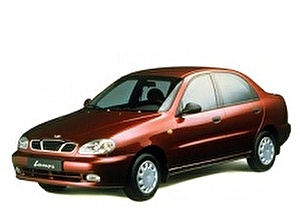
Tyres and wheels for Daewoo Lanos, wheel size on Даевоо Ланос
Другие модели Daewoo
Daewoo Arcadia, Daewoo Chairman, Daewoo Damas, Daewoo Espero, Daewoo Evanda, Daewoo Fino, Daewoo G2X, Daewoo Gentra, Daewoo Kalos, Daewoo Korando, Daewoo Lacetti, Daewoo Lanos, Daewoo Le Mans, Daewoo Leganza, Daewoo Lublin, Daewoo Magnus, Daewoo Matiz, Daewoo Musso, Daewoo Nexia, Daewoo Nubira, Daewoo Prince, Daewoo Racer, Daewoo Rezzo, Daewoo Sens, Daewoo Statesman, Daewoo Tacuma, Daewoo Tico, Daewoo Tosca, Daewoo Veritas, Daewoo Winstorm,Параметры дисков на Даевоо Ланос
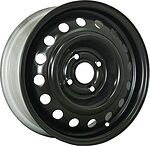
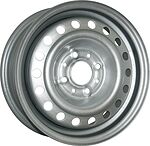
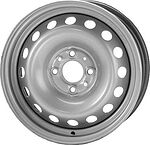
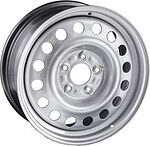
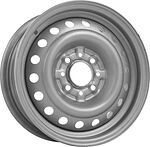
- PCD 4x100 диаметром от 13 до 14, шириной от 5 до 5.5 и профилем от ET49 до ET49как у Opel Combo Tour
Tires on Daewoo Lanos
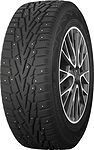
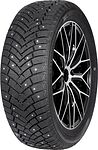
- Tyre size from R13 to R14, width from 155 to 185 and profile from 60 to 80
- Minimum tyre size: 155/80 R13, maximum: 215/35 R17
Favorite winter tires
Наиболее популярные модели шин






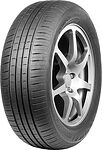
Tires on Daewoo Lanos (Даевоо)
The Daewoo Lanos was introduced in 1997, becoming one of the key models of the Korean brand in the segment of affordable B-class cars. The car was initially developed as a "global" model, intended not only for the domestic market but also for other countries and continents, including Europe and Asia, where cars of this segment were very popular at that time.Unlike many budget models of the mid-1990s, the "Lanos" was created with the involvement of well-known engineering and design studios. The external design was handled by the ItalDesign atelier under the direction of Giorgetto Giugiaro, which is why the car received a rather neat and harmonious silhouette without excessive utilitarianism. For its time, the car looked modern: smooth body lines, large optics, and compact proportions made it visually more "expensive" than some competitors. The main competitors in the market were such models as the Hyundai Accent, Renault Symbol, and Skoda Felicia. Against their background, the Lanos stood out with a more attractive combination of low cost, technical reliability, and comfort in everyday use.
Platform and Chassis Design
The basis was a front-wheel drive platform with a transverse engine arrangement. In the suspension design, engineers used proven solutions: at the front - an independent scheme of the McPherson type, at the rear - a semi-dependent beam. This set did not offer sports handling, but provided reliability, smooth ride, and low maintenance cost.
The wheelbase was 2520 mm - an indicator that allowed for a relatively spacious salon for a class B car. The body stiffness was improved due to reinforced longitudinal members and programmable deformation zones. The braking system in most versions included front ventilated discs and rear drums. On later modifications, an anti-lock braking system (ABS) and a brake amplifier with more precise adjustment appeared.
The engine range included several gasoline engines with a displacement of 1.3 to 1.6 liters. The base versions were equipped with simple 8-valve engines, and the more expensive ones - with 16-valve engines with increased power. The most popular were the configurations with an 8-valve 1.5-liter engine, developing 86 horsepower. This engine was distinguished by moderate fuel consumption and simplicity of maintenance - qualities that were highly valued by owners in developing markets. The top 1.6 engine produced around 106 horsepower, providing noticeably more acceleration dynamics. Transmissions were offered in two versions: a five-speed manual transmission and a four-speed automatic. The latter was less common and mainly found on export versions for individual markets.
Equipment and Interior
Despite its budget status, the car offered a fairly wide range of equipment. Depending on the configuration, the buyer could get:
- power steering;
- air conditioning;
- electric windows;
- central locking;
- airbags.
The interior was distinguished by simplicity, but ergonomics were well thought out. The central console had a clear layout of controls, and the instrument panel had large scales with good readability. Unlike some competitors, the manufacturer paid attention to sound insulation: at speed, the car was perceived as quieter than many budget models of that time.
One of the main advantages was the balance of the design. If many budget cars of that period offered either a minimal price or more modern technology, the Korean model tried to combine both factors. For example, compared to the Hyundai Accent, the car had a softer suspension setting and better ride smoothness. In comparison with the Renault Symbol, the Lanos had a simpler design and cheaper maintenance. And relative to the Skoda Felicia, it won in body aerodynamics and platform modernity. Another important factor was the universality of bodies: in addition to the sedan, buyers were offered 3- and 5-door hatchbacks, which expanded the model's audience.
Standard for this car were 13- and 14-inch wheels with 175/70 R13 or 185/60 R14 tires, respectively. Such wheels provided a good balance between comfort and stability on the road, so owners often choose similar sizes when replacing them. In the online store "Mosavtoshina", it is convenient to select suitable options for this model due to a wide range of products and precise compliance with factory parameters.
Advantages of selecting tires for Daewoo Lanos on our website:
- the catalog features summer, winter, and all-season tires from different brands and price categories, allowing the car owner to choose the optimal option in terms of resource, comfort, and cost;
- the site offers steel and alloy wheels of suitable sizes, thanks to which it is easy to maintain the factory reliability of the chassis or slightly update the appearance of the vehicle;
- the diversity of manufacturers and price segments provides an opportunity to select a set of wheels without overpaying, focusing on real operating conditions;
- the possibility of receiving assistance from specialists who will select compatible tires and wheels, taking into account the parameters of the suspension, size, and driving style.