Tyres and wheels for Daewoo Espero, wheel size on Даевоо Есперо
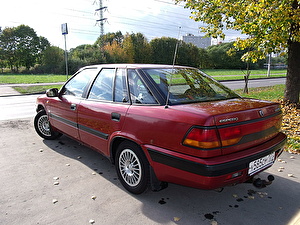
Другие модели Daewoo
Daewoo Arcadia, Daewoo Chairman, Daewoo Damas, Daewoo Espero, Daewoo Evanda, Daewoo Fino, Daewoo G2X, Daewoo Gentra, Daewoo Kalos, Daewoo Korando, Daewoo Lacetti, Daewoo Lanos, Daewoo Le Mans, Daewoo Leganza, Daewoo Lublin, Daewoo Magnus, Daewoo Matiz, Daewoo Musso, Daewoo Nexia, Daewoo Nubira, Daewoo Prince, Daewoo Racer, Daewoo Rezzo, Daewoo Sens, Daewoo Statesman, Daewoo Tacuma, Daewoo Tico, Daewoo Tosca, Daewoo Veritas, Daewoo Winstorm,Параметры дисков на Даевоо Есперо
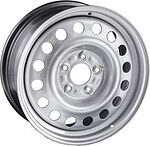
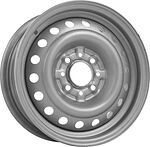
- PCD 4x100 диаметром от 14 до 14, шириной от 5.5 до 5.5 и профилем от ET49 до ET49как у Chevrolet Lanos
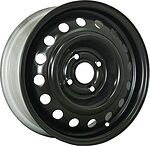
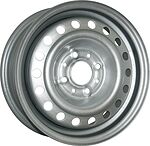
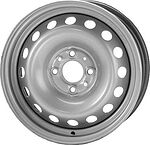
Tires on Daewoo Espero
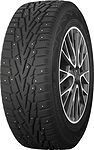
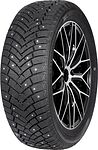
- Tyre size from R14 to R14, width from 185 to 185 and profile from 65 to 65S.
- Minimum tyre size: 185/65 R14, maximum: 185/65S R14






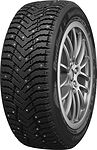
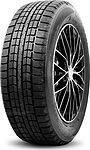
Tires on Daewoo Espero (Даевоо)
The Daewoo Espero sedan was introduced in 1990, becoming one of the first models of the South Korean brand aimed at European markets, primarily its eastern part. The car occupied the niche of a medium-class family sedan and became an important step for the brand seeking to expand beyond the Asian market. The model was based on a modernized Opel Ascona platform, which Daewoo engineers adapted to their own comfort and equipment requirements. This allowed the Espero to combine a proven technical base with a more modern design and an attractive price.Against the background of competitors such as the Ford Sierra, Volkswagen Passat, and Opel Vectra of the early 1990s, the Korean sedan stood out primarily for its rich equipment in basic versions and relatively affordable cost. While European manufacturers often offered additional options for a separate fee, the Espero often already had air conditioning, electric windows, and a central lock in its standard configuration.
Body Design and Construction Features
The exterior design was developed by the Bertone studio, which gave the sedan characteristic smooth lines and an aerodynamic silhouette for the early 1990s. The coefficient of aerodynamic drag was one of the best in its class, positively affecting the noise level in the cabin and fuel consumption. The body had a classic 3-volume layout with a sufficiently long wheelbase, allowing for a spacious cabin, especially in the rear seats. The trunk also had an impressive volume, making the Espero a practical choice for family trips. The body structure included zones of programmable deformation, as well as reinforced elements in the doors, which increased safety in the event of side collisions. For the early 1990s, such a level of passive safety was considered quite modern.
Powertrains and Transmission
Along with the Opel platform, the engine range was also borrowed, consisting of inline gasoline "fours" of the GM Family II series. These engines were distinguished by their simplicity of design and good maintainability, which was an important factor for markets with a developing service infrastructure. The base engine was a 1.5-liter engine, producing 90 horsepower. More common were versions with 1.8 and 2.0-liter engines, with power outputs of 95-110 horsepower. In combination with a relatively light and aerodynamic body, these engines provided good dynamics and low fuel consumption. Depending on the equipment version, the power units worked in combination with a 5-speed manual gearbox or a 4-range "automatic". Front-wheel drive and a well-tuned suspension ensured stable car behavior on the road and predictable reactions to steering.
Suspension and Ride Quality
During development, particular attention was paid to comfort when driving on any paved roads. The front suspension used "MacPherson" struts, and the rear represented a semi-independent beam with longitudinal levers. This scheme was widely used in the European segment of compact cars and is still used today, as it provides a successful balance between handling and ride smoothness.
Against the background of competitors, this sedan stood out for its soft suspension tuning, thanks to which the car handled road irregularities well. The power steering provided sufficiently precise reactions, which favorably distinguished the model from even more affordable "classmates". The braking system included disc mechanisms at the front and drum brakes at the rear, and in more expensive configurations, an anti-lock braking system was installed.
Equipment and Interior Features
The Espero's cabin was designed with practicality and convenience of daily use in mind. The instrument panel had a laconic architecture with large scales and convenient control layouts. Depending on the configuration, the car could be equipped with air conditioning, electric window and mirror drives, an adjustable steering column, and an audio system. For its time, such a set of equipment was quite generous, especially considering the model's pricing. The trim materials were distinguished by good wear resistance, which was particularly appreciated by car owners who used them as family transport or service vehicles.
The standard configurations of this car provided for the use of wheels with a mounting diameter of 14 and 15 inches. Such parameters ensure a good balance between comfort and stability on the road. It is convenient to select suitable tires and wheel disks through the "Mosavtoshina" online store, where a wide range of models for cars of this class is presented.
Advantages of selecting tires for the Daewoo Espero on our website:
- The assortment is constantly updated with new products from the tire industry, which, along with the variety of tires, allows you to choose the optimal option for this sedan, considering almost any operating conditions and driver preferences;
- The possibility of purchasing high-quality steel and alloy 14- and 15-inch disks from leading world manufacturers;
- Regular discounts, special offers for regular customers allow you to purchase tires and disks on very favorable terms;
- Managers will help find the most suitable models of wheel products for this sedan, simplifying the choice and reducing the risk of error when buying.