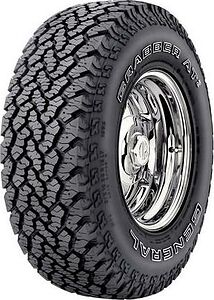
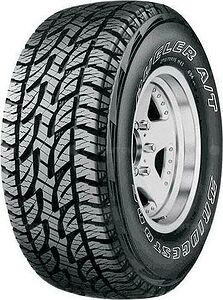
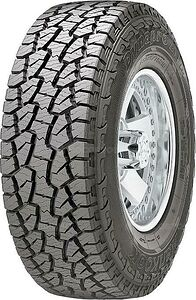
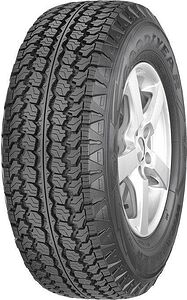
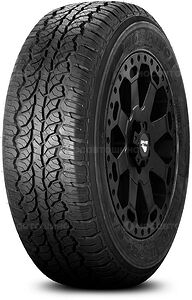
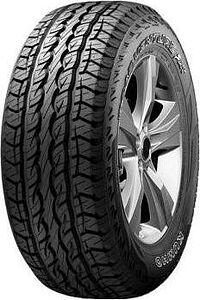
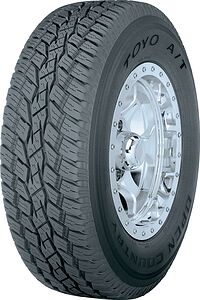
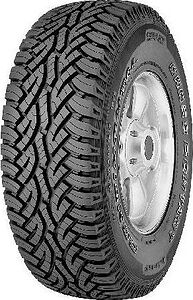
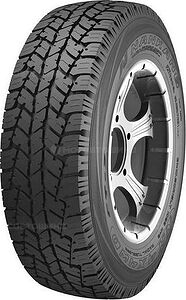
What's interesting is that General used to be fitted to the Hilux before being replaced by Bridgestone. In this test, they win due to their good off-road capabilities and effective braking on tar. However, de Villiers noted that they tend to understeer slightly, requiring some correction to maintain trajectory.
The test explained why Bridgestone were chosen for the Hilux - they suit the vehicle perfectly. According to De Villiers, their predictability allows for enjoyable driving. You feel safe, he noted.
The results of the Korean Hankook indicate that the established brands now have strong competitors. Hankook performs well in any conditions, and De Villiers was particularly impressed with the smooth ride.
The minimal difference between Goodyear and Hankook demonstrates the current level of competition in the market. Although Goodyear didn't score high on off-road, de Villiers praised them for stability and controllability, especially when braking.
No particular hopes were placed on these Chinese tires, and, as it turned out, in vain, since they performed well in all disciplines. De Villiers remained dissatisfied: <They feel unstable and make the car shake, which affects the ride quality>.
As de Villier noted, Kumho slightly worsen ride comfort, and they have limited braking efficiency. In terms of characteristics, they are close to Toyo.
Toyo tires are popular among off-road enthusiasts in various countries around the world, and this test showed that there are reasons for this. At the same time, de Villiers stated that due to their stiff design, they find less grip during braking.
Continental failed to meet expectations, possibly because they are more oriented towards asphalt driving. De Villiers praised them for their ride quality and added that they are <stable and steady>.
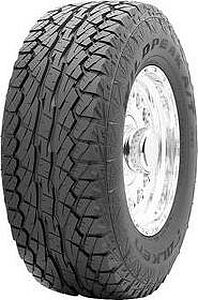
Given their price (the cheapest in the test) and effective braking, Falken would be a good choice for those who prioritize asphalt characteristics. De Villiers, however, noted that while they have good stability, the ride is too harsh.
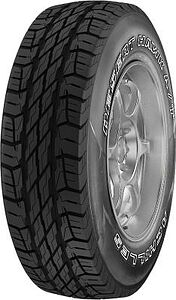
Achilles belongs to the budget class of tires, so the test results can be considered quite decent. And if it weren't for the relatively low traction on sand, the place in the rating would be even higher.
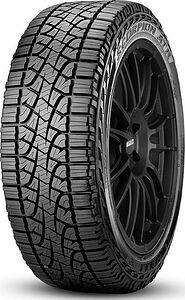
Pirelli is better known for its UHP tyres, but the Scorpion range has also been around for a while. Pirelli brakes very effectively on asphalt, but off-road it's a different story. De Viliers particularly liked their quick steering response.
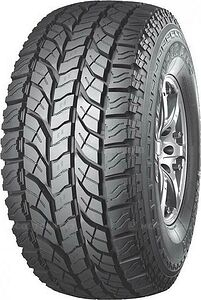
Yokohama are considered good off-road tires, but seem to be a bit behind in terms of technology development. De Villiers said that their traction force is weaker than the others, but it's worth adding that at lower pressure, Yokohama might have done better.
According to de Villiers, Velocity stops the car well on gravel and is very comfortable on asphalt (they also have the lowest level of external rolling noise). Off-road, they are similar to BFGoodrich.
Nankang's short braking distance on asphalt surprised everyone, but their tread pattern is not as effective off-road. De Villiers noted that on the road they have a stiff ride and unbalanced behavior.
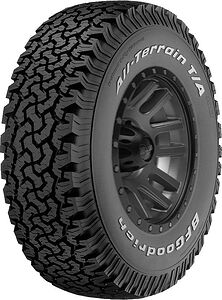
Despite their rugged construction and aggressive tread pattern, the BFGoodrich tires were surprisingly quiet on asphalt, where they also only had average braking performance. The tires also handled worse than others on gravel, and their design is not very suitable for loose sand.