Traction properties on sand Traction properties in mud and on grass Traction properties on wet and dry asphalt
Noise
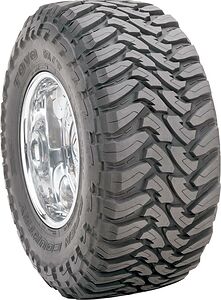
It's amazing that tires have been released for over 10 years and win the test. Maybe the reason is the directional tread pattern? The tires "dig" well in mud and grass, and in sand, they allow you to accelerate faster than anyone else. However, on gravel, the grip is no longer so good, and on a dirt winding track, the car does not always respond clearly to steering: the "rally" capabilities of these tires are limited.
But on asphalt - both wet and dry - the maximum level of grip. Unfortunately, the hum of the tread is audible throughout the speed range.
Traction in mud and on gravel Handling on dirt roads Acoustic comfort Cost
traction properties on sand and on grass
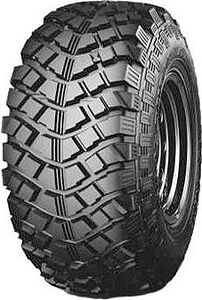
The most effective tires: this applies to both the name and the accompanying graphics on the sidewalls. In the mud, they especially well "paddle" with wheelspin: an increase in engine speed almost always leads to a start and increases the chances of overcoming a difficult section. But on grass and sand, the possibilities are limited. On asphalt, the coupling properties are moderate, and the comfort indicators are above average: for example, these are the quietest tires in the Mud Terrain class. It is also important that the prices for tires at the time of publication were the lowest.
Traction properties in mud and on grass: traction properties on wet asphalt low rolling resistance
Traction properties on gravel handling on dirt
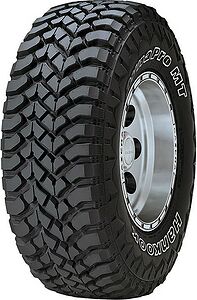
Korean tires provided the best acceleration both in mud and on fresh grass. Although, according to subjective impressions, these tires do not give additional confidence in mud: when increasing the revolutions, the acceleration pace almost does not change. And it's better not to drive on gravel with these tires: they "chew" worse than everything, and the behavior of the car on the ground strewn with small pebbles keeps the driver in tension. The car floats on a straight line and reluctantly enters turns. On wet asphalt, the tires work well and delight with acceptable smoothness of ride. And the minimum rolling resistance among Mud Terrain tires will allow you to save on fuel. Yes, and buying these tires is not the most burdensome.
Traction in mud Off-road handling Traction on wet pavement.
poor ride quality high rolling resistance
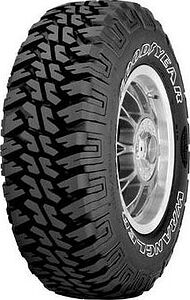
The feature of these tires is a kevlar-reinforced frame (para-aramid fiber with high tear resistance). Theoretically, this should reduce the likelihood of damage when driving on stones and forest roads. The capabilities of asymmetric tires off-road are at a medium level. In mud, the car starts confidently, drives well "in a tug", but movement with wheelspin is not very effective. On gravel, the traction capabilities are also moderate, although the car handles well. It's very easy to control skids and pass turns in an effective controlled drift. Rally tires! On asphalt, the tires unexpectedly turned out to be the worst when braking on dry pavement and one of the stiffest. And they also strongly resist rolling.
poor ride comfort low traction properties on wet asphalt high weight high rolling resistance
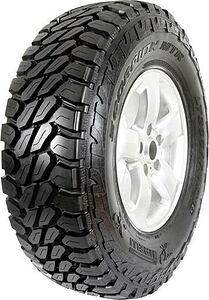
The tires performed fairly well off-road - especially in mud, allowing you to drive both "in a tug" and with intense wheelspin. On sand and gravel, the traction capabilities are more modest, and on the highway, handling had to be corrected a couple of times by turning the wheel to the limit! And on asphalt, there is a lack of grip - especially on wet surfaces. These are one of the stiffest tires in our test, and at the same time, they are noticeably heavier than the others and more resistant to rolling. The fact that these tires are not designed for asphalt is also indirectly evidenced by the speed index: unlike the other tires, which are designed for a speed of 160 km/h, the "maximum" speed of these tires is limited to 150 km/h.
Low rolling resistance comfort on-road handling traction on sand and gravel.
Extremely low traction properties in mud low traction properties on grass
Out of rating
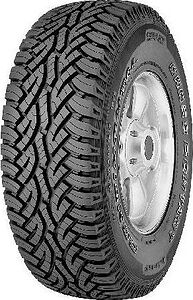
The tires were included in the out-of-competition test program to demonstrate the fundamental differences between more versatile all-terrain tires of the AT (All Terrain) class and mud tires of the MT (Mud Terrain) class. And they succeeded! On the mud section, the car in the rear-wheel drive version could not reach the necessary 20 km/h for measurement. However, in the other disciplines, tires with a less aggressive and not so deep tread pattern showed very worthy results. On gravel, the tires are even the best! And on sand, they "dig" well. On such "fine-grained" surfaces, a more saturated rubber tread works better than the aggressive lugs of MT-class tires. And surprisingly, on asphalt, the tires lost to several models of the main rating. That is, it's not a fact that MT-class tires definitely lose to AT tires on asphalt. It all depends on specific models and manufacturers. Although in terms of comfort and ease of rolling, these tires are clearly preferable.
Medium traction performance on gravel and on grass
low traction in mud low traction on wet asphalt low ride smoothness
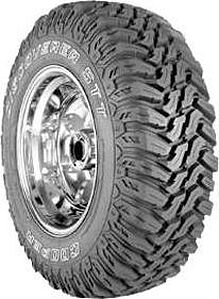
Despite the fact that the Cooper Tires test site is located just 100 km from where we conducted the tests, the "home walls" did not help. On grass and sand, the tires somehow "paddle", but in mud, the car on these tires refuses to accelerate intensively. And on the dirt handling track, it was not possible to show a good time due to sharp skidding. On wet asphalt, the braking properties are average, on dry asphalt they are only slightly better. And in terms of comfort, these tires are outsiders: they carefully recalculate all the seams of the asphalt. Far from the best option for off-road tires. Especially considering the high price.
Off-road traction average traction on sand and gravel.
low traction in mud low traction on wet asphalt high price
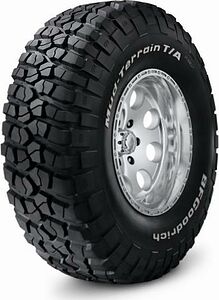
In recent years, tires have shone with a halo of sporting glory: they win both in classic rallies and in rally raids. On a winding dirt track, it was on these tires that the best time was shown (if you don't count the Continental's out-of-competition tires). The car clearly follows the trajectory, smoothly starts to slip. Pretty good grip - both on sand and on gravel. But in the mud, the tires lose to competitors - and it was this that became the reason for the low position in the final rating. Good tires for high-speed driving on dirt roads, but not suitable for crawling through the mud. And they cost a lot.