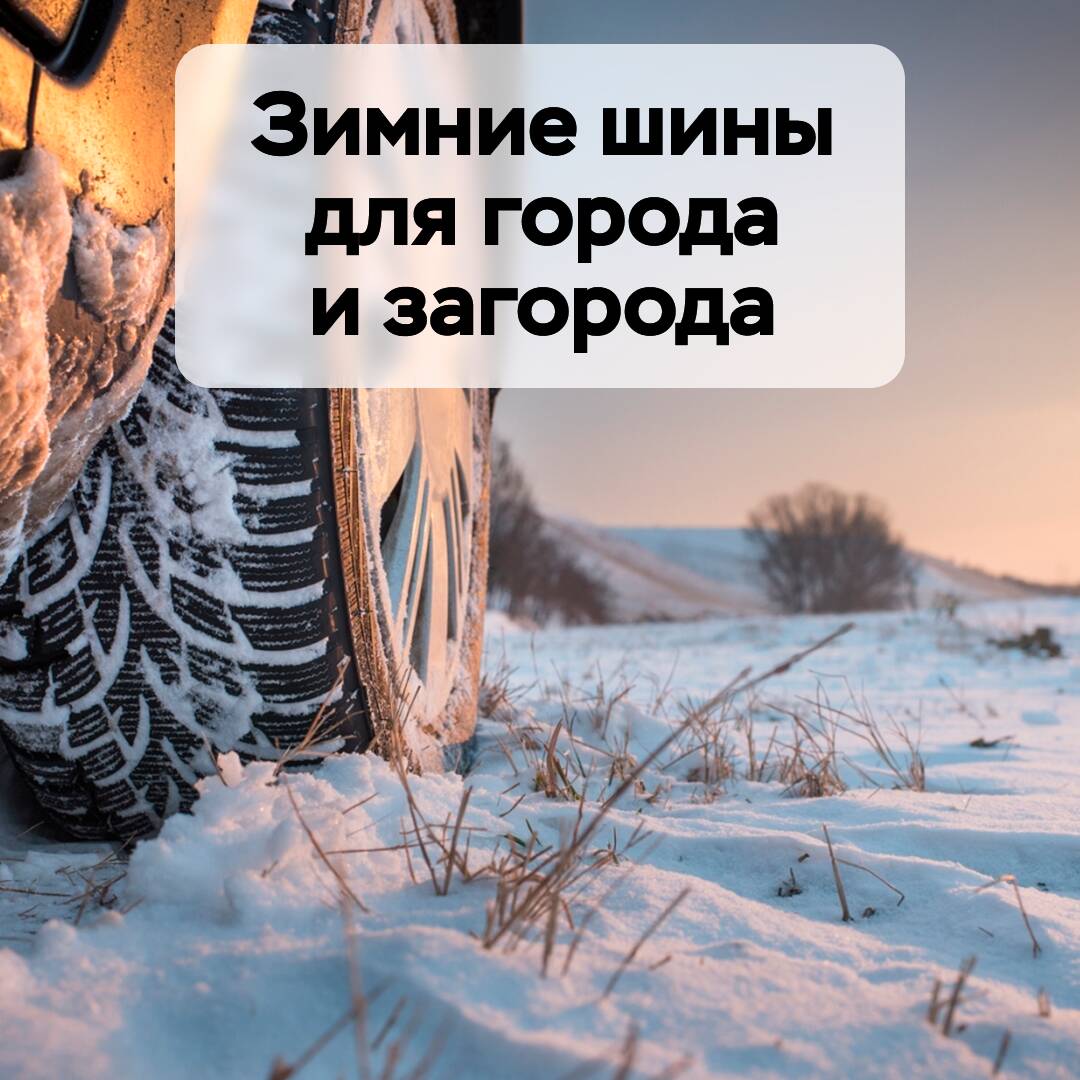
Winter tires for city and countryside
There is a persistent opinion that non-studded tires are designed exclusively for the city, while studded tires are unsuitable for urban conditions. This is not entirely true, and one could even say it's not true at all. Any tire represents a set of technologies aimed at specific characteristics. In any case, the balance of characteristics is what matters. Tires should be balanced equally for urban and rural use.
Let's break down the main differences.
Studded tires have a more developed negative profile, and therefore, improved characteristics in deep and rolled snow. The studs have nothing to do with it. At the same time, studded tires should not be ruled out in urban areas. Yes, they indeed excel on ice, but they also often do not concede to non-studded tires on dry asphalt. The whole secret lies in the stability of the tread blocks. While non-studded tires have many lamellas for effective braking on ice, studded models are forced to abandon some of the lamellas in favor of a massive block of rubber to hold the anti-skid studs. Thus, the tread blocks are more stable and can fully compete with non-studded tires on dry asphalt.
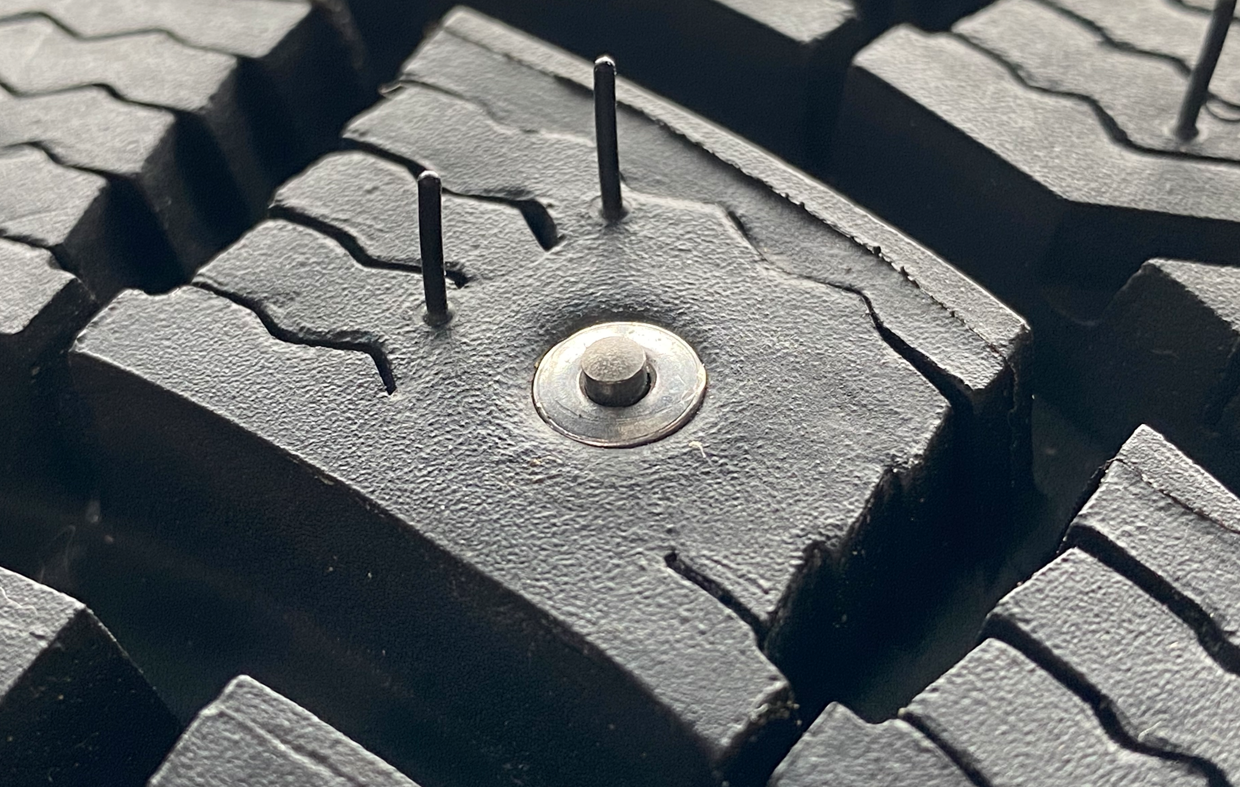
High-quality studded tires with a wide balance of characteristics can be boldly considered a good option for both urban and rural trips.
Non-studded tires have only two main tools in their arsenal to combat harsh winter conditions - the rubber compound and lamellas. The lamellas, in turn, provide evacuation of a thin water film on ice and ensure several rows of gripping edges. Surprisingly, this gives an advantage in extremely low temperatures, where the stud simply cannot penetrate the ice. This often happens at temperatures below -30°C. At the same time, the engineers of almost all non-studded tires shift their balance towards acoustic comfort at the expense of reducing the negative profile in longitudinal and transverse channels, which negatively affects the passage of deep and loose snow.
Thus, it can be concluded that non-studded tires are excellent for urban conditions and for rural trips on rolled snow or at extremely low temperatures.