
Prinx Chengshan plant in Thailand resumes production
Chinese company Prinx Chengshan has announced that the tire plant in Chonburi, suspended on August 1 by order of the Thailand Industrial Estate Authority (IEAT), has resumed operation, and a 28-day trial period has been set, during which the air sampling equipment will be tested to verify its compliance with local regulations.
The company notes that it does not expect the production suspension to have a significant impact on its financial performance and will inform investors of the situation as necessary.
Earlier, Prinx Chengshan pointed out that the plant closure was mainly due to the alleged improper disposal of packaging for transporting technical carbon, and the extended production line did not undergo a proper waste emission assessment. Additionally, Prinx Chengshan Tire North America (PCTNA) noted that while the production downtime is a problem, "with current inventory levels, we believe we can fill the gap in a short period, as produced tires are being shipped on schedule".
"Prinx Chengshan Tire North America, as always, strives to deliver high-quality products that meet all state standards," the company emphasized.
In the IEAT, it was reported that, in addition to violations related to the transportation of hazardous industrial waste and air quality assessment, the plant also found tires without certification to Thai Industrial Standards (TIS), as well as tires with erased production dates and brand logos, but since the plant has resumed operation, this situation has also been clarified.
According to naewna.com, on June 10, employees of the Thai Ministry of Industry and the Consumer Protection Police Division (CPPD) of the Central Investigation Bureau (CIS) discovered a pile of tires with removed production dates and brand logos in a forest in Rayong Province (bordering Chonburi). A total of 74,504 tires worth over 223 million baht (6.7 million dollars) were found, which were fenced with a zinc fence, allegedly to hide non-standard quality tires from authorities. The photos show a partially erased Prinx brand logo, which belongs to Prinx Chengshan.
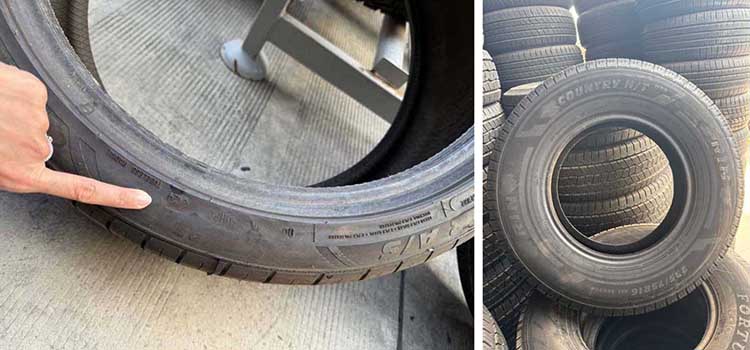
After the discovery of the tires, the ministry instructed the Department of Industrial Works (DIW) to conduct a nationwide inspection of tire factories and retail stores to prevent low-quality, worn-out, or damaged tires from entering the market. Additionally, consumers are reminded not to buy tires without an eco-label, as its absence indicates that the tire is not certified to TIS standards and may be of poor quality or worn out. Motorists are also urged to report non-certified tires so that the Ministry of Industry can take action.
Photo: Stephen Goodchild / Tyre Industry Publications Ltd.