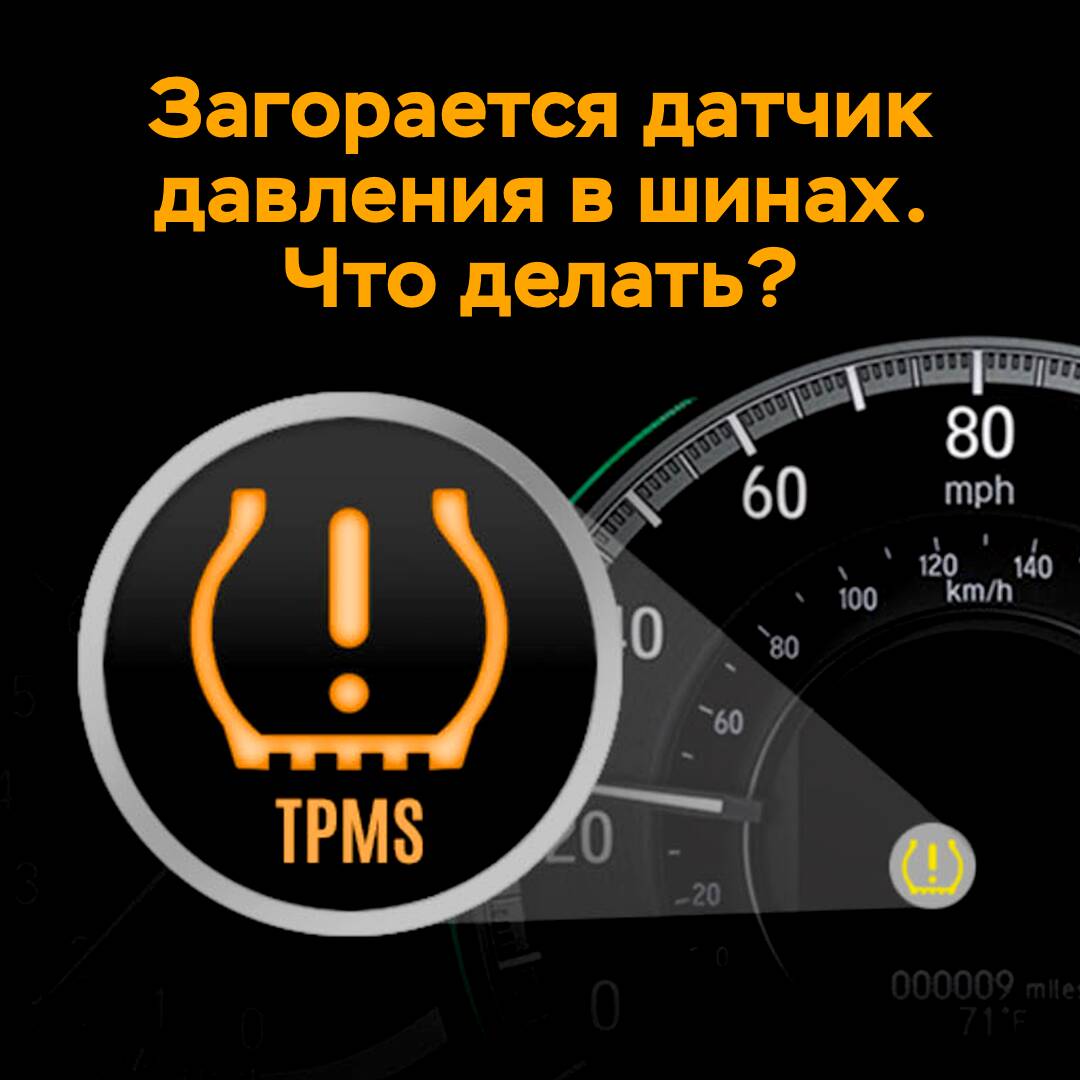
The tire pressure sensor is on. What to do?
Modern cars have numerous passive and active safety systems. Various sound and light signals, indicators, and inscriptions on the dashboard warn about any malfunctions. And, of course, it's worth paying attention to these icons. Among them may be very important signals. And we'll talk about one of them. What to do if the tire icon with an exclamation mark inside lights up on your dashboard?
This icon represents the Tire Pressure Monitoring System (TPMS). If it lights up (usually yellow), it means that the pressure in your tires is below the recommended value. Let's take a closer look at what these systems are and how they work, especially since every car that comes off the assembly line in Europe, America, or is intended for sale there, must be equipped with this system. Pressure monitoring systems can be direct or indirect. The most expensive, reliable, and accurate system is the direct one. In this case, a pressure sensor is installed inside each wheel. The sensor measures the pressure in real-time and transmits it to the onboard system via a special radio signal. In cars with such a system, you can display the pressure in all four tires on the dashboard or screen. The accuracy of such a system is usually up to 0.1 bar, which is more than enough for civilian use. The main advantage of these systems is their accuracy. You always know the pressure in each wheel. However, there are also some drawbacks. If you have a second set of tires on rims, you will need to purchase sensors for them as well. In addition to the cost of purchasing, you will also need to spend money on their installation. Simply installing the sensors and driving is not possible; you need to "register" them. That is, connect them to the onboard computer so that the car knows which sensor is in which wheel. To do this, you need special equipment and skills. The second type of system is significantly simpler. The indirect system works based on information from wheel speed sensors. These sensors are installed on all cars and are the basis for systems such as ABS and ESP. If the pressure in the wheel changes, the wheels on one axis will rotate at different speeds. And then the system alerts the driver to check the pressure. However, the system cannot indicate which wheel has which pressure, so only the icon with the tire and exclamation mark is displayed. Further, the driver must check everything themselves to ensure that the tires are okay. Due to the low accuracy of this system, there are often false alarms because the sensor detects a deviation from the norm. This can be due to the installation of non-recommended tire or rim sizes. The system sees a deviation from the parameters programmed into it, and then you will almost always have this icon lit up.
Tire pressure is an important parameter directly related to safety, so if the tire icon lights up on your dashboard, first, you need to find a convenient place to stop. Then check all the tires and only after making sure that everything is in order, continue driving. Tire pressure monitoring systems will help you save not only your wallet but also your health and life, as well as the lives of your loved ones.