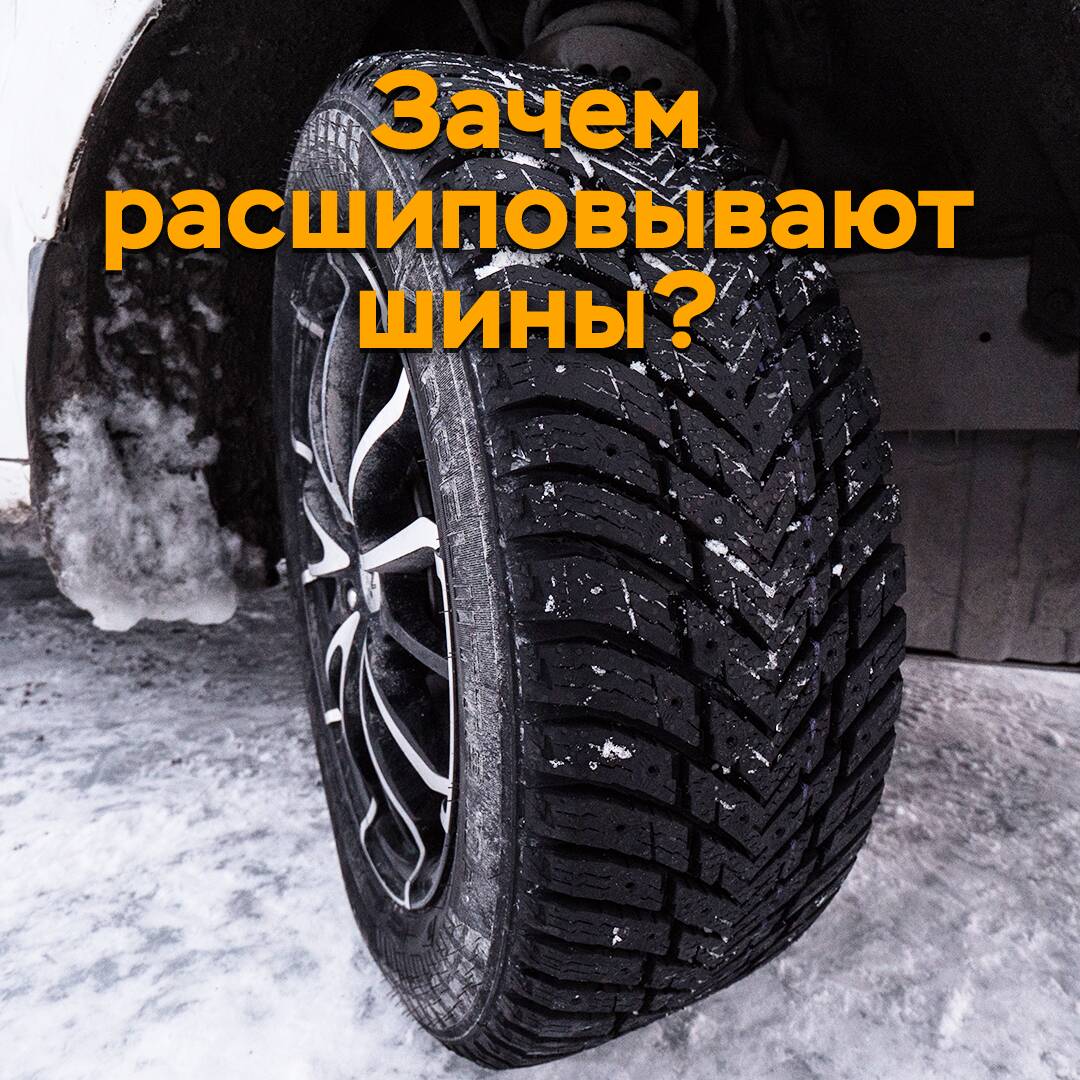
Why are tires studded?
Sometimes on the roads during the winter period, you can come across winter studded tires without studs. At the same time, it is obvious that the studs were there, they were simply removed.
Often the reason can be a trip to countries where studded tires are prohibited, and some car owners remove the studs in advance or directly at the border to continue driving. But there are also cases when studded tires are stripped of studs for completely different purposes.
One of the most striking differences between studded tires and non-studded tires is that they have a more developed negative profile than tires for mild European winters, which makes them more effective in deep snow. If you look closely, you can easily see that the longitudinal and transverse channels of the tread pattern of a studded tire are almost twice as wide.
Therefore, car owners who live in conditions with a low amount of ice but a snowy winter have long been aware of this difference. Of course, not only the studs are responsible for traction on ice, but also such important elements as lamellas. We wrote about this in a separate article. But it's worth remembering that nothing has been invented yet that is better than a stud on ice, and if icy roads can be encountered in your region at least a few times a winter, it's not worth experimenting like that.
Many car owners make the mistake of buying these tires, hoping to reduce noise. The noise from winter tires is formed mostly by the combination and size of the longitudinal and transverse channels, rather than the studs.