
Steering wheel vibrations after installing new disks
With the arrival of warm weather, queues at car washes become significantly longer, which means that people want to give their car a fresh and attractive appearance. For the same reason, the demand for alloy wheels increases. At the same time, it is often possible to encounter the statement: "I bought new wheels, and the steering wheel started to vibrate at speed. This means the wheels are defective!"
This is not the case at all. Defects in wheels can occur, although quite rarely, but they are not related to geometry. In other words, wheels cannot leave the factory in an oval shape. This is the essence of alloy wheels.
So, what can cause vibration? Only the wheels were changed, and they were checked on a balancing machine. The tire fitter even performed balance optimization by rotating the tire on the wheel. The vibration still remained. There can be several reasons for this.
1. The central hole of the wheel is not correctly selected.
The central hole must fit perfectly on the hub, without the slightest play, even in fractions of a millimeter. If there is play, it cannot be compensated by the force of tightening or centered manually.
This is quite common in practice, because the manufacturer intentionally makes the central hole of the wheel a bit larger, so that the wheel fits on a larger number of cars. If the chosen wheel has play, there is nothing complicated about its installation and ideal centering. You just need to install centering rings. Don't be confused by the fact that they are made of plastic. Centering rings do not have to withstand high loads. They serve as a means of ideal centering of the wheel with a large central hole on the hub. 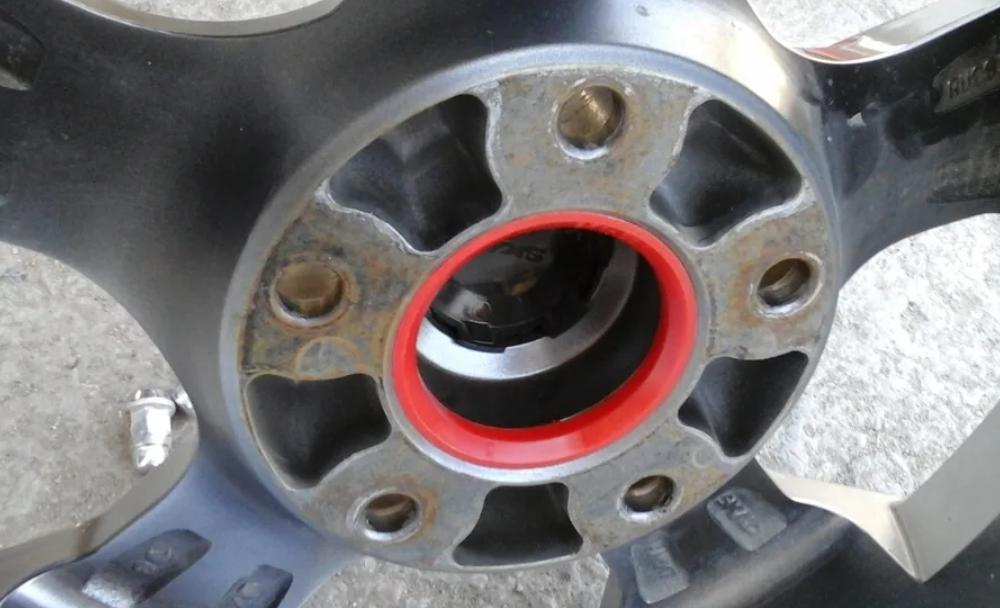
2. The wrong fastening is selected.
There are three types of fastening: "Sphere", "Cone", "Flat washer". When choosing wheels, it is important to correctly select the fastening. Otherwise, the contact between the wheel and the hub will not be tight enough, and the steering wheel will vibrate noticeably at speed. 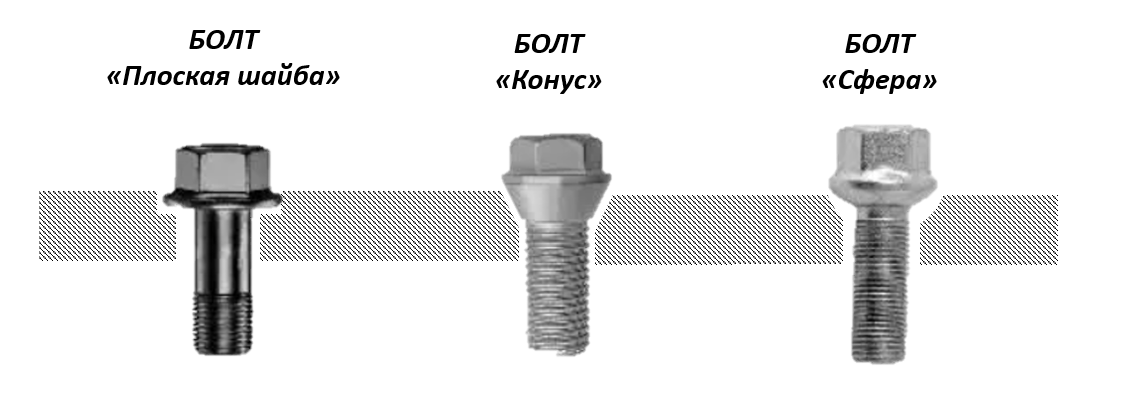
3. The tires have uneven wear.
This happens rarely, but it does happen. This is especially common if two sets of tires were used on wheels for a long time without being removed. As a result, the wheels and tires become one solid unit. Any deformation on the wheels affects the wear of the tire. When changing the wheel to a new and perfectly shaped one, the tire with a certain wear may not fit properly on the wheel.
As can be seen from the above, to avoid problems with installing new wheels, you just need to select everything correctly. Our specialists can help you with this.