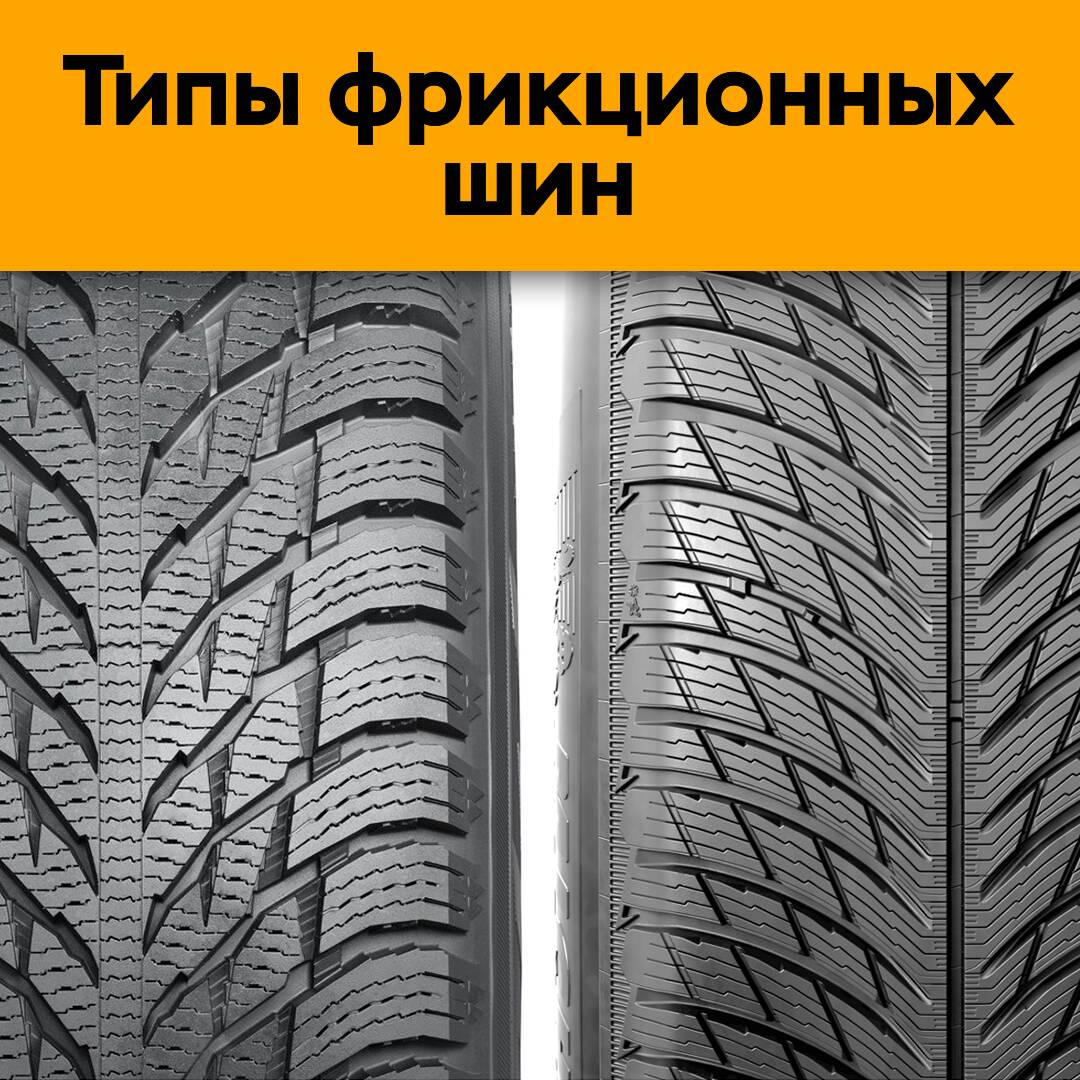
Types of Friction Tires
Perhaps for some car owners, tires are just "black and round", and winter tires are only divided into "studded" and "non-studded", but, of course, this is not the case. If summer tires are straightforward and an error in the segment can result in maximum discomfort, rapid wear, and increased fuel consumption, then with winter tires, the question of safety arises directly.
Tires equipped with anti-skid studs have a gradation only by the number of studs, and non-studded tires, or as they are often called "friction tires", are divided into two clear segments:
- For harsh winter conditions
- For mild European winters.
It's essential to distinguish between these segments, as if temperatures below -20°C are common for you, then tires for mild winters may experience serious difficulties on the road, and you will definitely feel it.
How to distinguish between these segments?
First and foremost, you should start with the manufacturers' recommendations. If you see phrases like "alpine gamma tires" in the description, then these are tires for mild winters and should only be preferred if you have a suitable climate.
These tires differ not only in the composition of the rubber compounds but also in the design elements. Pay attention to the illustration for this article. On the left, a model of a tire from the Nordic segment is shown for example, and on the right, a model from the Alpine segment.
At first glance, the "gentleness" of the tire for the European winter is striking. It is visible that the lamellas are of a simpler shape and, in general, thinner. It is also noticeable to the naked eye that the distance between the blocks in the tire for harsh winter is wider, which implies more efficient work in deep snow, but also more noise on asphalt.
When choosing tires, it's crucial to know such nuances, because there are no bad tires, and each tire has its own purpose.