Winter Tire Test by Auto Zeitung — 2025
The magazine Auto Zeitung tested 10 sets of winter tires in the 245/45 R19 size, conducting traditional tests on snow, wet, and dry surfaces, as well as evaluating the environmental friendliness of the participants, including measuring tread wear to assess particulate emissions that can harm the environment and human health.
Five premium-class tires were tested: Bridgestone Blizzak 6, Continental WinterContact TS 870 P, Goodyear UltraGrip Performance 3, Michelin Pilot Alpin 5, and Pirelli P Zero Winter 2, as well as two models from the mid-price segment: Vredestein Wintrac Pro+ and Yokohama BluEarth*Winter V906. Additionally, budget-friendly tires Linglong Sport Master Winter and Maxxis Premitra Snow WP6 were included, as well as Triangle EffeXWinter TW421, which is a new model for the 2025/2026 season and had not previously participated in tests.
Snow and asphalt tests were conducted at the Goodyear and Continental test facilities, respectively, while laboratory tests were carried out at the Continental and Pirelli facilities. A BMW 520d Touring served as the test vehicle.
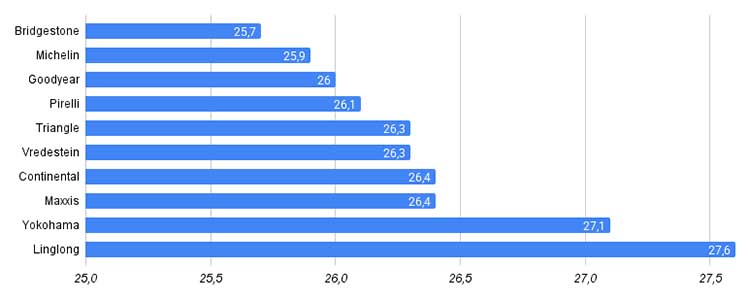
On snowy surfaces, the shortest braking distance was achieved by Bridgestone, followed by Michelin and Goodyear, while the cheapest Linglong tires performed the worst.
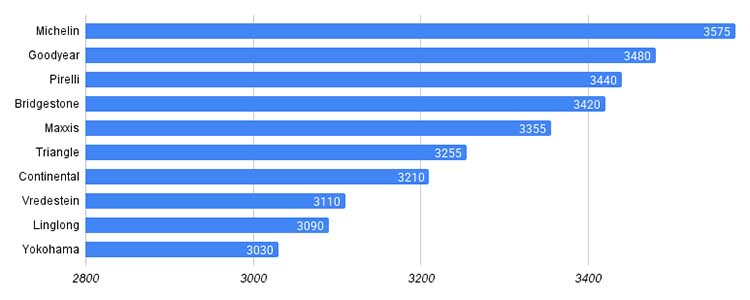
In the traction test on snow, premium tires were again at the top, with Michelin and Goodyear being the best, while Yokohama was even less effective than Linglong.
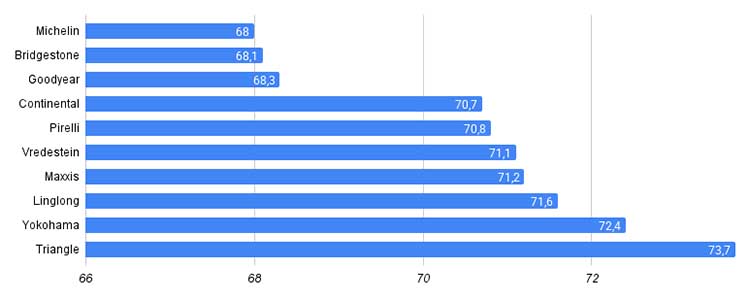
Michelin also won the test for handling on a snowy track, while Yokohama and Triangle performed worse.
On wet surfaces, Pirelli showed their best qualities, stopping the car the fastest. For comparison, the car on Maxxis tires needed 8.2 meters more to stop from 100 km/h, resulting in a residual speed of around 40 km/h.
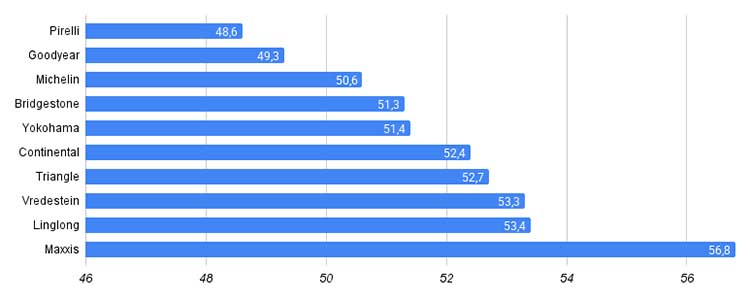
Pirelli also achieved the best lap time, while Maxxis again struggled, and even other budget-friendly tires performed better.
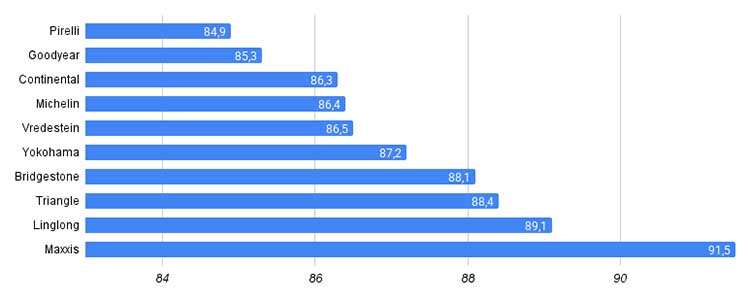
Lateral grip was evaluated on a circular wet track with a diameter of 58 meters, and Pirelli again showed the best result, while Maxxis confirmed their poor performance on wet roads.
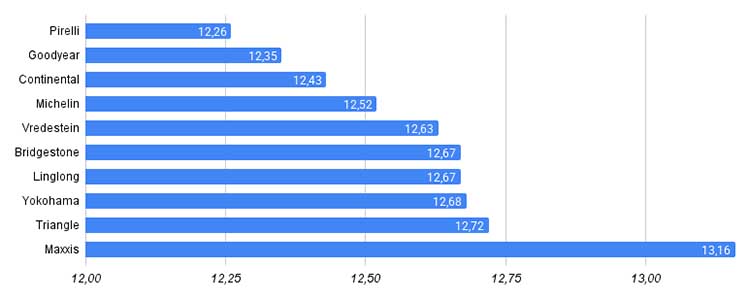
Continental showed the best resistance to longitudinal aquaplaning, while Yokohama had a very weak result in this discipline.
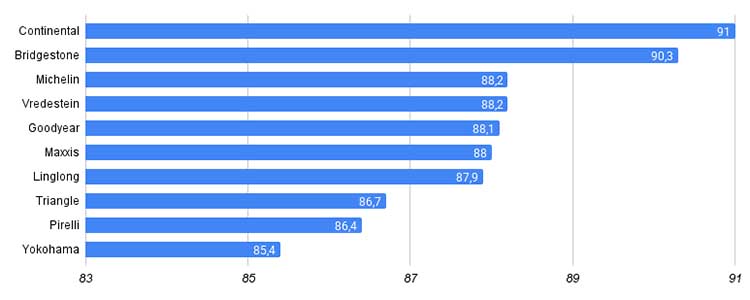
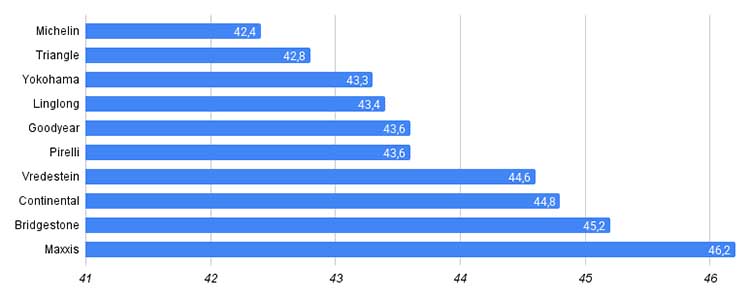
On dry surfaces, economy-class tires, which had previously performed as expected, began to surprise, and Triangle only lost to Michelin in terms of braking efficiency. The longest braking distance was recorded for Maxxis tires.
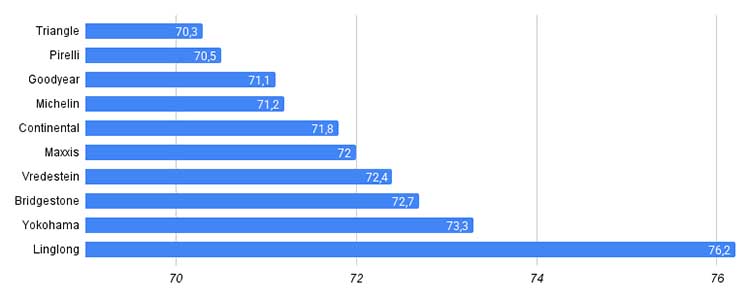
In the handling test on a dry track, Linglong took first place, but experts noted that due to the weak stability of the tires on the rear axle, constant steering was required. Triangle's transverse grip was clearly not as good as their longitudinal grip, putting them in last place.
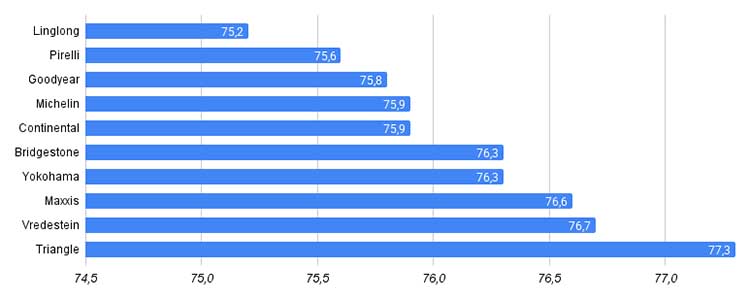
In the noise test, Linglong and Triangle swapped places, with the former having a very weak result, which would definitely affect acoustic comfort.
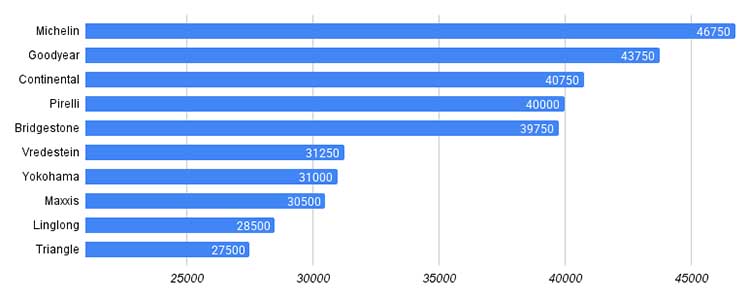
The most durable tires in the test were Michelin, which could travel almost 47,000 km before needing replacement, while Triangle's maximum mileage was only 27,500 km.
Despite having the lowest durability, Triangle became the best in terms of cost per kilometer, due to their low price in Germany (350 euros vs. 1090 euros for Michelin).
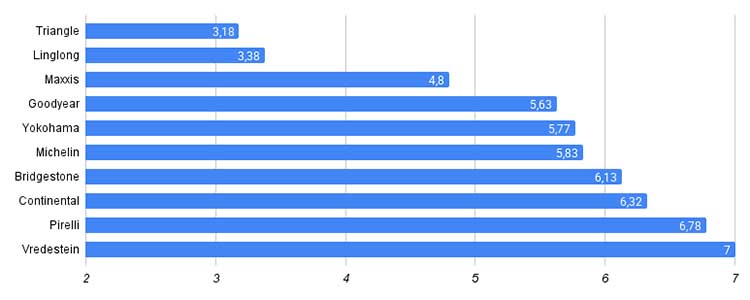
The lowest rolling resistance among the tested tires was shown by Bridgestone, made using the Enliten technology, which improves tire efficiency, including by reducing weight. Linglong tires worsened fuel efficiency the most.
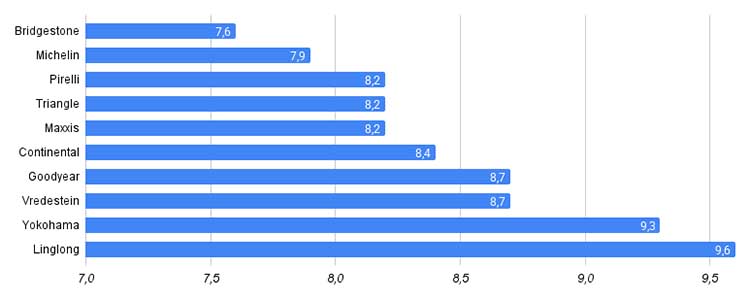
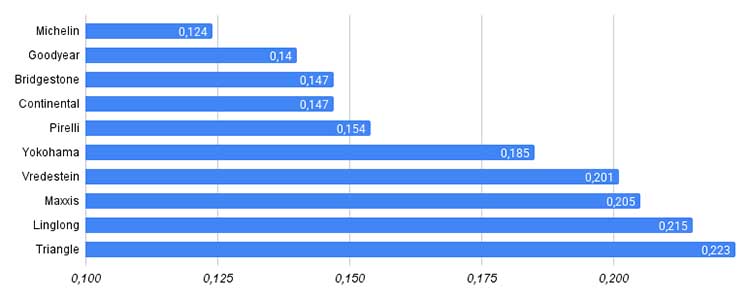
Laboratory tests showed that Michelin's tread wear was only 0.124 mm per 1000 km, meaning they emitted the least amount of particles into the air compared to the other test participants.
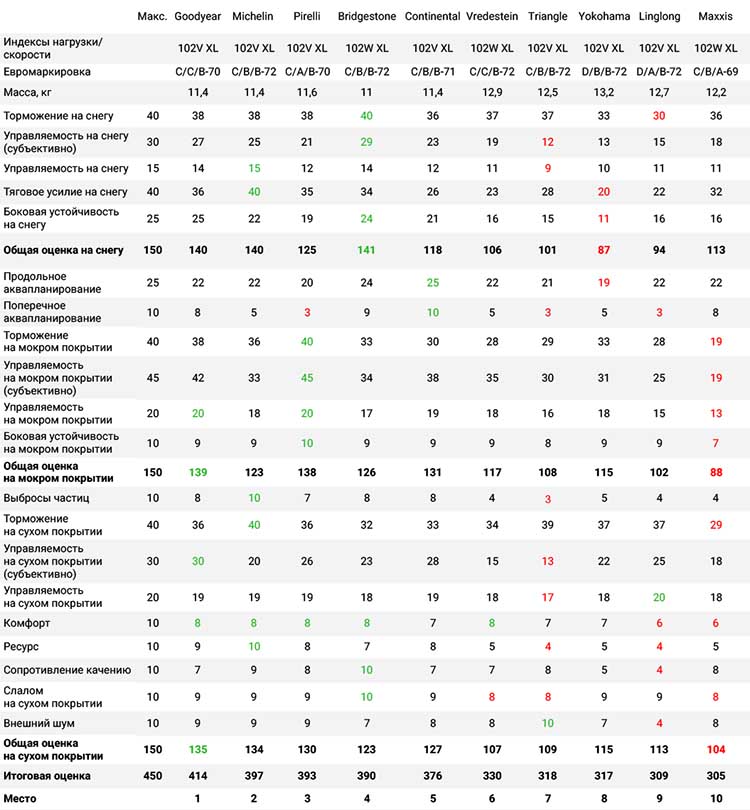
Goodyear UltraGrip Performance 3 took the top spot in the overall ranking, showing good results in all disciplines and having balanced characteristics. Michelin Pilot Alpin 5 came in second, performing well on snow and dry surfaces, and also having a very high durability and low rolling resistance, which would reduce costs (although the tires themselves are quite expensive). Pirelli P Zero Winter 2 took third place, also showing a good balance of parameters and excellent performance in wet surface tests, although they had reduced resistance to longitudinal aquaplaning.
Fourth place went to Bridgestone Blizzak 6 Enliten, which received the maximum number of points in snow tests and also performed well on wet roads, as well as having very low rolling resistance, helping to save fuel. Fifth place was taken by Continental WinterContact TS 870 P, which effectively resisted aquaplaning and provided ease of handling on all surface types, but lost points due to a relatively long braking distance on wet surfaces, which also happened with Vredestein Wintrac Pro+, which otherwise showed good results in various conditions.
The new Triangle EffeXWinter TW421 was the cheapest tire in the test and managed to show the second-best result in the dry braking distance test. Unfortunately, this was the end of its advantages, and the tires worsened handling on any surface and also had very low durability. The Linglong Sport Master Winter tires that participated in the test were developed specifically for European drivers and manufactured at the company's plant in Serbia, but, as the testers noted, they did not meet expectations - at least, not yet. On dry surfaces, Linglong unexpectedly took first place in the handling test, but on snow and wet surfaces, they often found themselves at the bottom of the ranking, and they also had a very high noise level. Maxxis Premitra Snow WP6 took the last place, having decent traction on snow but weak results in other areas, especially on wet surfaces.
Source: Auto Zeitung