UTAC 2024 Non-Studded Winter Tire Test
The Finnish organization UTAC Ivalo (formerly Test World) conducts tire tests every year, the results of which are published in several Northern European countries, and for the new season, experts have tested 10 models of non-studded Scandinavian-type tires.
Tires of the premium class (Continental VikingContact 8, Goodyear UltraGrip Ice 3, Michelin X-Ice Snow and Nokian Hakkapeliitta R5) were tested, as well as models of the middle price segment (Hankook Winter i*cept iZ3, Kumho WinterCraft ice Wi51 and Falken Winterpeak F-Snow 1), as well as three budget tires (Linglong Nord Master, Radar Dimax Ice and Triangle Snowlink PL01). The cheapest tire in the test was Radar, which belongs to the line of private brands of the Singaporean company Omni United, the price of which, for example, in Sweden is almost three times lower than that of Continental. At the same time, Radar did not take the last place, and there were two tires with even weaker results.
The tests were carried out at the Ivalo polygon (Finland), where tires are tested both on outdoor tracks and in large covered pavilions. Volkswagen Golf was used in the tests, and the tires were taken in size 205/55 R16.
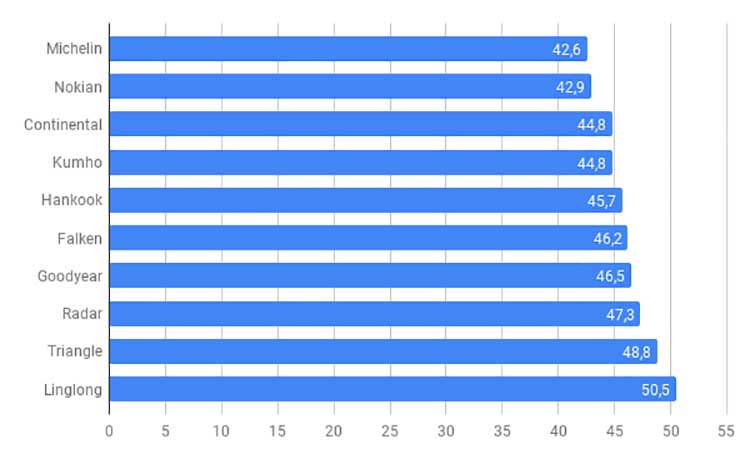
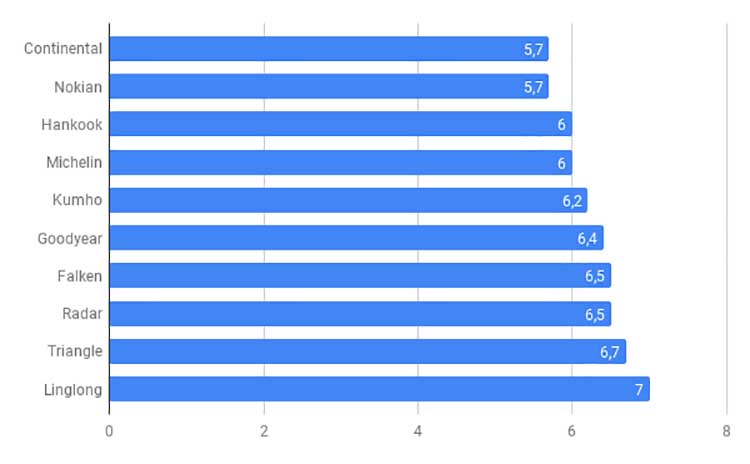
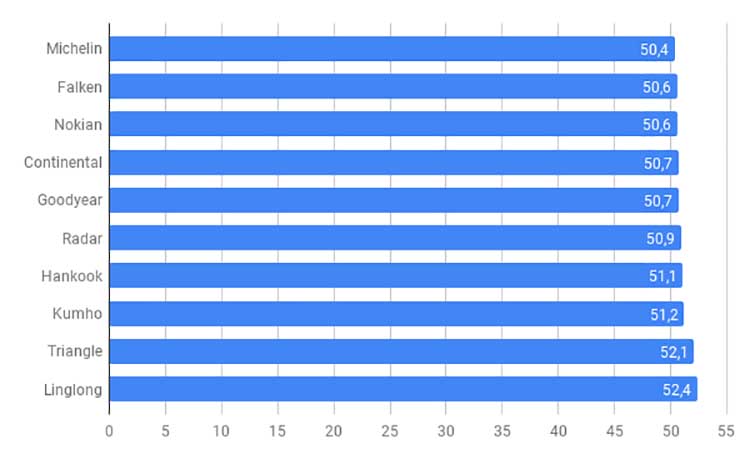
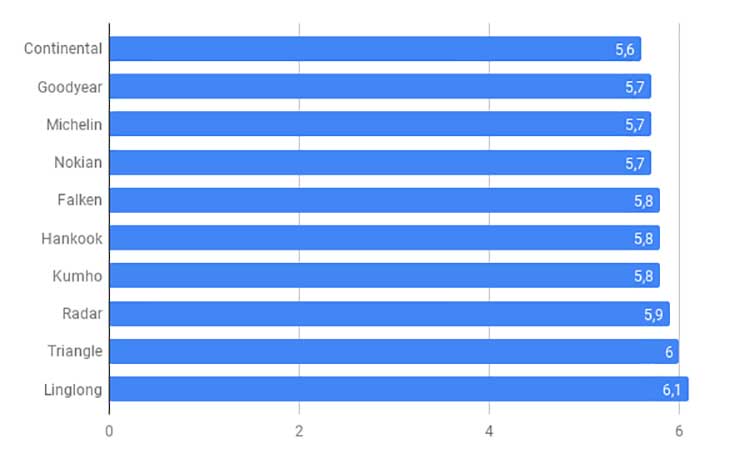

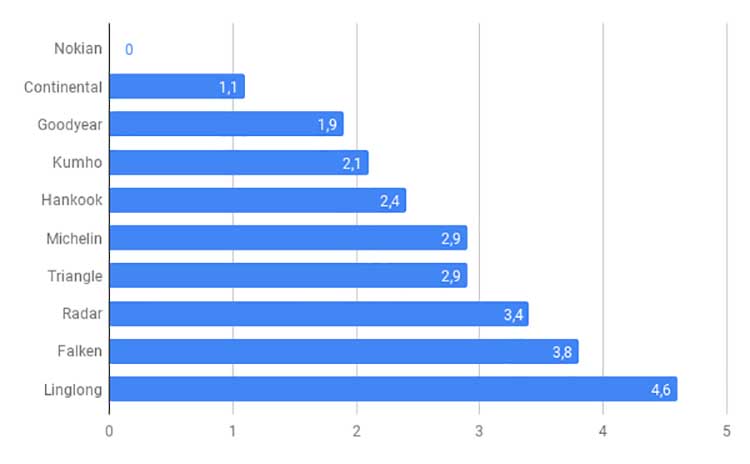
According to the test results, all tires were ranked in strict accordance with their price positioning, i.e. "premium" leads, and budget tires occupy places at the end of the rating, and there were no surprises in the test. The first place is occupied by Continental, which provides high traction on ice, and ease of handling is preserved in any situation and is combined with a short braking distance. On snow, traction is also very good, while on wet asphalt, the sensitivity on the steering wheel deteriorates slightly, but the grip remains high even during sharp maneuvers. Continental is also quite quiet and economical.
Next are Nokian, which also guarantee excellent handling and a high level of safety on ice, snow, and R5 also have low noise, as well as the best fuel economy among the tested tires. At the same time, on wet pavement, the reactions to steering wheel turns are inaccurate, and the braking distance is relatively long.
The leaders are closed by Goodyear tires, which on ice and snow reliably maintain traction in complex situations, although the braking distances were relatively long (compared to the best tires in this parameter). On asphalt, Goodyear surpassed all competitors, including due to good stability. Acoustic comfort and economy are also good.
The fourth place went to Michelin tires, which have excellent longitudinal traction on ice, but lateral stability could be improved. On snow, the tires behave more reliably, and there are no surprises to be expected. On asphalt, X-Ice Snow has not the best braking efficiency, but transverse traction is high, which helps to maintain stability during emergency maneuvers. Rolling resistance is low, but the tires make a fairly audible noise.
The fifth place was shared by Hankook and Kumho from South Korean brands. Hankook tires generally work well on snow and ice, although they concede to the leaders in terms of overall traction, while on asphalt they have quite long braking distances and average transverse traction, but the tires still cope with sharp maneuvers. Economy is average, and there is a noticeable noise.
In turn, Kumho on ice demonstrated good braking properties and high transverse traction, however, with too large a steering angle, the front wheels may start to skid. On snow, the tires behave in general stably and reliably, but there is also a risk of skidding during an emergency maneuver. There are no complaints about noise and economy, which cannot be said about directional stability.
Falken tires from the Japanese Sumitomo Rubber Industries on ice and snow function quite well, but only until the traction limit is reached, after which a tendency to both skidding and drifting appears, due to which the car becomes quite difficult to handle. On wet asphalt, the braking distances are short, but lateral stability is not the best. Noise is low, but rolling resistance is increased.
The cheap Radar tire of Chinese production clearly concedes to models in higher places in terms of traction on ice, both longitudinal and transverse, however, it still behaves quite stably and without surprises. On snow, the indicators are average, although the behavior is again predictable, including in complex situations, and on wet and dry asphalt, there are problems with braking efficiency and response to steering wheel turns, but transverse traction is good. The noise is low, rolling resistance is increased.
Only the ninth place is occupied by Triangle tires, which, when performing an emergency maneuver on ice or snow, can suddenly start sliding on both the front and rear axles. On asphalt, the tires have good braking qualities, but, again, there is a risk that the tires will sharply go into a skid. Triangle tires were also found to be quite quiet, but rolling resistance is high, and directional stability is also not the best.
Finally, the worst in the overall standings were Linglong Nord Master, which have very weak traction on ice and snow (braking distances are long, and skidding can easily occur in turns), and in fact, despite the name, the tires are better suited for warm winters, since they behave reliably on wet asphalt. Some noise is present, and in addition to everything, Linglong had the highest rolling resistance among the tested tires.
