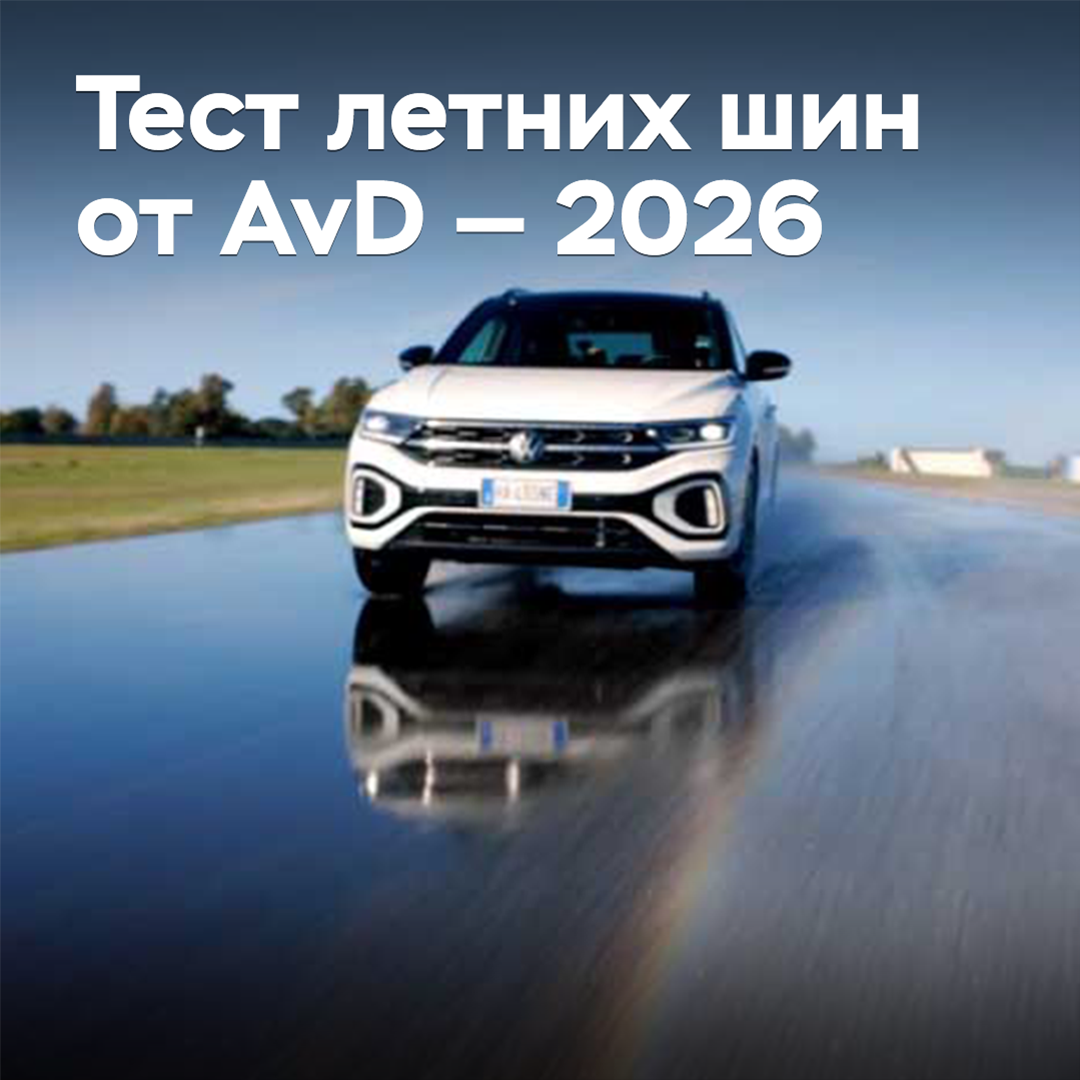
Summer Tire Test by AvD — 2026
Last year, the German Automobile Club (AvD) resumed tire testing after a 50-year hiatus, with all-season tires being tested in 2025 and summer models in 2026. Fifteen tires from all price categories were selected and tested in cooperation with Tempotire, a company specializing in tire testing.
The tests were conducted using a Volkswagen T-Roc on test tracks in Italy, with tires in the 215/55 R17 size being tested. Safety criteria were naturally prioritized, and environmental parameters were also evaluated separately.
List of participants:
Goodyear EfficientGrip Performance 2
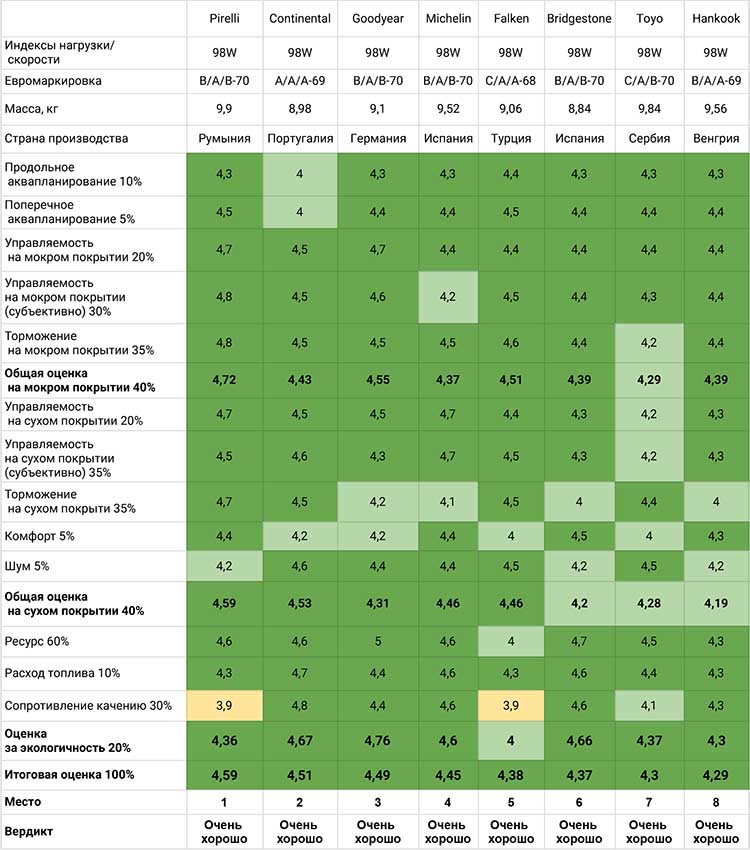
Pirelli Cinturato (C3) won the test convincingly, significantly outperforming previous-generation tires in all safety-related parameters, according to the testers. Pirelli performs well in all conditions, and their most impressive performance was in wet handling tests, where they demonstrated precise reactions to steering wheel turns and balanced behavior, allowing for both the best lap time and a genuine driving pleasure. The braking qualities are also excellent, and the tread pattern quickly evacuates water, which also affected the resistance to aquaplaning. Additionally, Pirelli has a high mileage, but there are also some minor drawbacks, and the Cinturato was one of the noisiest tires in the test, as well as having increased rolling resistance.
Silver was awarded to Continental UltraContact NXT, which confirmed that sporting qualities and environmental friendliness are not mutually exclusive parameters. NXT is the most "green" serial tire from the German concern, with up to 65% of various eco-materials used in its production, from silica from rice husk ash to polyether from recycled PET bottles, and at the same time, the tires demonstrated excellent dynamic characteristics on both dry and wet surfaces. Since the reduction in rolling resistance forced a decrease in tread depth, the resistance to aquaplaning deteriorated slightly, but the NXT is very quiet, comfortable, and durable tires (which, however, are expensive even for products from Continental).
Goodyear EfficientGrip Performance 2 took third place, which have been on the market for quite some time but still remain one of the best and only conceded to fresher models from Pirelli and Continental. The main advantages of Goodyear were called the outstanding service life and stability of characteristics in any conditions, i.e., the tires are effective in any conditions and do not have obvious weaknesses, and also provide good smoothness of the ride, including on uneven surfaces, which is important for those who often have to drive on poor roads.
Although Michelin Primacy 5 also optimized the tread depth for improved economy, they still impressed with their resistance to aquaplaning, which is due to the thoughtful tread pattern that effectively evacuates water from the contact area with the road. The indicators on wet surfaces are also good, but Primacy 5 performed even better on dry asphalt, demonstrating precise reactions to the driver's actions, excellent stability, and superb braking qualities. Michelin also traditionally has very high wear resistance, and in addition to this, the tires have low rolling resistance.
Falken Ziex ZE320 followed Michelin, which also performed well on wet surfaces, while on dry asphalt, the stability is good, but the sensitivity of the steering could be improved, and their main drawbacks are reduced wear resistance and high rolling resistance.
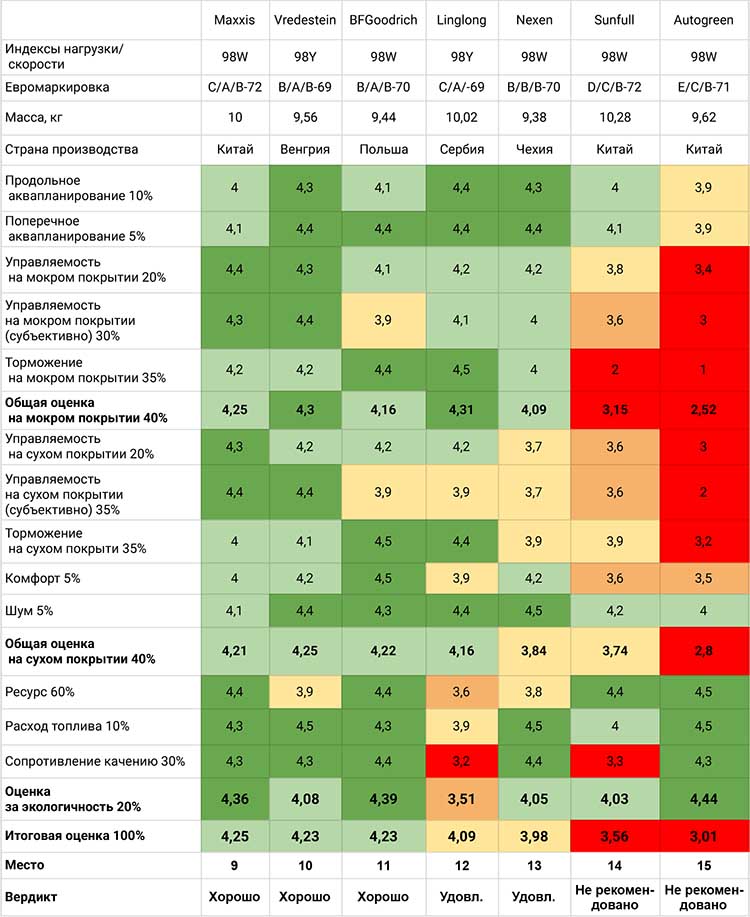
Bridgestone Turanza 6 this time failed to make it to the top five, due to the fact that on dry surfaces, they conceded to the test leaders due to a relatively long braking distance, as well as not the highest transverse grip when passing sharp turns. At the same time, on a wet surface, there were no complaints about Turanza 6, and in addition, the tires have a high level of comfort, including acoustic comfort, which makes them well-suited for long trips. Like other products from Bridgestone, made using the Enliten technology, the tires have a lightweight design that reduces both resource consumption and rolling resistance, and in the wear resistance test, Turanza showed the second result.
Toyo Proxes Comfort tires generally behave reliably in any conditions, but on wet surfaces, a tendency to understeer under load was noticed, and on dry surfaces, the response was not as straightforward as that of some competitors (when the steering wheel is in the central position, a "plateau" is first observed, and then the tires respond very sharply, due to which the driver sometimes has to additionally correct the direction of movement). The picture in the comfort tests was also ambiguous, and Toyo has low noise and good smoothness of the ride, but they are not very effective in terms of shock absorption when driving over large transverse joints, which is felt in the cabin. The rolling resistance is low, and Toyo was even able to surpass their rating on the Euro label, and the resource is high.
Hankook Ventus Prime 4 closes the list of tires with a rating of "Very good", which confirm the reputation of the Korean company as a manufacturer of high-quality and affordable tires. Especially well, Hankook performed in tests on wet surfaces, where, in particular, they behaved very predictably at the limit of adhesion, while on a dry track, the only drawback can be considered the need for relatively large steering wheel angles during maneuvering, which is unlikely to be noticed in everyday life, unlike the low noise level and comfortable ride. The resource is also in order, and overall, Hankook can be considered an excellent alternative to more expensive premium tires.
Although Hankook has very good results, the status of tires with the best price-quality ratio among the participants was not awarded to them, but to Maxxis Premitra HP6, which, with their even more modest price, demonstrated a high level of safety and did not reveal any drawbacks that could reduce it. On wet surfaces, Maxxis behaves predictably, although they have a tendency to understeer and somewhat slow reactions to steering wheel turns, and on dry surfaces, the sharpness of steering and grip are not as impressive as those of the tires on the first places, but Premitra HP6 is quite capable of safely delivering to the destination. The comfort is acceptable, although the noise is slightly increased, and the durability is also at a good level.
Vredestein Ultrac+ noted for their very good resistance to aquaplaning, and the tires also provide good handling and informativeness on both wet and dry surfaces. In addition, Vredestein turned out to be quiet, comfortable, and economical, and the main drawback is a relatively low resource.
BFGoodrich Advantage 2 tires were clearly developed by Michelin specialists with an emphasis on economy, durability, and comfort, which, unfortunately, negatively affected the dynamic characteristics, and on a wet surface, the tires have a tendency to understeer in sharp turns and slowed reactions to the driver's actions, and on a dry surface, the grip and lateral stability are acceptable, but the sensitivity of steering is not the best. At the same time, BFGoodrich provides a very high level of comfort, has excellent wear resistance, and contributes to fuel savings.
Linglong Sport Master received a rating of "Satisfactory", having both strong and weak sides, and the main surprise - as well as in the recent test by Auto Bild - was the excellent braking efficiency on both dry and wet surfaces, by which the tires of the Chinese brand do not concede to premium products. The resistance to aquaplaning is also commendable, however, the handling still needs to be worked on, and although the tires can provide acceptable safety, the informativeness leaves much to be desired, as well as the accuracy of reactions, especially on dry surfaces. In addition, Linglong turned out to be clearly not the most comfortable and "felt wooden" on uneven surfaces, and the rolling resistance was the highest among the tested tires, which, like the very low resource, worsens the attractiveness of the purchase.
Below Linglong are Nexen N'Fera Primus, which were able to show good results on wet surfaces, but on a dry track, the situation was significantly worse, and the tires clearly lacked lateral stability and sharpness of reactions, and they also tend to understeer, so fans of sporty driving can safely pass by. The advantages include low noise and a comfortable ride, as well as good economy, but the resource definitely needs to be increased, and overall, Nexen tires can be recommended to those who drive a car a little and highly value grip in the rain.
Budget tires Sunfull SF-888 took the penultimate place with a rating of "Not recommended", as they are not able to provide acceptable safety, especially on wet asphalt, where they had a "alarmingly low level of grip". When stopping from 100 km/h, the braking distance of Sunfull was 12 meters longer than that of the leader, which is equivalent to a residual speed of around 44 km/h, and the tires also have low lateral stability, and when maneuvering, it is necessary to significantly increase the effort on the steering wheel. In addition to this, Sunfull poorly absorbs vibrations, produces an annoying noise, and increases fuel consumption, including due to the fact that they were the heaviest among the tires in the test.
Even worse were Autogreen Smart Chaser SC1, which had "glaring shortcomings in terms of safety". The residual speed of cars on Autogreen in the wet braking test was over 58 km/h, and the tires behave unstably in any conditions, do not differ in ride comfort, and also emit a distinct hum at high speeds and in turns. The wear resistance is very high, but this clearly cannot compensate for the significant deterioration in safety.
Source, including photos: AvD