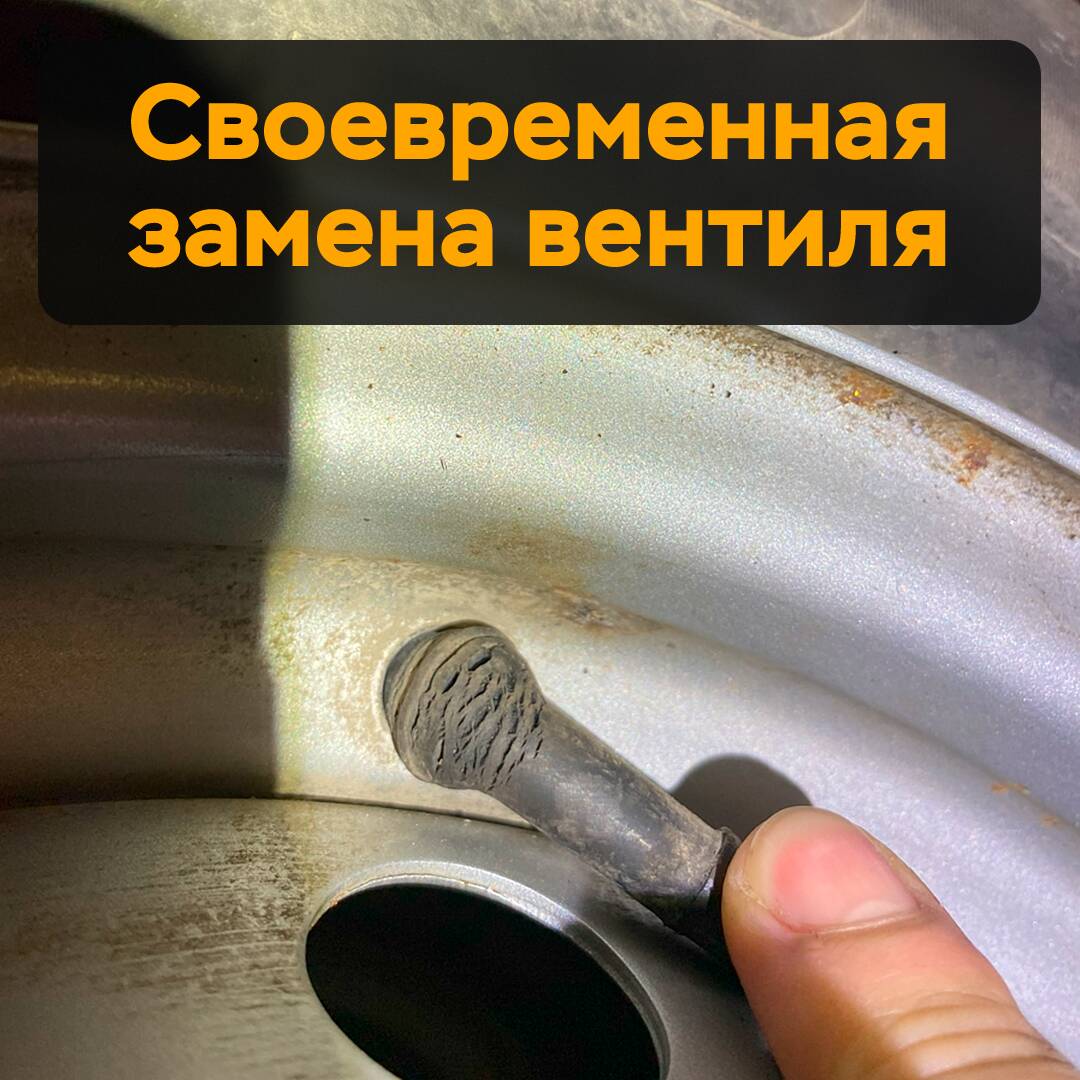
Timely replacement of the valve stem
When changing tires seasonally, it's worth noting that the tire fitter in 100% of cases simply cuts off the valve and installs a new one. Some customers may object in puzzlement - "Why cut off a working valve". The question is logical, but this process is part of the standard procedures of any high-quality tire fitting service, not for extra profit, but for safety. It's worth exploring the reasons in more detail.
First of all, it should be noted that tires are not made of rubber, but of several dozen components. Even monolithic, at first glance, rubber consists of many components, which is more accurate to call not just "rubber" but "rubber compound". The engineers of the world's leading companies are constantly working on the composition of rubber compounds, and their goal is not only to improve the characteristics but also to counteract the factors of aging, ozone exposure, road chemistry, and other aggressive aspects.
This is why new components are added to the rubber compound of tires, giving them the opportunity to serve longer with minimal loss of characteristics. At the same time, the valves that ensure the retention and regulation of air pressure inside the tire are also covered with rubber, but in this case, it's not a "rubber compound". Valve manufacturers, of course, are not trying to save money, but production must be economically viable, and that's why it doesn't make sense to extend the lifespan of rubber components for more than one season.
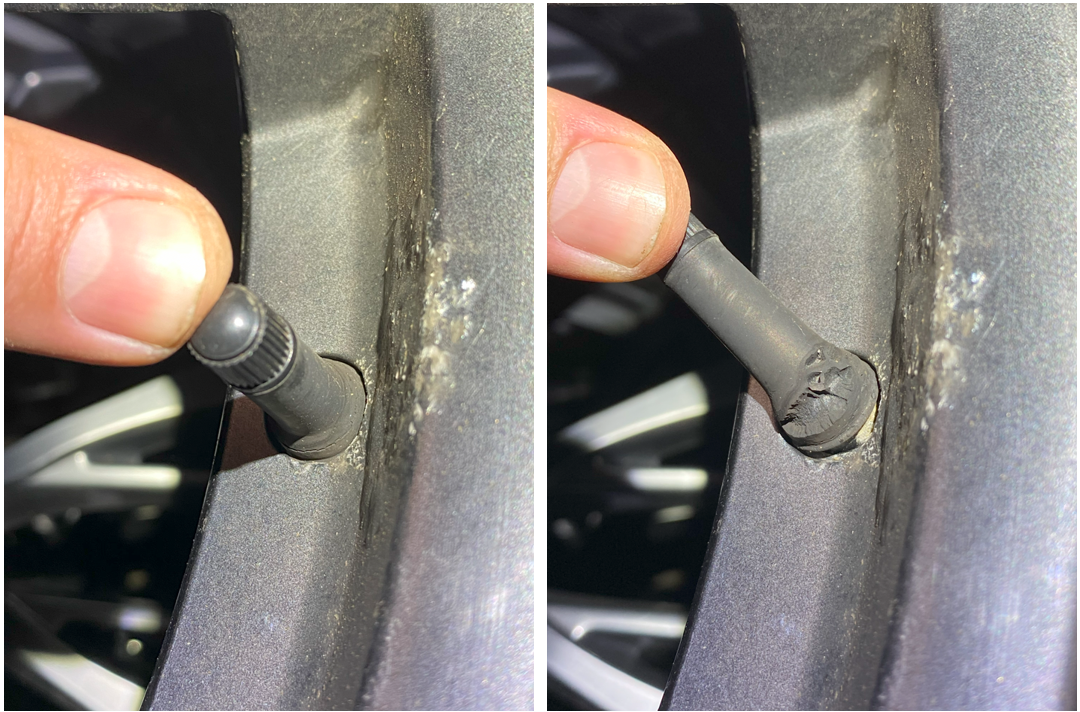
Of course, everything depends on the conditions, and the rubber of the valve can last longer. But the cheapness of this component simply doesn't make sense to risk safety, so in the standard procedures of any quality service, there is a replacement of the valve, despite its externally suitable condition. Even a seemingly suitable valve can have invisible damage, as shown in the photo for this article.