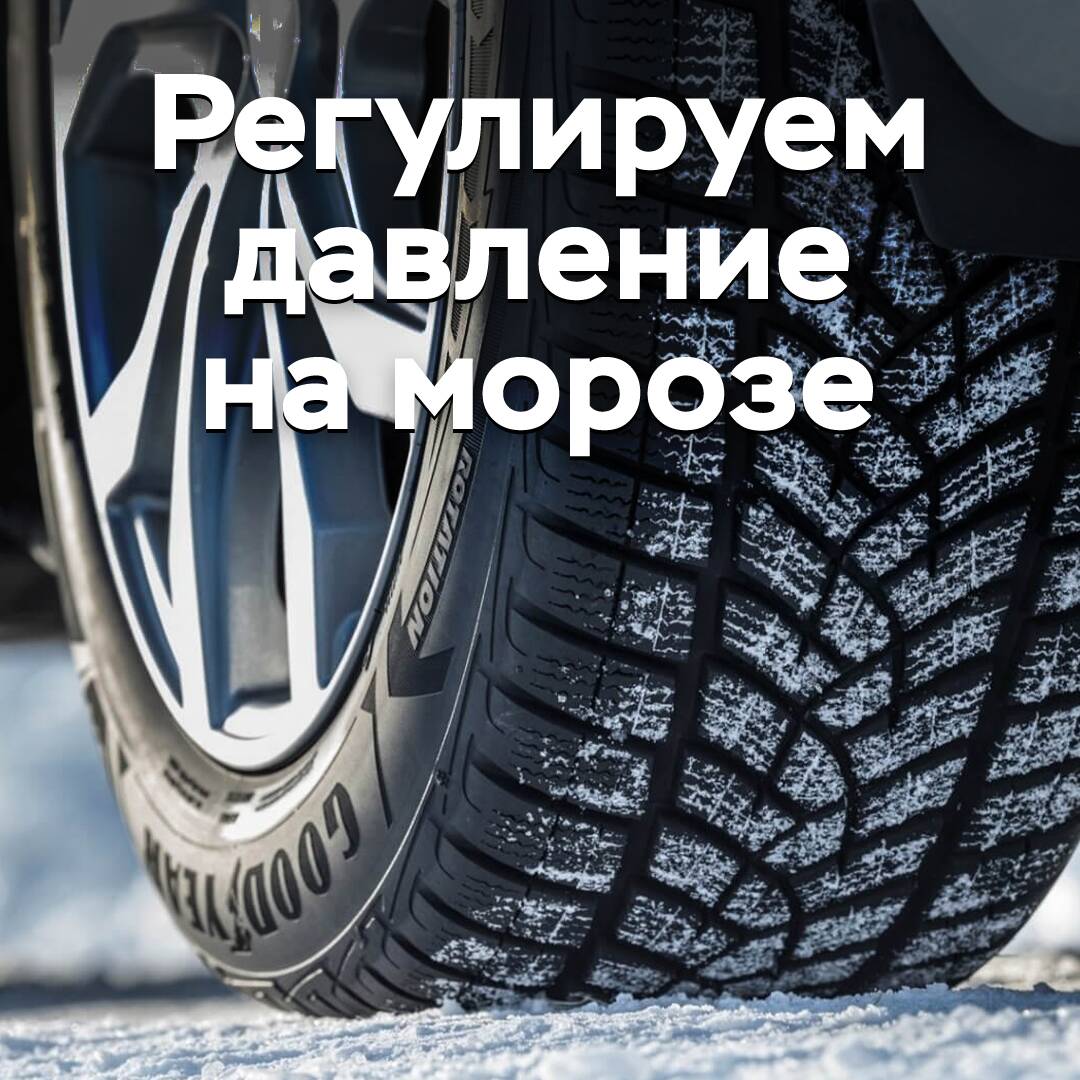
Regulate pressure on frost
Tire pressure is one of the most crucial factors for long and trouble-free operation. When changing tires seasonally, in a qualified tire center, your tires will be inflated to the recommended value, but what's next? How should you monitor your tires? Many people say that tire pressure only needs to be checked during strong frosts.
Despite the fact that the tire is hermetically sealed, natural pressure reduction still occurs. There can be several reasons for this. Let's consider one of the most obvious ones - the change in ambient air temperature. Drivers usually change summer tires to winter ones at an average daily air temperature of +7°C. In winter months, the temperature can drop to -20°C. As the temperature drops, the air density changes and it occupies a smaller volume. With a 20-degree temperature change, the density increases by approximately 8%. The pressure can drop by 0.1-0.2 bar. The difference is small, but if you don't check the tire pressure for a long time, it can affect the tire's characteristics. When driving on tires with pressure lower than normal, you will feel the car's sluggishness, it will respond more slowly to steering wheel turns. Moreover, the traction will be worse, as the contact patch at the point of contact between the tire and the road decreases.
Cold weather is not the only reason why tire pressure can drop. Despite the fact that there is a special hermetic layer inside the tires, the pressure in the tires decreases during operation. In addition to natural air leakage, there are also air leaks at the points of loose fit of the tire to the rim. For example, if the disk is dirty or its paint coating is damaged. Air can also escape through a poor-quality or damaged valve. It is also recommended to regularly inspect and replace it, as it is inexpensive but an important part.
Therefore, pressure should be checked not only in frost, as recommended on the internet, but also with a certain regularity. Look up and memorize the recommended pressure for your vehicle. The information can be found on the sticker on the body pillar. A good habit will be to inspect the wheels every time before starting the movement and check the pressure with a pressure gauge once a month. For this, you can visit any tire center or a gas station with a tire inflation facility. Timely detection of low pressure, first of all, will save your tire from premature failure, and also increase your safety.