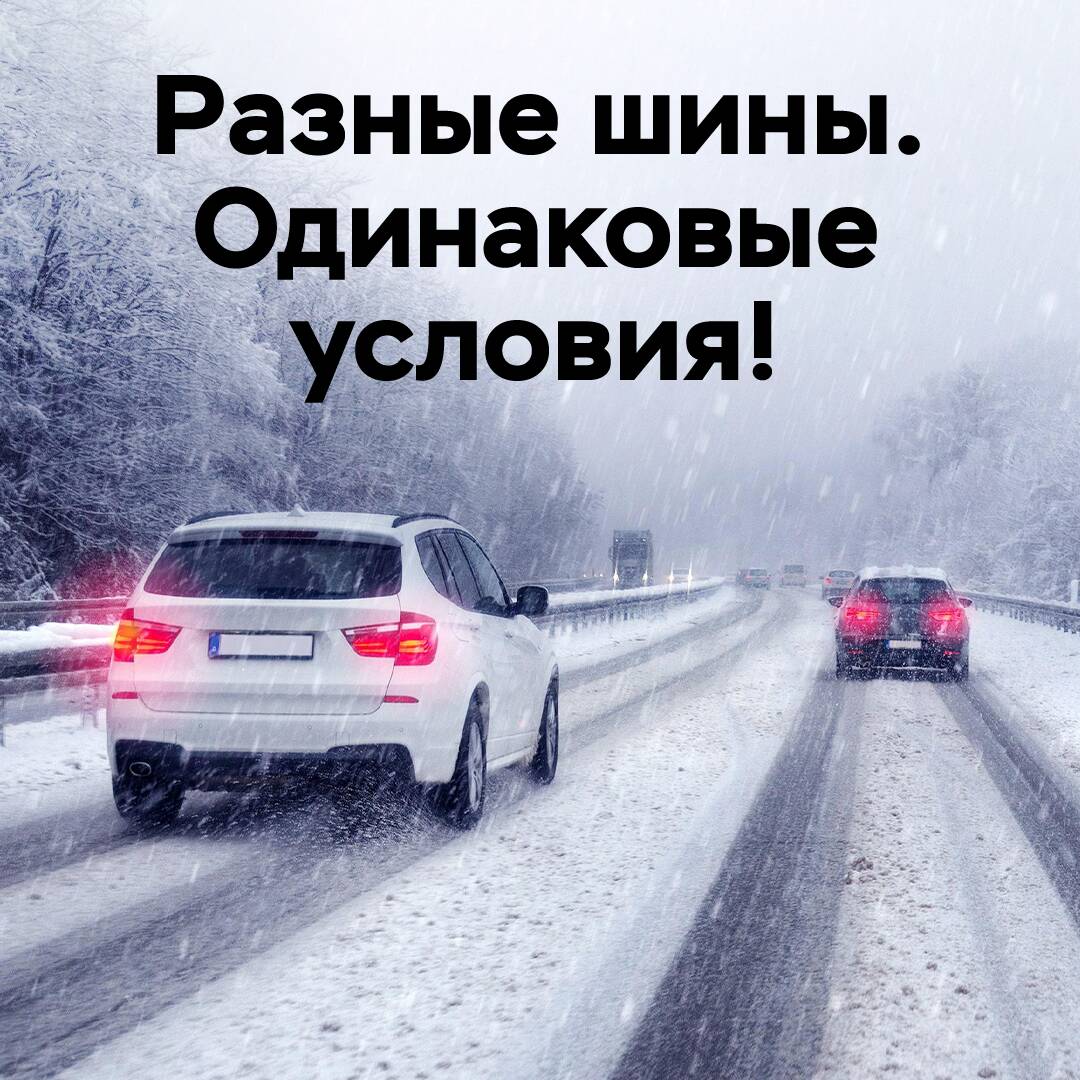
Different tires. Same conditions!
Modern life is diverse and multifaceted. And people in modern society, despite their overall similarity, are often very different, especially when it comes to personal preferences and tastes. Fortunately, the modern market of abundance offers a wide range of goods to suit every taste and preference. And this applies not only to mass-market and everyday goods, but also to more long-term acquisitions, such as automotive products and, in particular, winter tires.
If you take a closer look, you'll notice that despite their seeming "sameness", the tires offered on the market are quite different. At the same time, marketers in the tire industry are not stingy with their proprietary "chips" in their winter lines, such as a new shape of spikes or even the use of walnut shells, to emphasize the uniqueness and "unlikeness" of their offer. If this trend continues, in the near future, tires will be printed on a 3D printer right in the tire center, individually for each customer.
But is this really good? After all, the set of basic requirements for a tire in the winter period remains fairly conservative: safety on winter roads, good handling, and... driving pleasure.
At the same time, the most important thing remains the choice of the correct segment of tires. Winter conditions equalize everyone on the road, and the correctness of your choice when buying tires will determine your safety. One of the most common misconceptions is buying winter tires of the "Alpine" class for mild winter conditions and using them in harsh winter. The tire is simply not designed for this. How to distinguish between different types of non-studded tires, we wrote in a separate article. In addition, you should always keep in mind the current condition of the tires, since with each kilometer traveled, the tire reduces its characteristics on winter roads.