Commercial Transport Issues
Today, it's hard to imagine that, having driven from point "A" to point "B", you won't encounter a single light commercial vehicle along the way. This type of transport includes delivery vehicles in large cities and, most importantly, minibuses for passenger transportation, also known as "route taxis". Thousands of vehicles of this class ply the roads every day. The danger lies in the fact that this type of transport is almost entirely operated on "all-season" tires. These tires are all-season only in the loosest sense, having mediocre performance on snow and a complete lack of traction on ice.
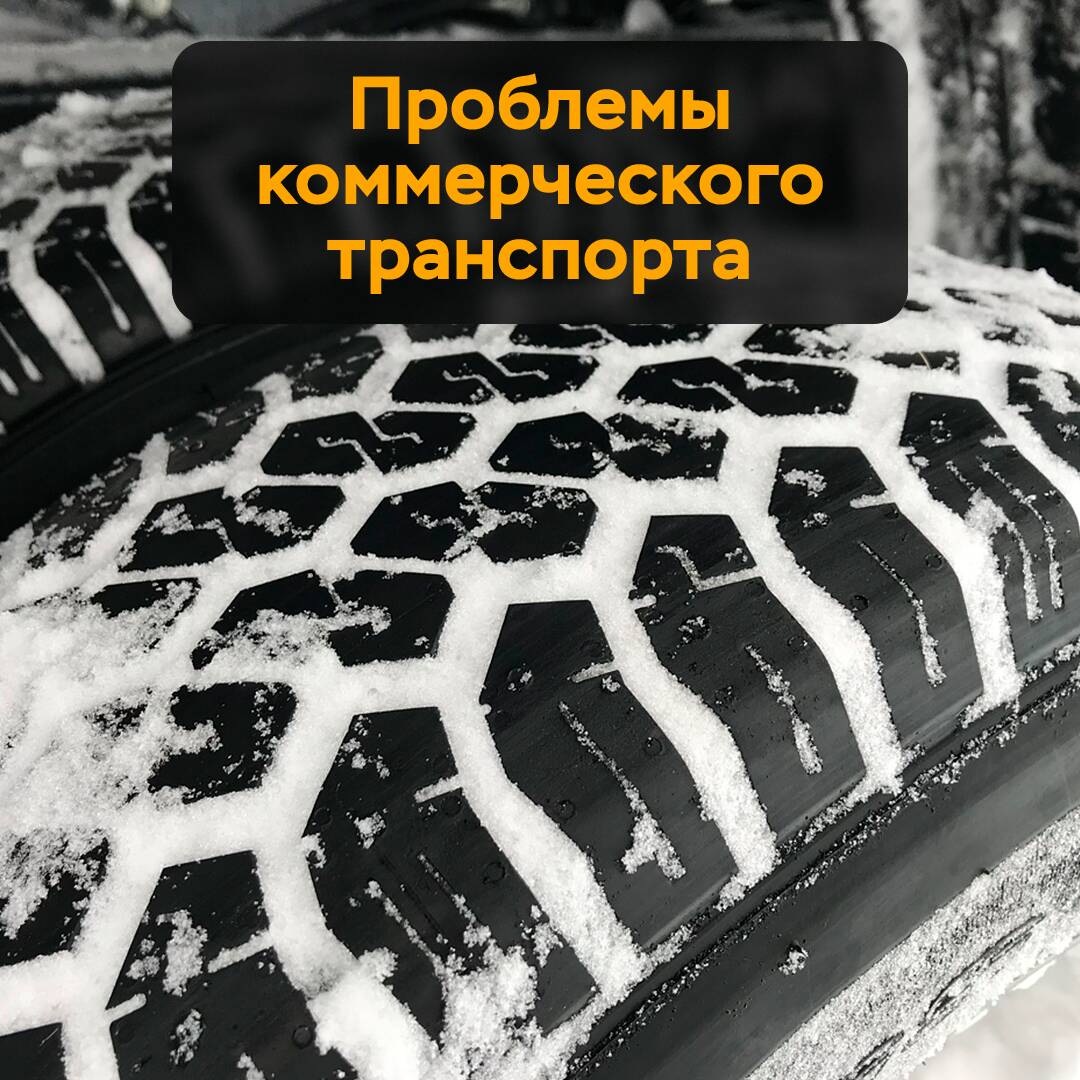
A good example can be seen in vehicles of the "Gazelle" and "Gazelle NEXT" brands. The initial equipment of these vehicles includes "Cordiant Business" tires, which are decent but still summer tires. There's no need to mention the absence of anti-skid studs, but take a look at the photo - the tread pattern doesn't even have lamellas, which are necessary for effective traction on winter surfaces. One might argue that these vehicles have low speeds, but in fact, only a small part of light commercial transport adheres to low-speed limits. Many, on the other hand, are in a hurry to deliver goods, passengers, etc. faster. At the same time, we must not forget about the high inertia due to the high weight.
As we mentioned earlier, commercial transport is often evaluated from the point of view of cost per kilometer. Buying a set of six winter tires and regular tire changes significantly reduces efficiency, and therefore profitability. Remember that there's no such thing as a free lunch, and the contact patch of large light commercial vehicles still requires effective tires to ensure safe handling. Take this into account when driving. Remember that even if you have effective winter tires, the braking distance of the "Gazelle" behind you can be significantly longer. Be careful.