
Advantages and disadvantages of four-wheel drive
"I have four-wheel drive, so I can drive through winter on summer tires."
As strange as it may seem, such a statement can be encountered quite often. Especially often this is found among owners of "off-road tires". In support of their words, such tires can even have winter markings, but at the same time, they are absolutely not winter tires. We have already discussed this issue in a separate article. Today, we would like to talk about four-wheel drive and assist systems and how they help us in winter conditions.
ABS (Anti-lock Braking System) and Vehicle Stability Control Systems
Although the anti-lock braking system, traction control system, and vehicle stability system help to utilize the full potential of your tire, none of these systems actually provide more traction. These systems are capable of regulating or limiting your vehicle's capabilities when accelerating, braking, and cornering only with the traction provided by your tires.

Anti-lock braking systems help prevent wheel lockup and skidding. Thus, while your anti-lock braking system helps maintain steerability and course stability.
On the other hand, a system like "traction control" helps prevent wheel spin by reducing engine power and/or applying the brakes. Thus, while "traction control" also helps maintain course stability, acceleration can be slower.
Vehicle stability systems, which recognize when your vehicle is "deviating" from the intended course (determined by your steering and braking), selectively brake any of the four wheels and/or reduce engine power to help correct excessive or insufficient wheel turn. However, no system, no matter how complex, can defy the laws of physics or prevent reckless driving when you exceed the capabilities of your tires.
AWD (All-Wheel Drive) / 4WD (Four-Wheel Drive) Systems
Four-wheel drive vehicles have become very popular among drivers. While their versatility for year-round use undoubtedly plays a certain role, they are often chosen primarily because their all-wheel drive systems make winter driving easier. The ability of these systems to distribute the vehicle's power between all four tires provides a real advantage when accelerating on slippery roads.
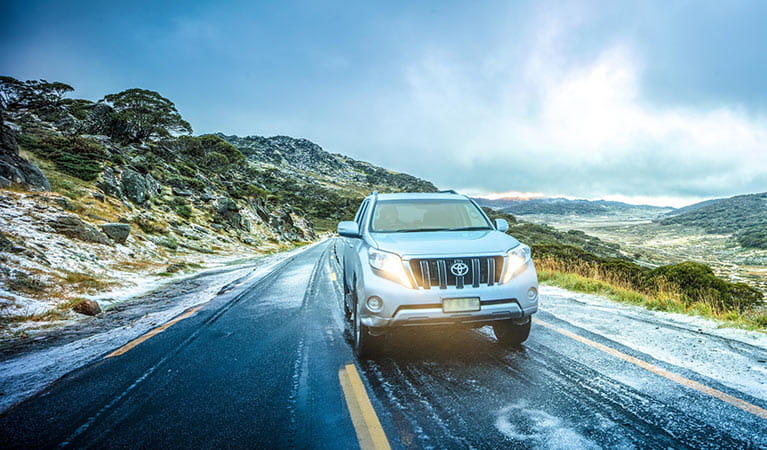
However, it's essential to remember that while the ability of a four-wheel drive vehicle to accelerate on slippery roads provides greater confidence, it actually doesn't provide any unique advantages when the vehicle needs to stop or turn. This is because other vehicles also use all four tires to provide braking and traction in turns. Since four-wheel drive vehicles actually weigh more than their two-wheel drive counterparts, more traction is required to stop or turn a corner.
So, regardless of whether your vehicle is equipped with traction control, stability control, four-wheel drive, or not, it's your tires that provide the actual traction with the road. Obviously, the more traction your tires have to work with, the better. Since most four-wheel drive vehicles come equipped with all-season tires from the factory, optimizing the capabilities of these systems on snow and ice requires the installation of winter tires.