
Presented Pirelli tires for the next Formula 1 season
The new line of Pirelli tires for the next Formula 1 season, which have been reduced in size compared to the current model, made their debut on the Yas Marina circuit in Abu Dhabi. The mounting diameter remains the same, but the tread width of the front and rear tires has been reduced by 25 and 30 mm, respectively. Additionally, the outer diameter of the tires has been reduced by 15 mm at the front and 10 mm at the rear.
The graphic design of the sidewalls has also been updated, with the addition of checkered flag images. "Now the Formula 1 tires have a completely different look compared to any other Pirelli product, both for motorsport and for public roads, while maintaining the historic style of design that is the hallmark of the Milanese company," Pirelli notes.
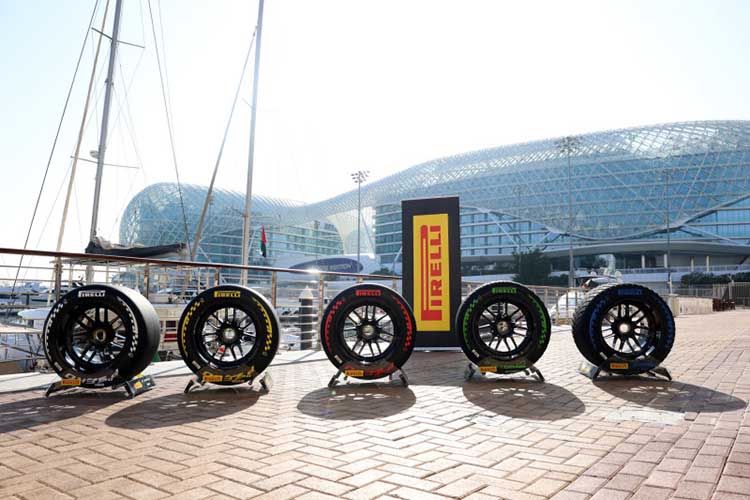
The colors indicating the rubber compound have not changed, and the white, yellow, and red markings are used for hard, medium, and soft tires, respectively, while green and blue are used for intermediate and wet tires.
The 2026 lineup will feature five compounds, from C1 (the hardest) to C5 (the softest), and Pirelli notes that their characteristics are similar to the current compounds, but the working window has been expanded, allowing for different strategies to be used in races. The tread pattern of the wet tires remains the same as in 2025.

Tests of the new tires were conducted at Yas Marina, which were tested by both main team drivers, who used specially prepared "mules", and young drivers who drove 2025-spec cars.
"This test was a great opportunity for all teams to try out the 2026 tires, whose final compounds will be officially approved on Monday," said Mario Isola, director of Pirelli's motorsport division. "During the tests throughout the season, the teams separately tested various versions of prototypes at different stages of development - either with a new construction or immediately with several variants of one compound. Today, they got their hands on the entire new lineup for the first time, which gave them the opportunity to better understand the characteristics of the tires. Using the same cars as in the tests, with the same speed limits, the teams were able to compare the data obtained at Yas Marina with the results of the tests conducted over the past few months. For our engineers, the test was crucial for confirming the differences in characteristics between compounds, including in terms of wear, which we have been working on throughout the year. The analysis of the behavior of the new tires, which have a reduced contact area, also allowed us to check their susceptibility to graining and overheating: two phenomena that may potentially increase due to the new tire sizes. Now we just have to wait until the end of January to see the tires in action at the Barcelona tests, where they will be tested on next-generation cars."

The tests in Barcelona will take place from January 26 to 30, and before that, the new tires can be seen at team presentations, which will take place in the coming weeks.