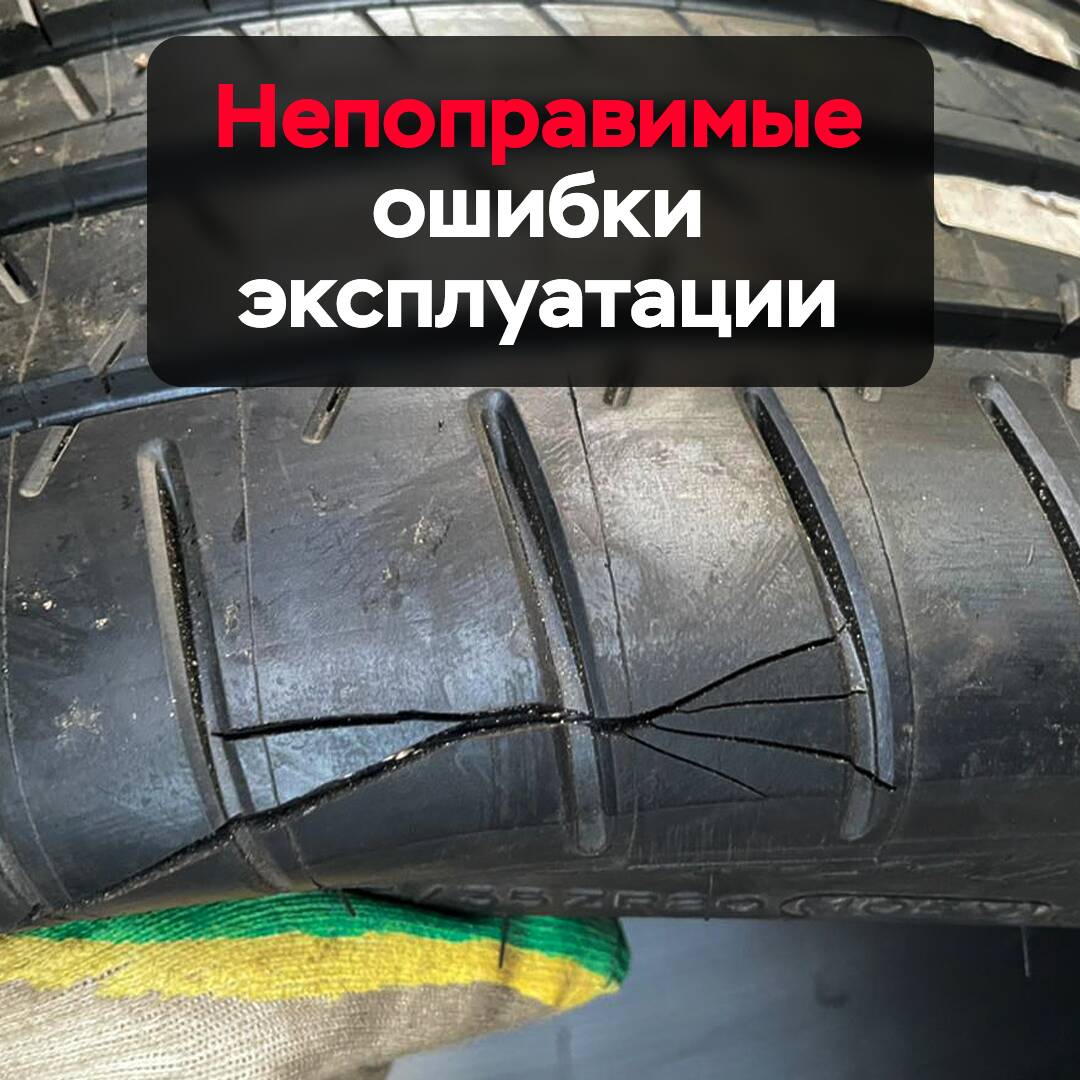
Irreparable operational errors
The winter season doesn't necessarily mean that summer tires should be forgotten, especially when it comes to the sporty segment. At first glance, there seems to be no connection, as using summer sporty segment tires in winter is simply impossible. But that's not entirely true. By tire operation, we mean not only driving on the road but also storage, processing, and applying means to give tires a glossy finish, and here's a very important feature, especially for winter.
The thing is that summer sporty segment tires have very progressive rubber compounds that include elastomers designed to change characteristics as they heat up. That's why there's such a thing as a warm-up lap in racing. But, as is often the case in the tire industry, there's always a reverse effect: when the temperature drops, the tire literally becomes glassy. And the temperature doesn't have to be extremely low. "Sport" segment tires can "freeze" at temperatures of -10°C and -15°C, which is normal for most regions of our country.
When frozen, the tire can be damaged by any careless movement. It can literally crack, as shown in the photo with this article. The cracks can be even smaller. Microcracks of just a few millimeters are enough to make the tire unsuitable for track use.
In this regard, both major tire manufacturers and we do not recommend performing any manipulations with sporty segment tires during the winter period. It's especially important to note that tires should never be thrown. In this case, they will become completely unusable.