
History of the brand: Gislaved
The Gislaved brand has recently become part of the Russian company "S8 Group", which includes the newly acquired assets of the Continental plant in Kaluga, as well as the Cordiant and Bridgestone enterprises. The Gislaved brand is well-deservedly loved by our customers for a long time and quite expectedly has a big history.
The history of Gislaved began in distant 1893 in Sweden. The brothers Carl and Wilhelm Gislow emigrated to the USA in the late 1800s and worked there in the rubber industry. Upon returning to Sweden, they applied their experience to work and decided to found their own company for the production of galoshes and, ultimately, automobile tires. The company's initial name was Gislaved Gummi (Gislaved Rubber). At first, they were engaged in the production of balls and galoshes, but soon switched to bicycle tires in 1904, and the next year they introduced the first automobile tire. Interestingly, the first Gislaved automobile tire was made in just one day, with the personal participation of the general director Wilhelm Gislow.

However, the first Gislaved tires turned out to be short-lived due to the use of several layers of textile fibers without rubber interlayers between them in the carcass. This led to rapid wear. In 1912, the company's management faced the need to revise the tire design after a failure on the road, when the last spare tire failed on the way from the Olympic Games in Stockholm, leaving the car inoperable.
The technical shortcomings were taken into account, and tire production was resumed in 1926 using a new design, in which the layers of textile cord were separated by a layer of rubber. This new model, called Gislaved Nord, was very successful. In 1927, the company began supplying factory tires to Volvo, which led to a significant increase in production volumes.
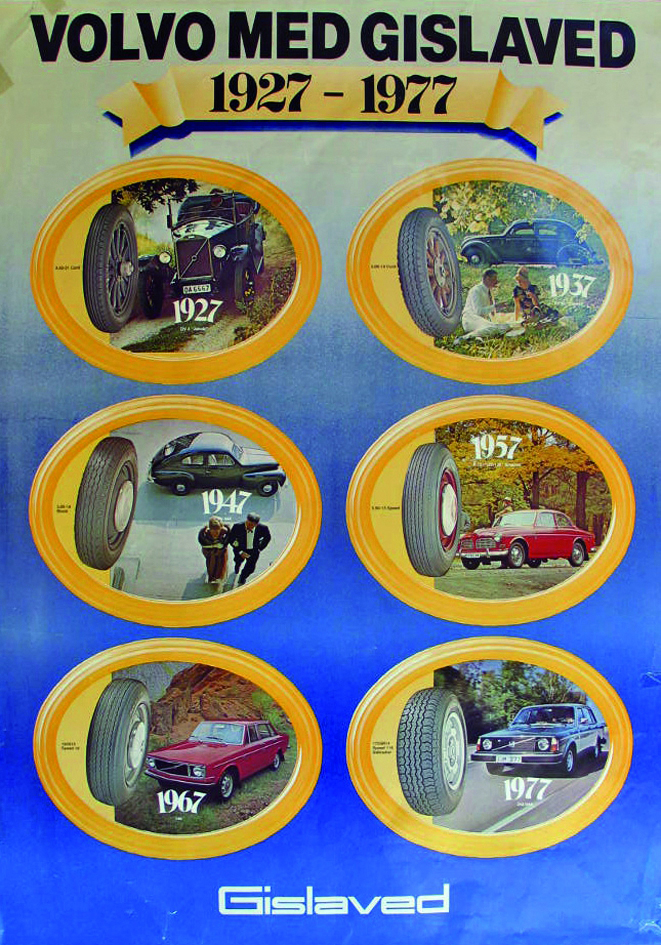
In 1938, the company entered into a technical cooperation agreement with an American rubber company, which made Gislaved tires even more competitive in the market. In 1985, Gislaved began cooperation with the Norwegian manufacturer Viking Tires, which led to their merger under the name Nivis Tyre AB with its headquarters in Gothenburg the following year. In 1991, Continental AG acquired 49% of Nivis Tyre AB's shares, and a year later acquired the remaining shares, becoming the full owner.
The popularity of the Swedish brand in Russia can be explained by the fact that tires of this brand were very popular in winter. This is quite logical: Scandinavia is a place of abundant snowfalls, sharp temperature fluctuations, ice, and sudden rains - all these conditions require an innovative and intuitive approach. Thanks to this thinking, the winter tires of this brand were of the highest quality. Moreover, few people remember this, but the second-generation Gislaved Nord Frost tires had plastic studs. This was a phenomenally breakthrough technology for its time. Even today, not all manufacturers can implement this technical solution in mass production.
The historical production in Gislaved was closed in 2002, and, as we mentioned above, the rights to use this brand were fully transferred to the new owners from Russia.