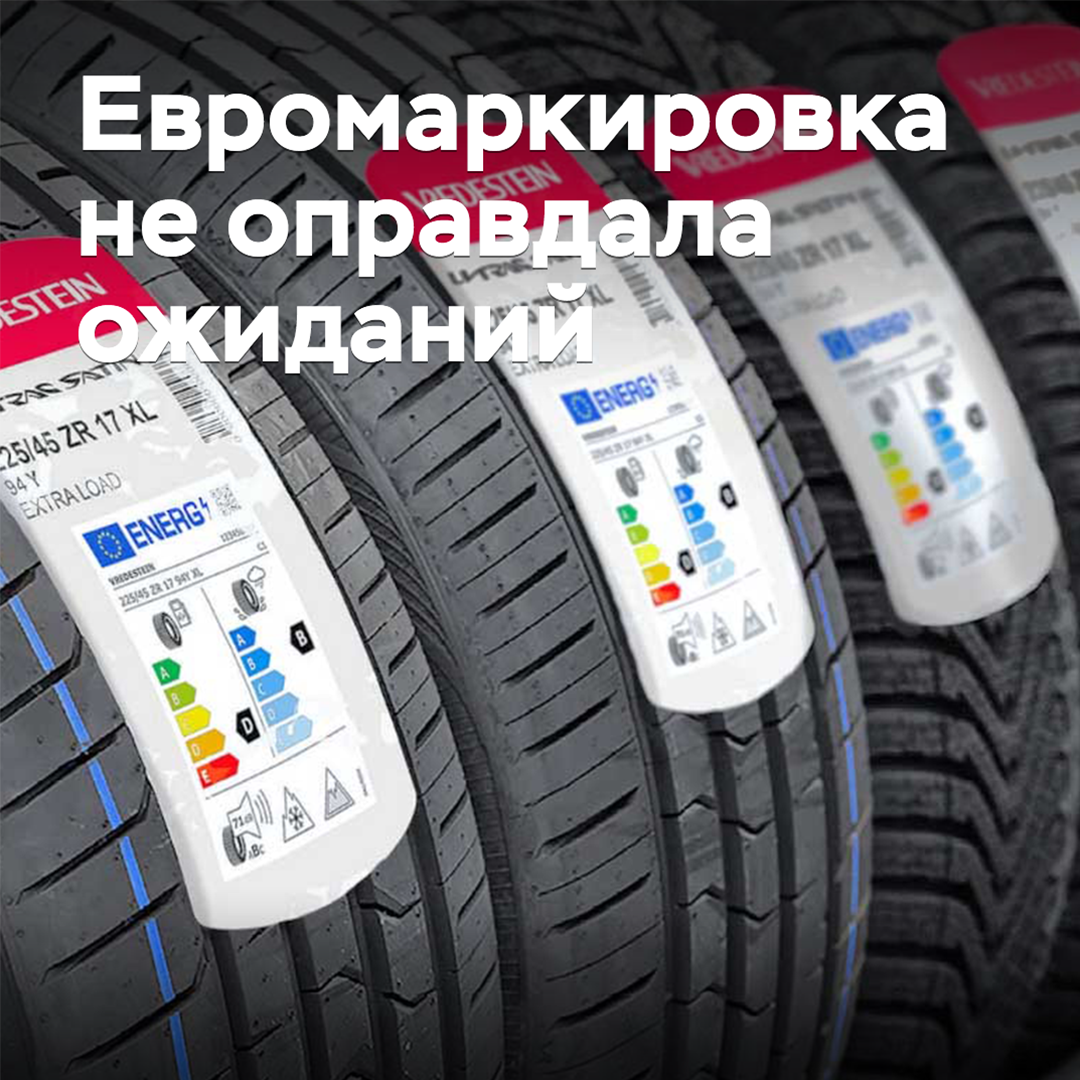
EU label did not meet expectations
Introduced in 2012 and updated in 2021, the European tire label — which rates tires based on three parameters: rolling resistance, wet grip, and external noise — was supposed to increase the demand for tires with the highest level of efficiency and economy, contributing to both road safety and reduced emissions. However, as a study conducted by the European Tyre and Rubber Manufacturers' Association (ETRMA) in collaboration with Lizeo has shown, this has not happened, and tires with low ratings on the euro label remain the most widespread.
ETRMA (now transformed into Tyres Europe) Secretary General Adam McCarthy acknowledges that "not enough consumers are aware of the labeling and use it as a guide when choosing tires," and also adds that another factor has played a role, namely the growing popularity of budget tires with low ratings on the label but attractive prices.
"The EU label is intended to encourage consumers to opt for tires with the best characteristics," he stated. "However, despite its introduction, the tires in the fastest-growing segment are also the least efficient, and these are budget-class products. For this reason, the average rating still stands at 'D' for rolling resistance and 'C' for wet grip."
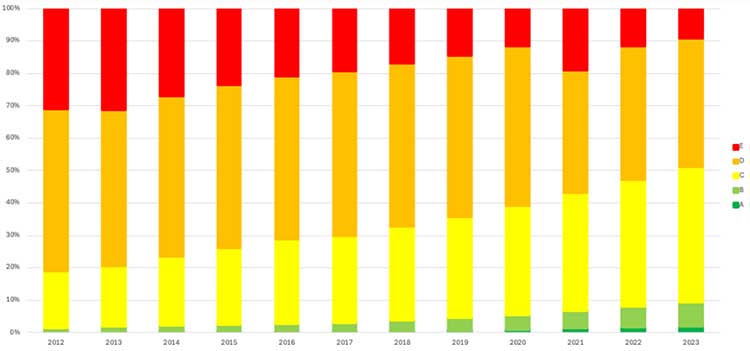
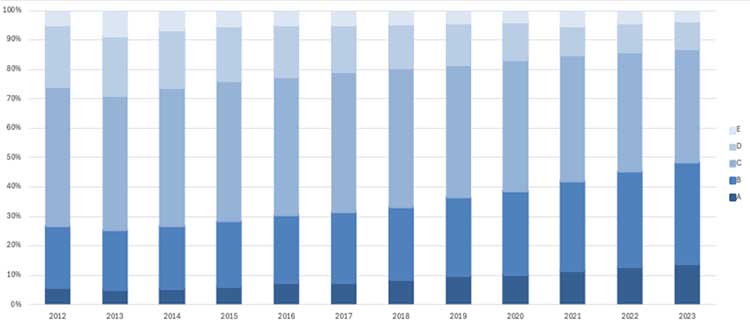
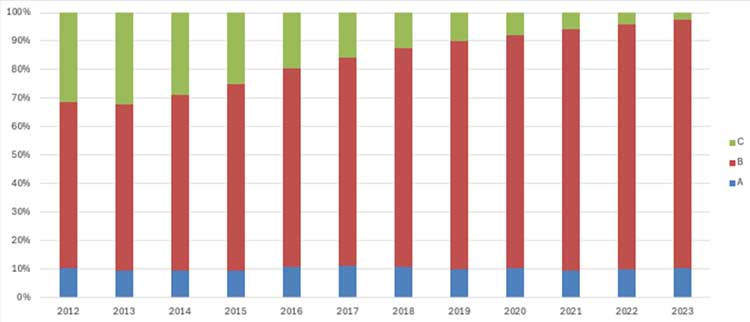
To change the situation, the organization calls on EU member states to stimulate the use of high-performance tires in public procurement and take other measures in this direction. "Greater public awareness and consistent use of labeling will drive innovation and increase demand for tires with the best operating characteristics," the association adds.
Photo: Apollo Tyres