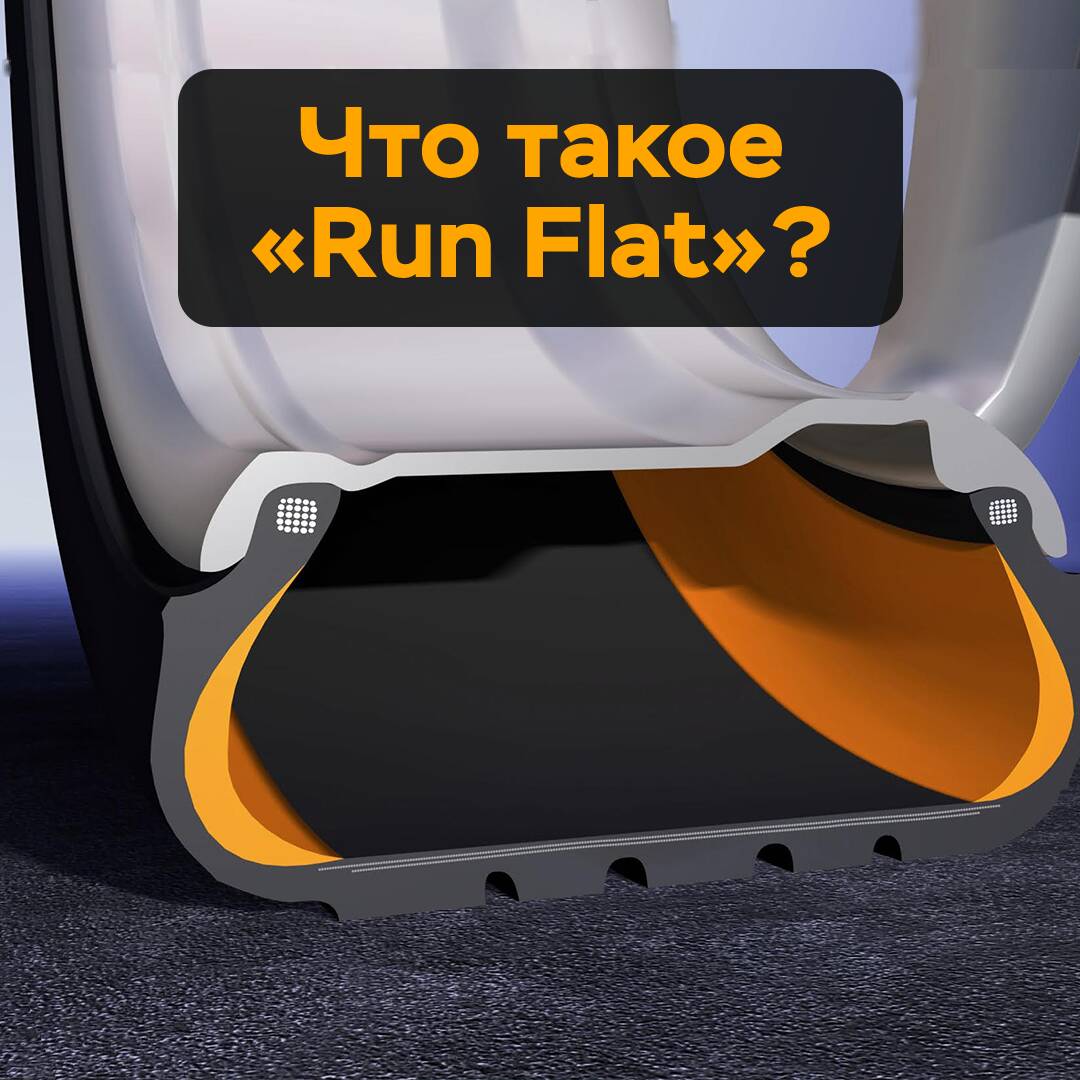
What is "RUN FLAT"?
Self-supporting tires have long been a familiar presence on the tire market, but the technology itself is not standing still, and there are changes, so this article will be of interest to both those who are familiar with it and those who are hearing about it for the first time.
The idea of self-supporting tires was intended to solve the problem that all manufacturers face - the problem of pressure loss and tire failure. Yes, indeed, at the very beginning, it was a breakthrough in tire manufacturing, but still not without drawbacks. Car manufacturers gladly accepted self-supporting tires, getting rid of the spare wheel, increasing the space in the trunk and reducing the weight of the car. It seemed that everything was fine, the spare wheel was a rudiment that was no longer needed. But everything is not so simple...
Car owners met the novelty with negativity, and not without reason.
First of all, comfort was significantly reduced. The maintainability of self-supporting tires is maintained due to the thicker sidewalls of the tire, which can travel without pressure up to 100 km at a speed not exceeding 80 km/h. Obviously, in terms of comfort, such tires simply cannot compete with regular ones. Of course, automakers seized on this technology with great optimism, because, as we said above, these tires significantly simplified the design of the trunk. After all, according to the idea, even the "dokatka" is no longer needed.
As it turned out, it is needed!
Due to the thicker sidewalls, it is almost impossible to mount the tire on a disc without a special machine. Not always within a radius of 100 km there is such a service, and therefore, replacing a tire or repairing it can become a problem. With which car owners faced from the very beginning. Therefore, many were forced to buy a spare wheel and place it in the trunk, where, for obvious reasons, there was no special compartment for it.
Taking into account the high price, low comfort level, and unprepared infrastructure of service centers, self-supporting tires were an undesirable option among buyers, but over time, the situation changed. More and more tire services can provide a service for mounting such tires. Now it's harder to find a tire fitting service without such an option.
The issue of comfort is also gradually being resolved. A number of manufacturers have announced an increase in the elasticity of the sidewall while maintaining the characteristics.
It is also worth noting that the names of this technology are commercial and each manufacturer has its own.
* Bridgestone - RFT
* Michelin - ZP
* Continental - SSR
* Goodyear - RunOnFlat
* Dunlop - ROF
* Yokohama - ZPS
* Pirelli - Run Flat
* Nokian - Flat Run
* Hankook - HRS
The principle of operation of these tires is the same.
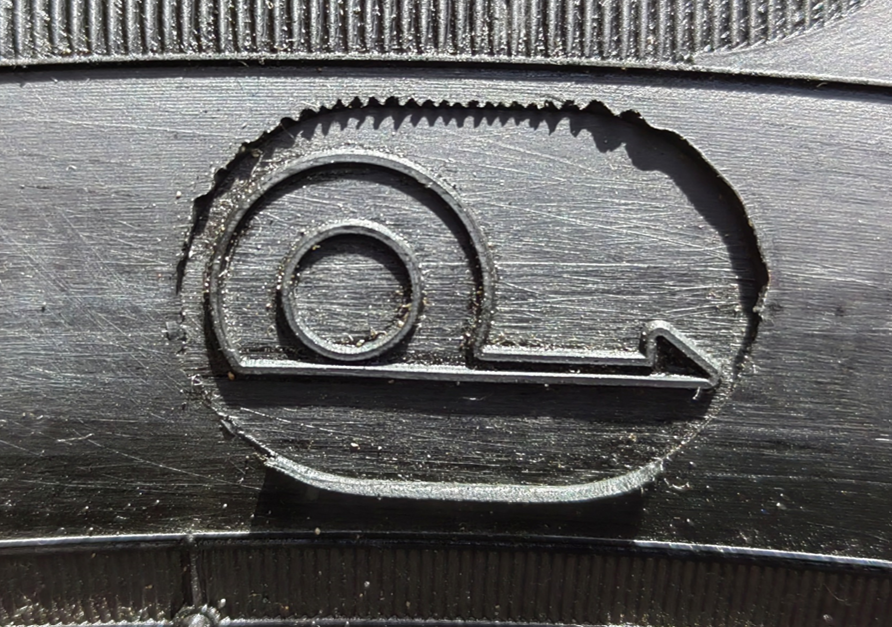
Also, in 2006, an amendment was introduced to the European Regulation on the conformity of Run Flat tires, based on ISO 16992.
This provision allows tire manufacturers to put a marking in the form of a symbol resembling a "snail", and the RF marking to the size designation, which replaces R, meaning the radial construction of the tire (e.g., 205/55 RF 16). These two letters indicate that the tire can withstand the ISO 16992 test.
It is important to note that the strength of the tires does not mean their invincibility. Even tires with such thick sidewalls can be damaged from standard pinching between the disc and an obstacle.