What is a "working rubber compound"?
The rubber compound of the tire consists of dozens of components, each with its own purpose. All components are added to the tire composition with the calculation that when the rubber compound transforms from a plastic state to an elastic one during the vulcanization process, they will be able to provide a full-fledged product capable of withstanding external environmental aggression and providing the necessary characteristics. Each tire model has its own functionality, and depending on it, the composition of the rubber compound is determined.
There are models where the main characteristic is strength, namely not only of the carcass but also of the rubber on tear. As a rule, these are models of the A/T and M/T segments. Remembering that a tire is always a balance of characteristics, we understand that it is not necessary to demand impeccable traction from such tires. While the sports tire segment can boast of traction, it has the lowest resource, not to mention that under certain conditions, tires can literally shatter like glass.
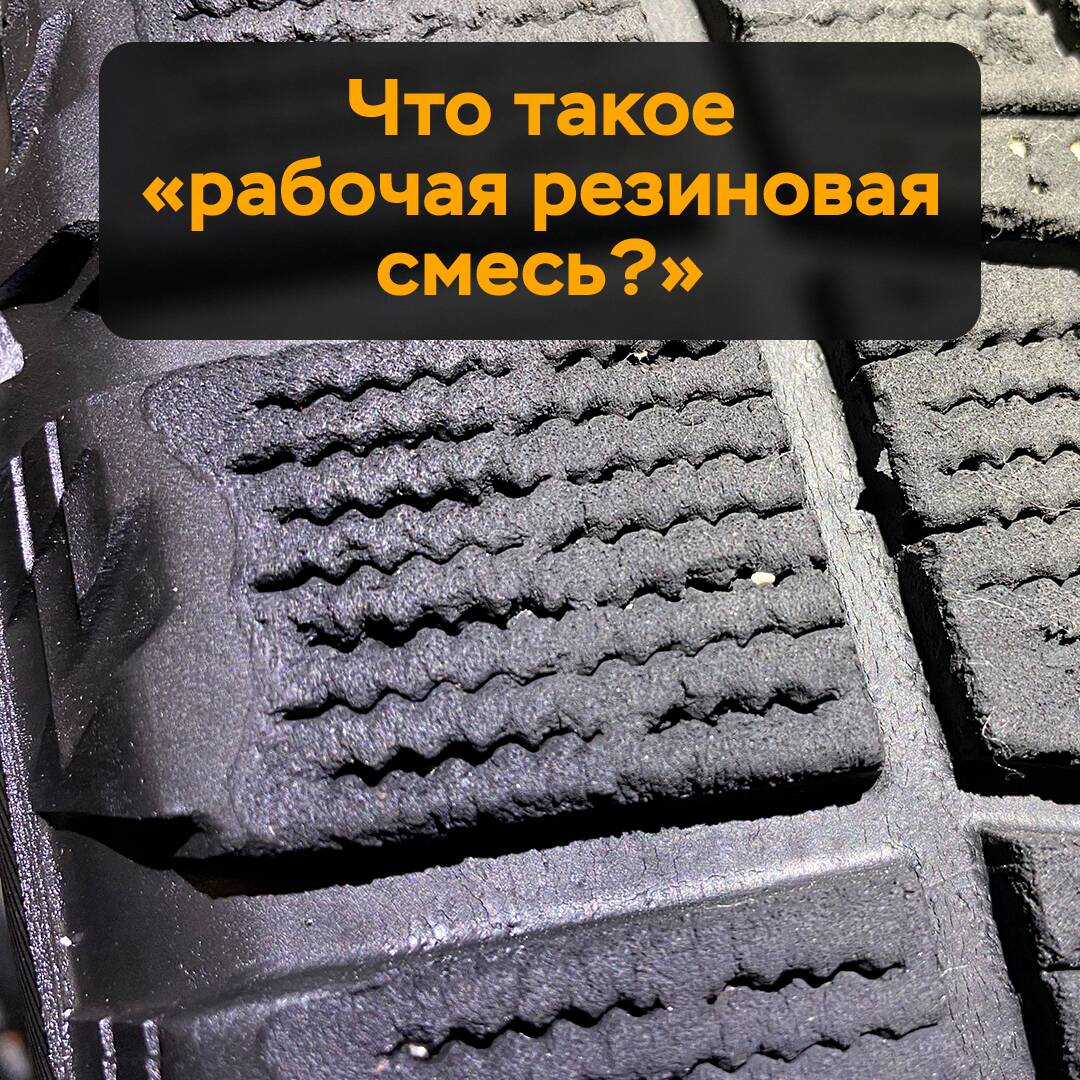
It is also important to understand that any tire has a so-called "working rubber compound". As a rule, it is located in the area that contacts the road. This is relevant for winter tires, and it is worth noting that this is one of the most expensive components. The winter rubber compound must provide traction and maintain elasticity even at extremely low temperatures. The manufacturer understands that there are regulatory requirements that, when reached, the tire cannot be operated, so, for the sake of economy, the rubber compound intended for winter conditions is only laid up to a residual tread depth of 4 mm. This boundary is very well visible in the photo for this article.
That's why it's essential to understand that operating winter tires with a tread depth close to 4 mm is not only not permitted from a legal point of view but also simply unsafe.