The big summer tire test from Auto Bild - 2025
In the main part of the large summer tire test in size 225/40 R18 from Auto Bild, 20 participants passed, who in qualification were able to demonstrate good enough braking qualities on dry and wet asphalt. In total, 52 tires participated in the qualifying round, and two products from Chinese brands made it to the finals: Linglong Sport Master and Sailun Atrezzo ZSR2.
In the main part of the test, the tires are compared according to a number of key parameters, and one of the differences of the Auto Bild tests is that experts also evaluate the resource of the tires, as well as calculate how much a thousand kilometers of the way will cost based on their cost. In addition, in order to show how bad cheap tires can be, a tire under the Autogreen brand was tested in part of the test, which was the worst in the qualification.
Test participants:
Autogreen Smart Chaser SC1 (out of competition)
Falken Ziex ZE320
Goodyear Eagle F1 Asymmetric 6
Nokian Powerproof 1
Wet asphalt
In the braking test on a wet surface, all participants show a good result, which is not surprising, since they have already confirmed their effectiveness in this regard during the qualifying stage. It is worth noting the very good result of Linglong, while the indicators of Autogreen speak for themselves.
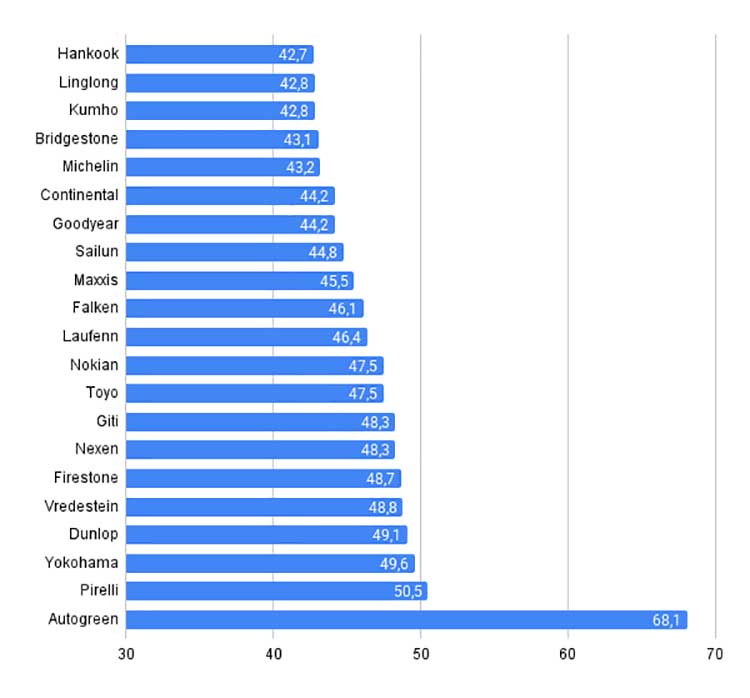
Linglong also has very good lateral stability on a wet surface, and most other tires also optimally maintain traction when subjected to transverse loads, and tires that did not fit within 15 seconds received average ratings. Autogreen again significantly lag behind the others.
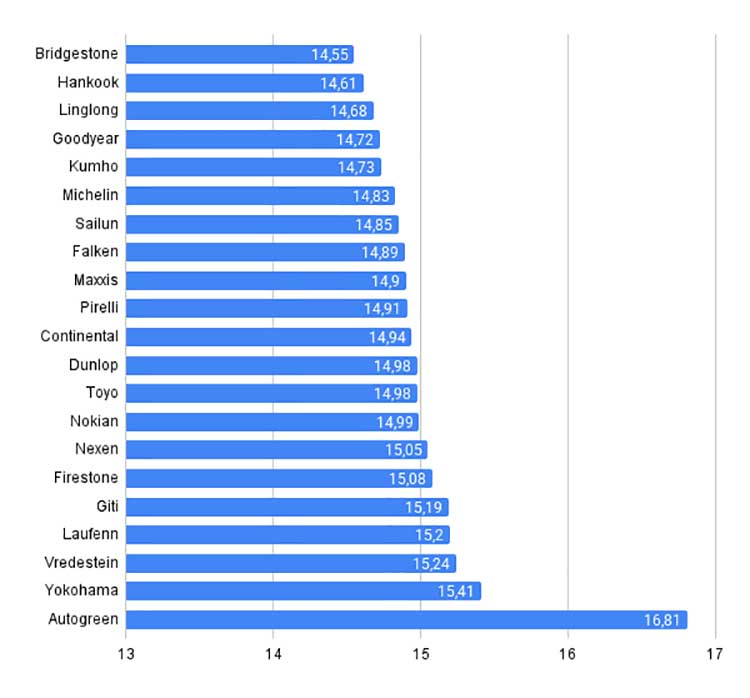
In the handling tests, Falken and Kumho become the best, but here, too, all participants, except for Autogreen, did not have any special problems.
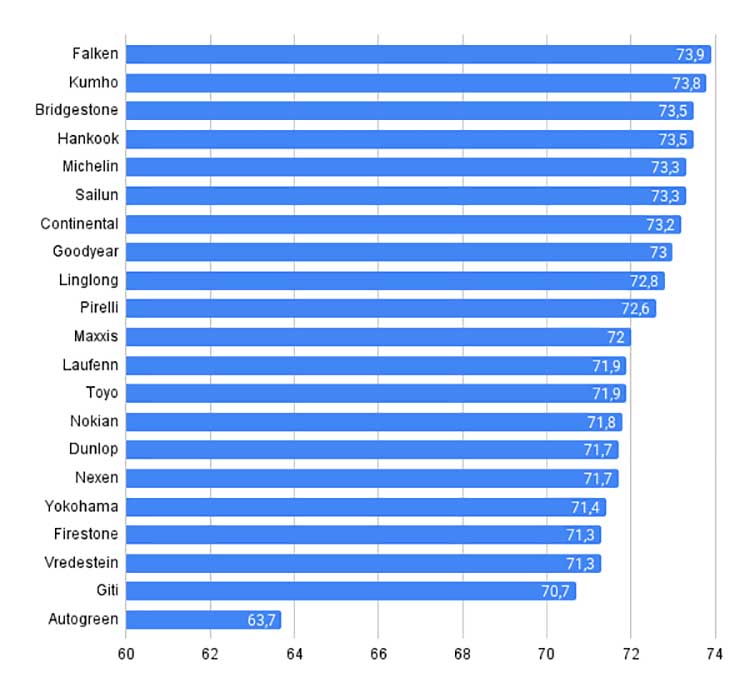
All tires also cope optimally with both longitudinal and transverse aquaplaning, and only Laufenn lose traction relatively early when entering a puddle while turning.
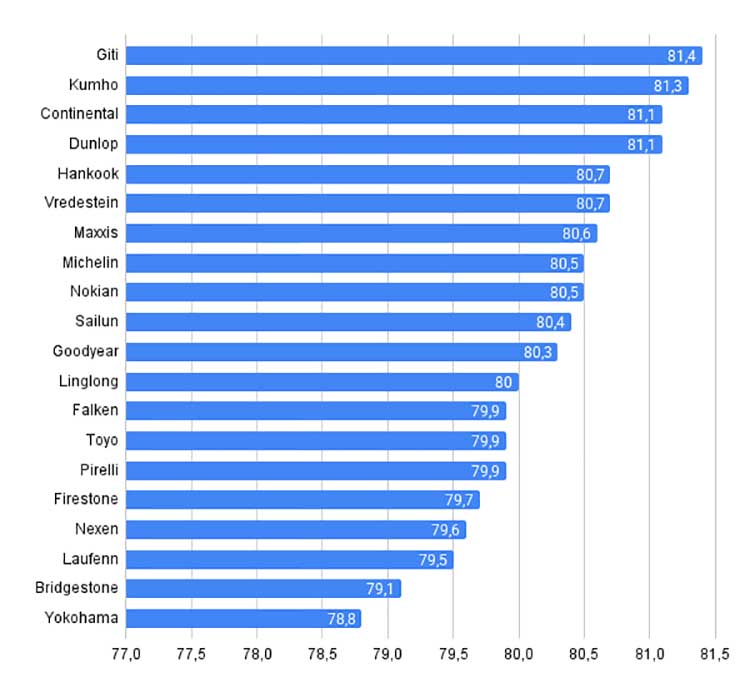
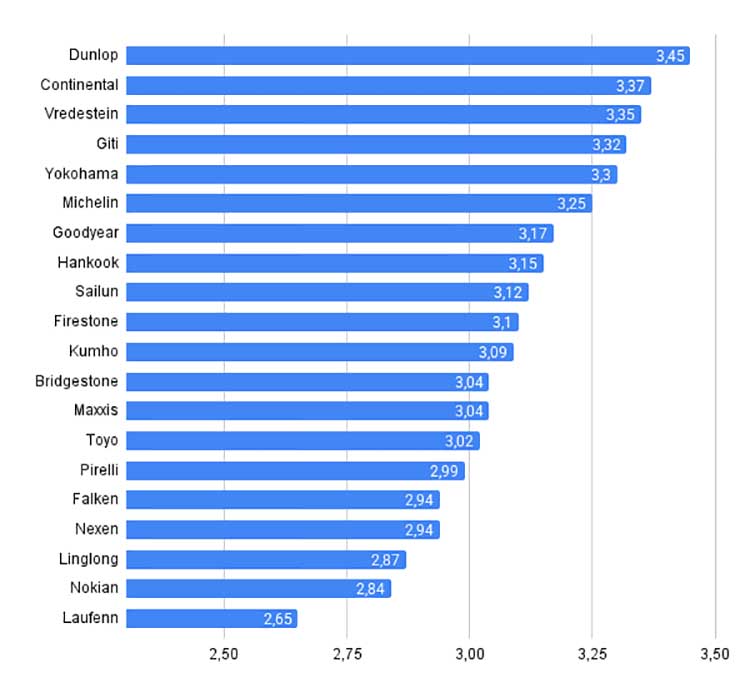
According to the results of all tests on a wet surface, the best were the tires Hankook and Kumho, which were slightly behind Michelin and Bridgestone. At the same time, Pirelli had too long a braking distance on a wet surface and low aquaplaning resistance for a premium product (possibly due to the fact that a tire with homologation from Audi was tested, and car manufacturers often ask to reduce rolling resistance, which can negatively affect performance in rainy weather), and as for Autogreen, their results were "catastrophic".
Dry asphalt
On a dry surface, the shortest braking distance was at Bridgestone, which also showed good lap time in the handling test, although they conceded to the tires from Hankook and Goodyear (the differences in the behavior of the best tires were insignificant, the experts noted). Autogreen again lag behind, and in the handling test, the cheap tire was able to overtake Nexen.
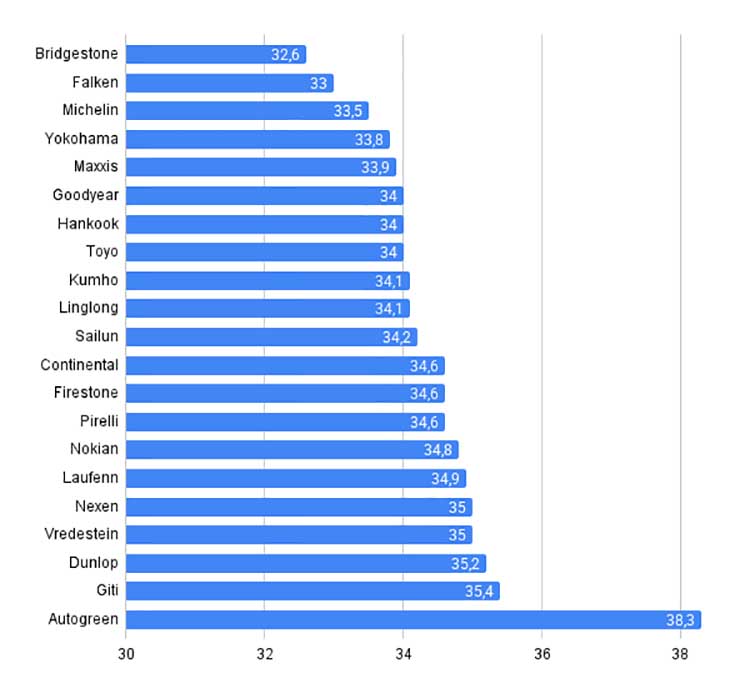
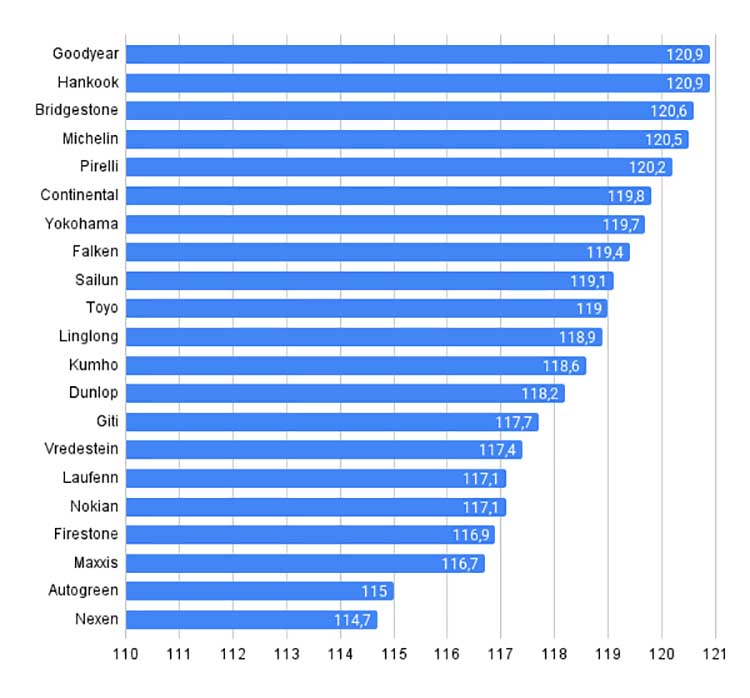
In the noise test, measurements were taken outside the car, and the first place was taken by Goodyear, followed by Nexen and Falken. At the same time, all participants received "Good" in this discipline.
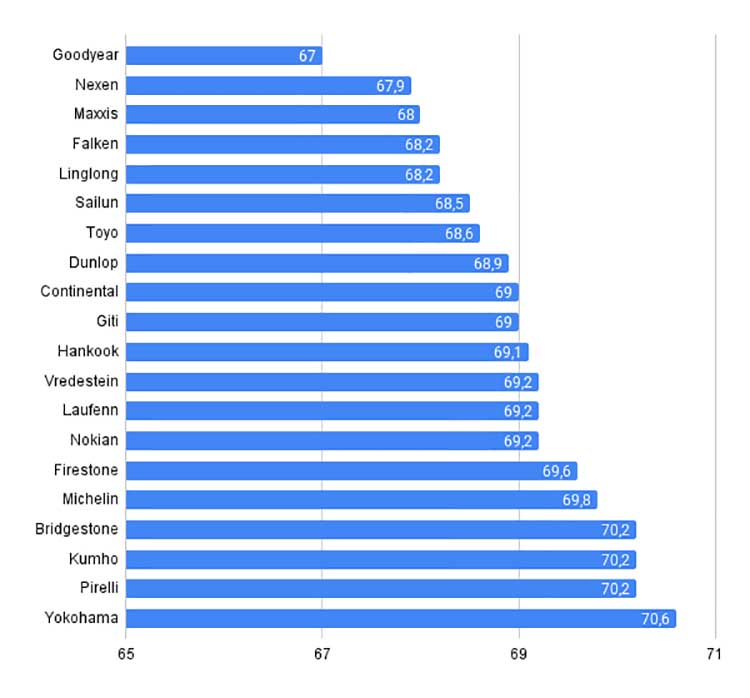
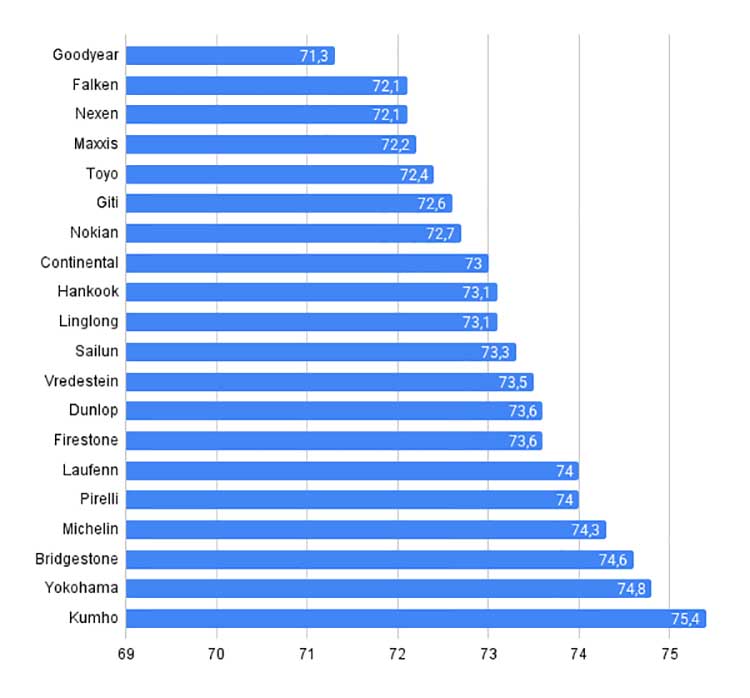
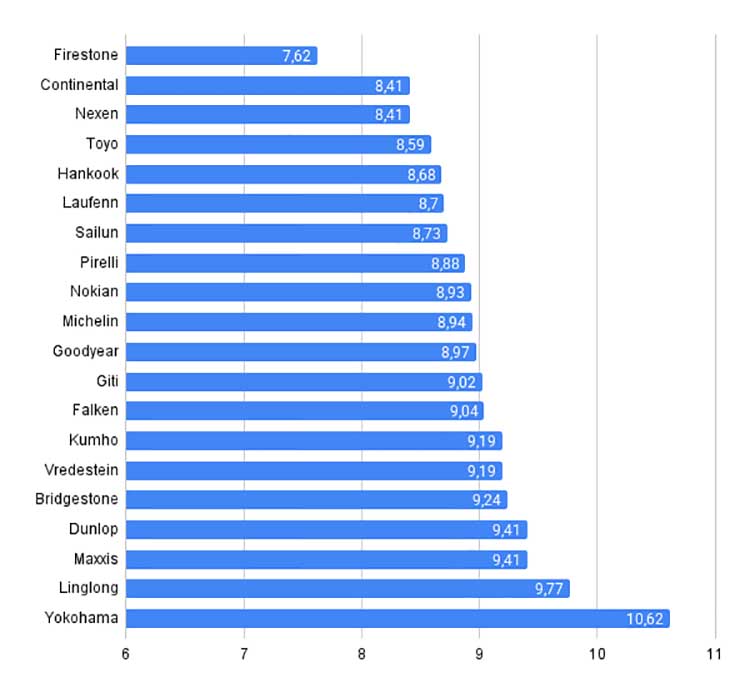
The Firestone tire was able to stand out from the competition in the rolling resistance tests, but here, too, all participants coped well with the tasks, and only Linglong and Yokohama received a "Satisfactory" rating.
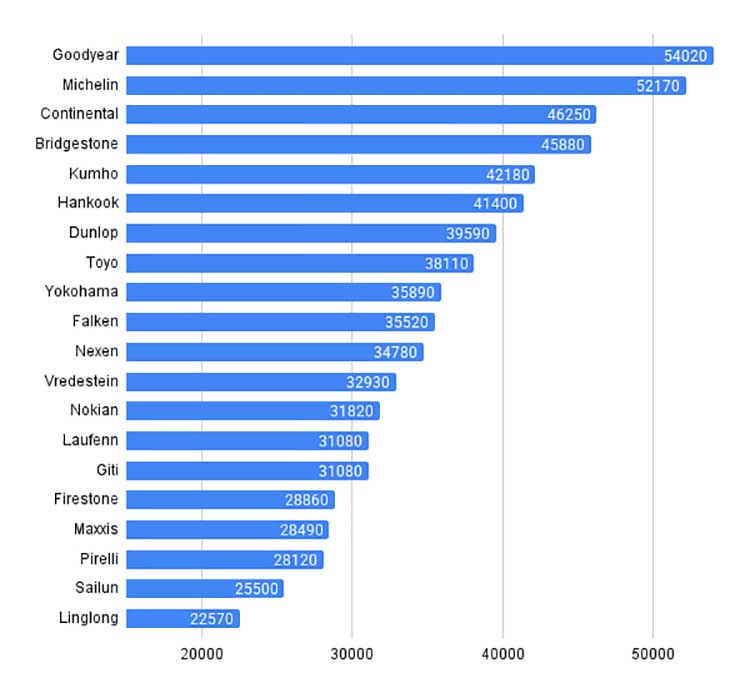
The most durable tires according to the test results were Goodyear and Michelin, which can travel more than 50,000 km. At the same time, both tires from Chinese brands showed very weak results, and their resource is twice as low as that of the leaders.
According to the ratio of potential mileage and price, the best were Goodyear, Kumho, and Toyo. The Linglong tire, with its very high wear, took the penultimate place, but the premium Pirelli had an even worse result, which significantly spoiled their final score.
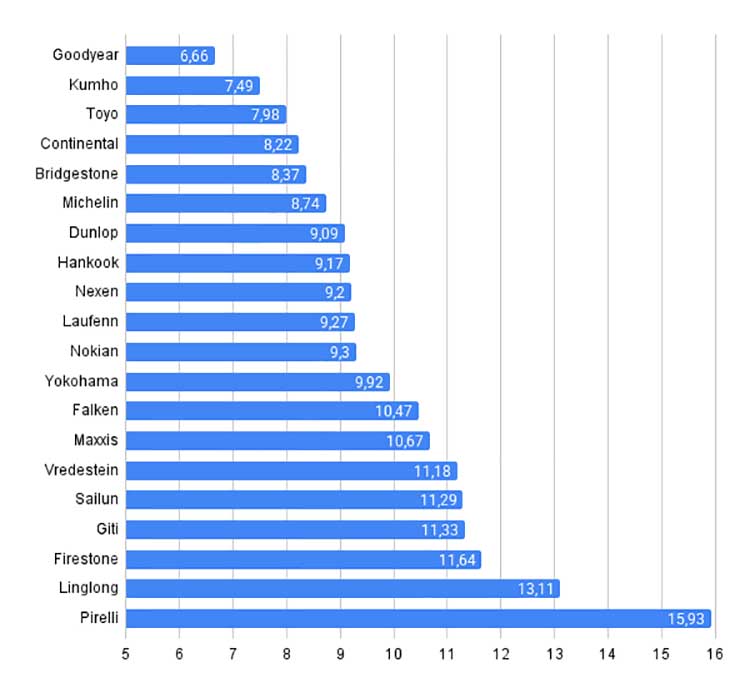
Test results
The first place in the overall test was shared by Goodyear and Michelin, which both provide a high level of safety, including in terms of braking on a wet road. In addition, both tires have excellent wear resistance, and Goodyear was also recognized as the most profitable purchase.
Behind the leaders are the tires Bridgestone, Continental, Hankook, and Kumho, which also earned the same number of points and did not show any significant drawbacks in any discipline. Bridgestone had damage to the tread after high-speed maneuvering on the track, but otherwise, these are very effective tires in any conditions; Continental combines good handling with high resource; and the results of the new product from Hankook, which also showed optimal driving characteristics and durability, suggest that the claims of the Korean brand, which regularly attributes itself to the premium segment, begin to justify themselves. As for Kumho, they work well on both dry and wet surfaces and also received additional points for the profitability of the purchase.
Next are the tires that had a relatively low result in at least one discipline, and Falken ranks seventh, with good braking properties and low noise, but limited resource, and eighth are Toyo, which received a good rating for the price-to-resource ratio, but at the same time have not the best lateral grip on a wet road. Dunlop is slightly lower, which can serve for a long time, but at the same time tend to skid on a wet road.
The top ten were able to fit, even despite very high wear, the tires from the Chinese Sailun, and the experts noted that, in general, manufacturers from China are clearly beginning to catch up with their Western competitors, and although Atrezzo ZSR2 has a problem with durability, but in terms of driving characteristics, they are at least not inferior to tires from much more famous brands, and this is also true for Linglong, which took 11th place.

The 12th place went to the tires from Maxxis, which showed themselves well on a wet track, but on a dry surface, they conceded to the leaders of the test, and they also have a limited resource and increased rolling resistance. Increased wear also hindered the tires Vredestein, while Laufenn turned out to be very comfortable and also effective in terms of braking, but they also have a somewhat limited resource. The tires Nexen also do not have outstanding wear resistance, and they respond to the driver's actions on a wet surface with some delay, but at the same time, they resist aquaplaning well and help save fuel. Nexen and Laufenn showed the same result as Pirelli, and for them, 14th place is an openly weak result, which is due to the fact that P Zero combines a high price and low resource, due to which they became the worst in terms of the cost of a kilometer of the way.
The 17th place was shared by Nokian (the tires have good braking properties and low noise, but limited resource and a strong tendency to skid) and Giti (in most disciplines, the tires behaved balanced, but they have relatively low lateral stability on a wet surface), and behind them are Yokohama, which should improve their performance on a wet surface. The last place went to the tires Firestone, which surpassed all competitors in terms of fuel efficiency, but at the same time, they react slowly to steering wheel turns and have average aquaplaning resistance.
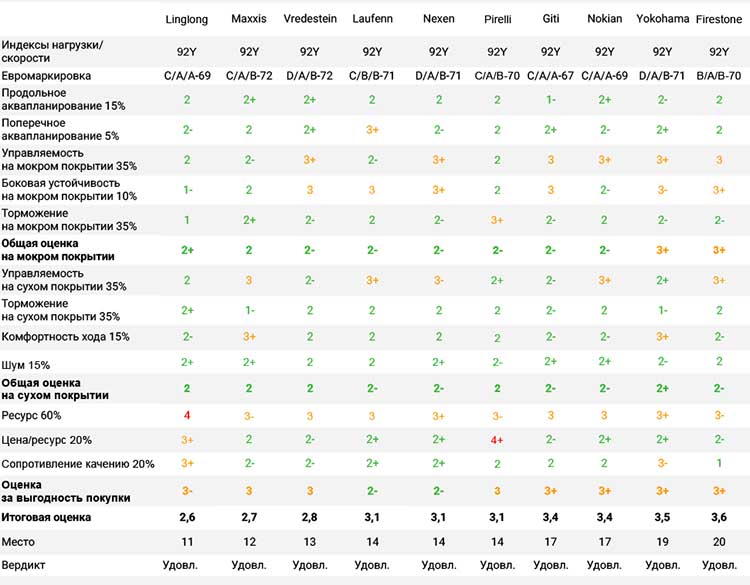
Source: Auto Bild