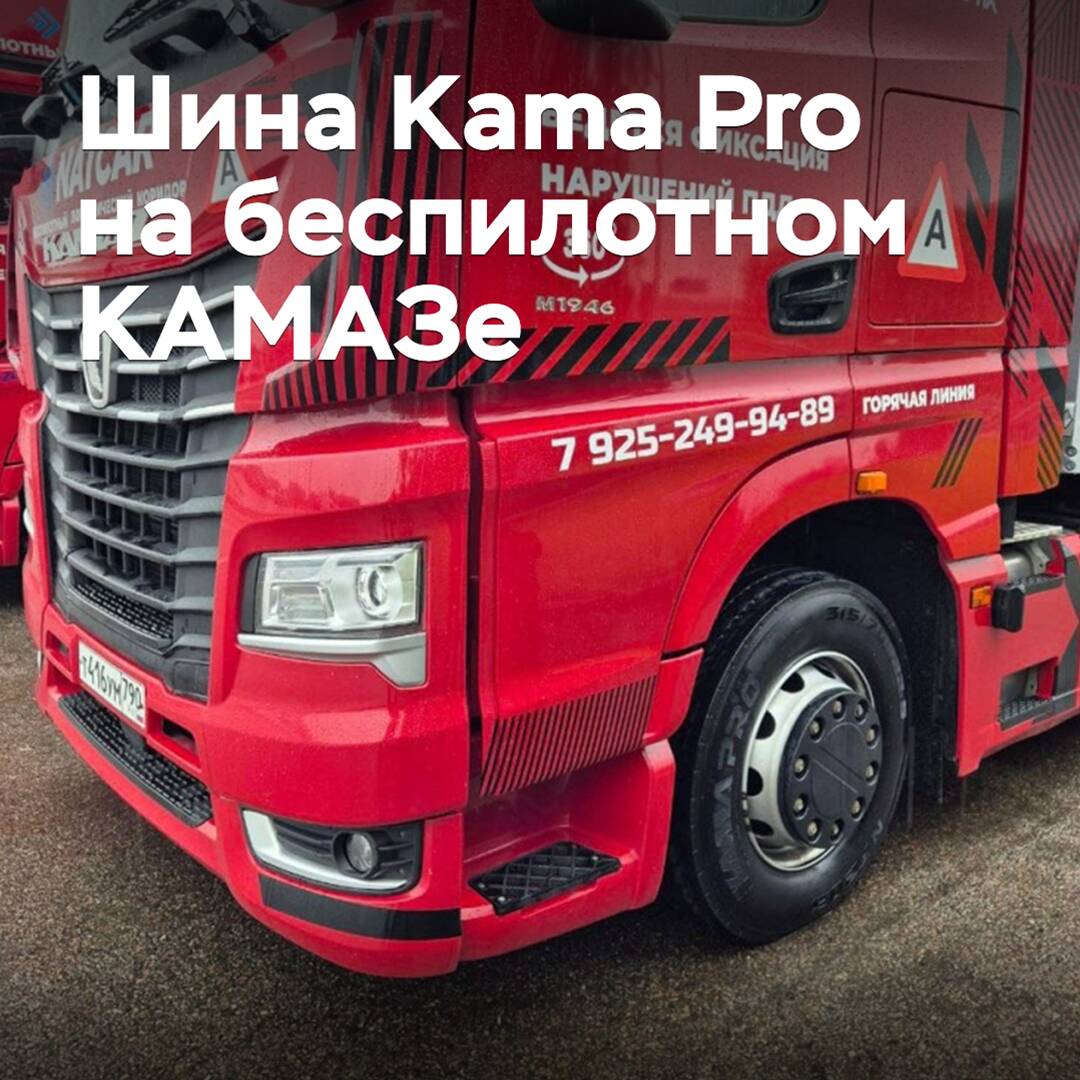
Autonomous KAMAZ successfully passed the test on Kama Pro tires
All-steel cord tires Kama Pro NF 230 were installed on the second-generation unmanned truck from KAMAZ, which was presented at the St. Petersburg International Economic Forum (SPIEF-2025). The new unmanned vehicle, called "Mayak-2", was personally tested by the head of PJSC "KAMAZ" Sergey Kogogin, who drove it 150 km from Solnechnogorsk to St. Petersburg along the M-11 "Neva" highway.
As noted by Timur Sharipov, Executive Director of TD "Kama", the "Mayak-2" project is "an example of how localized Russian products can meet the requirements of the most advanced transport".
"For Kama Tyres, participation in such initiatives is a strategic task, where we confirm the technological level and reliability of our solutions", he said, adding that "the use of Kama Pro tires in unmanned equipment is the result of systematic engineering work and a desire to anticipate industry requests".
Kama Pro NF 230 are designed specifically for intensive operation on Russian roads and have a diagonal all-steel cord construction, designed to help tires withstand increased loads and ensure stable vehicle behavior, which is especially important for unmanned vehicles. The model is intended for use on the steering axle of trucks and buses on regional and interregional routes and has a 3PMSF marking, which means safe operation is possible in winter conditions.
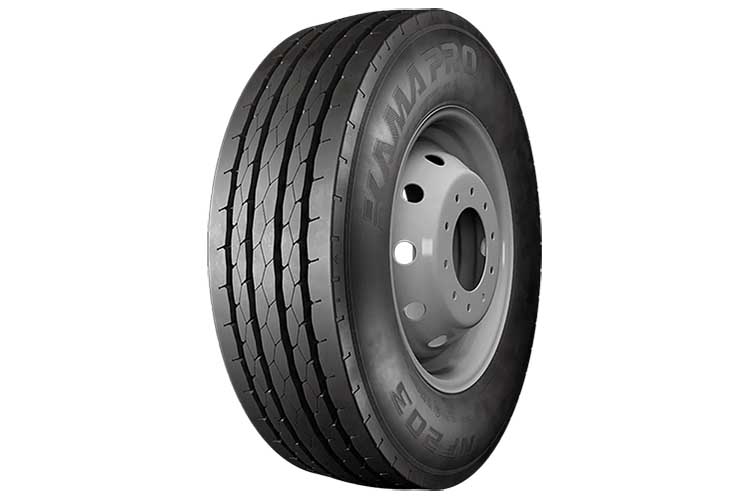
The tires have a tread pattern with five supporting ribs, improving directional stability, while the wide grooves accelerate liquid drainage, and their complex shape prevents stone trapping, increasing the service life of the tread.
"Cooperation with the Kama Tyres tire complex is part of the comprehensive strategy of PJSC "KAMAZ" for the development of a localized component base", note the tire company, adding that "the use of domestic tires in new generation projects confirms a high degree of readiness of the Russian industry to ensure supply sustainability, reduce dependence on imports and meet modern requirements for reliability, safety and technological independence".