
-
 Enlarge
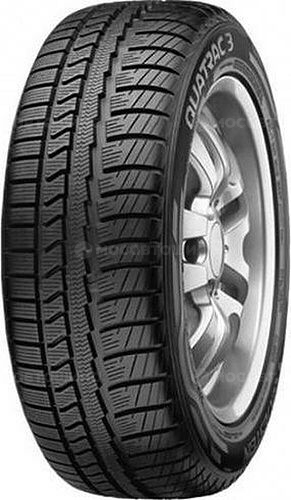
 Vredestein Quatrac 3
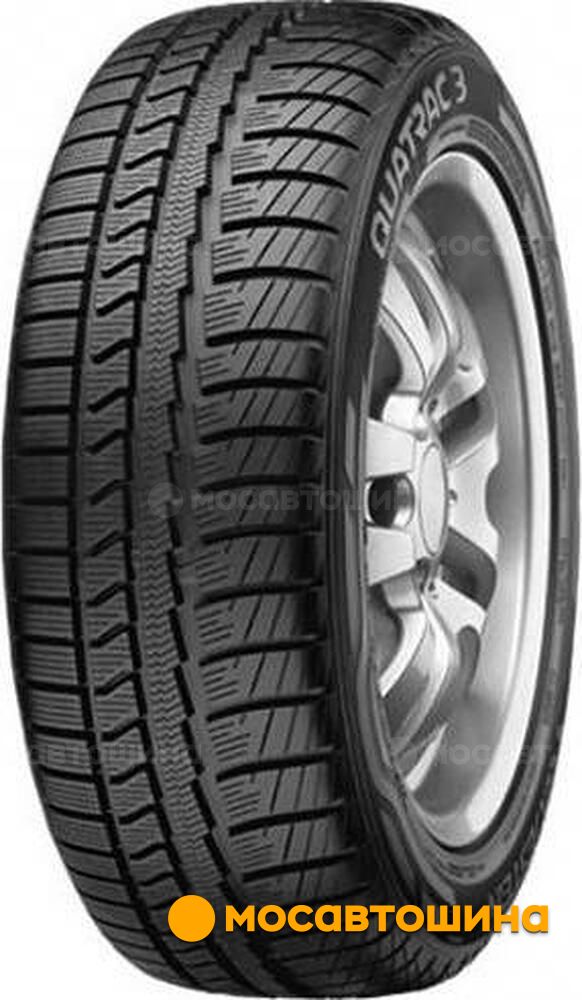
Description Vredestein Quatrac 3
The Vredestein Quatrac 3 passenger tire is an excellent choice for car owners who live in areas with a moderate climate, where the air temperature is around zero in winter. At the same time, this model, thanks to its universal tread pattern, is perfect for active use not only in winter but also in summer.
"Summer" and "winter" sides of the tread pattern
Since the specialists of the Dutch company were required to give the Vredestein Quatrac 3 tire high performance on very different types of road surfaces, they chose to use a tread pattern with an asymmetrical arrangement of elements. A distinctive feature of its design is a clear division into two parts: the outer side provides traction on dry, snow-free and ice-free roads, and the inner side allows you to move confidently on winter roads.
In accordance with the above functions, both "halves" differ significantly from each other in a number of design features. In particular, the outer side contains many very massive rectangular blocks arranged transversely. The second half of the tread is distinguished by an increased content of traction edges, which are formed not only by small blocks but also by numerous wavy lamellas. As a result, the tire demonstrates excellent traction, both on dry and slippery roads with snow and ice.
Rigid central longitudinal rib
The central longitudinal rib looks like some exception, which is distinguished by the absence of any gaps throughout its length and the presence of many transverse wavy lamellas. This tread element, due to its rigidity, provides the tire with fast and accurate reactions to steering wheel turns, as well as course stability when moving at any speed.
Main features of the Vredestein Quatrac 3 tire
- versatility of application due to the possibility of operation both in summer and in conditions of the so-called "European" winter;
- excellent resistance to aquaplaning due to three wide longitudinal grooves;
- excellent traction properties on snow are provided by numerous traction edges formed not only by blocks on the inner side of the tread but also by transverse wavy lamellas located on their surface;
- excellent handling on dry roads is achieved due to massive blocks that are located on the outer side of the tread.