The off-road tire Toyo Tranpath S/U is positioned by the Japanese manufacturer as an all-season model. Unlike many other cases, this is indeed true, even considering the climatic conditions of our country. The use of modern technologies and materials has allowed Japanese tire manufacturers to give this tire universality in the form of decent operational characteristics, both on summer and winter roads.
Central rib of triangular blocks
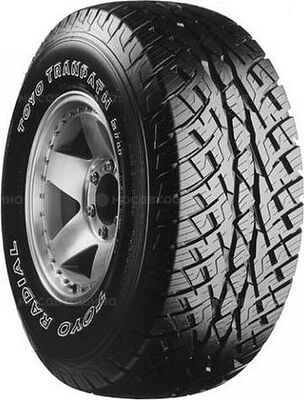
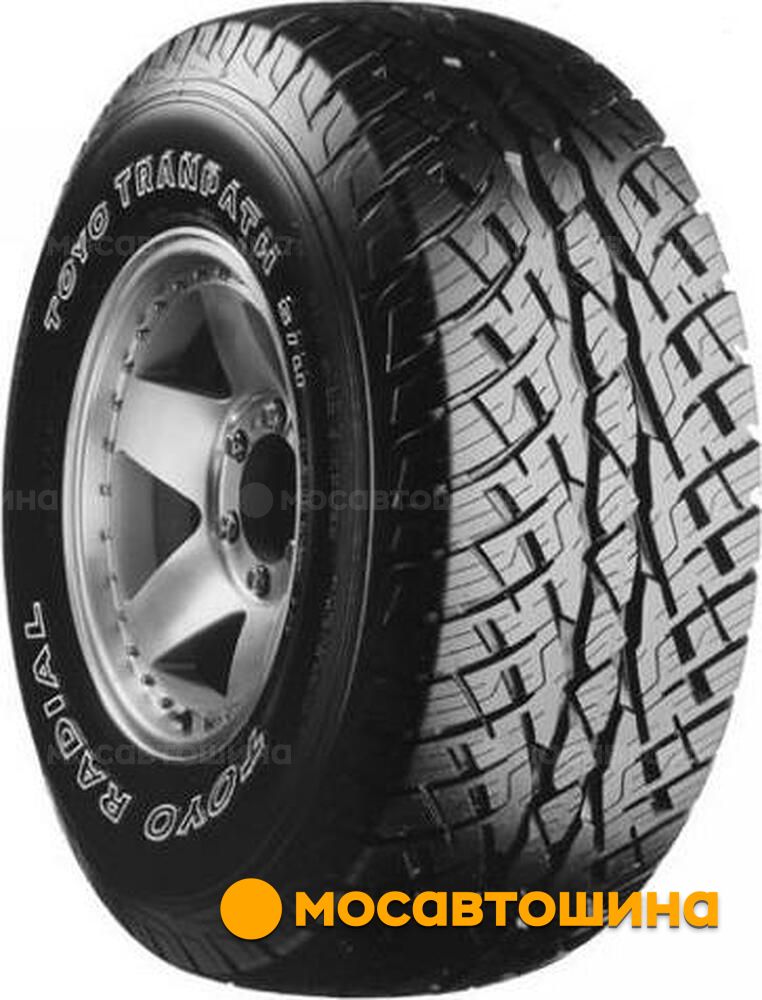
One of the key features in the design of this tread is the construction of its central longitudinal rib. The presence of numerous component elements gives it multifunctionality, and the tire as a whole the above-mentioned universality. This rib is composed of numerous triangular blocks, the corners of which are rounded, and the faces have a slight but very noticeable curvature. In addition, they are cut with lamellas. All these design features allow the central longitudinal rib to improve most of the basic operational properties of the tire, starting from directional stability and fuel efficiency, and ending with the level of noise and traction properties.
Shoulder zones of enormous width
A large part of the area of this tread is occupied by shoulder zones. Like the central longitudinal rib, they are distinguished by a complex structure. The blocks contained here are distinguished by numerous angles and faces. A significant part of the contact edges formed by them is located at a large angle. All these design features also allow the shoulder zones to improve several operational properties at once. First of all, this is the effectiveness of braking and stability when performing maneuvers and turns. At the same time, the massive sizes and rigid construction of the shoulder blocks prevent premature wear and increase the reliability of the tire's operation.
Main features of Toyo Tranpath S/U
- the central longitudinal rib of triangular blocks, in addition to directional stability and maneuverability, reduces the noise level, improves traction characteristics on slippery surfaces;
- the composite blocks of the shoulder zones provide stability in turns, stability of coupling properties on snow and when braking.
 Enlarge
 Enlarge