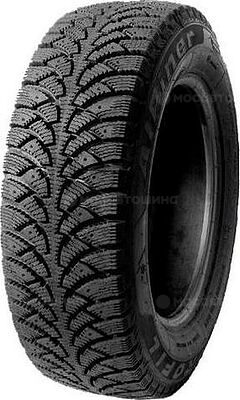
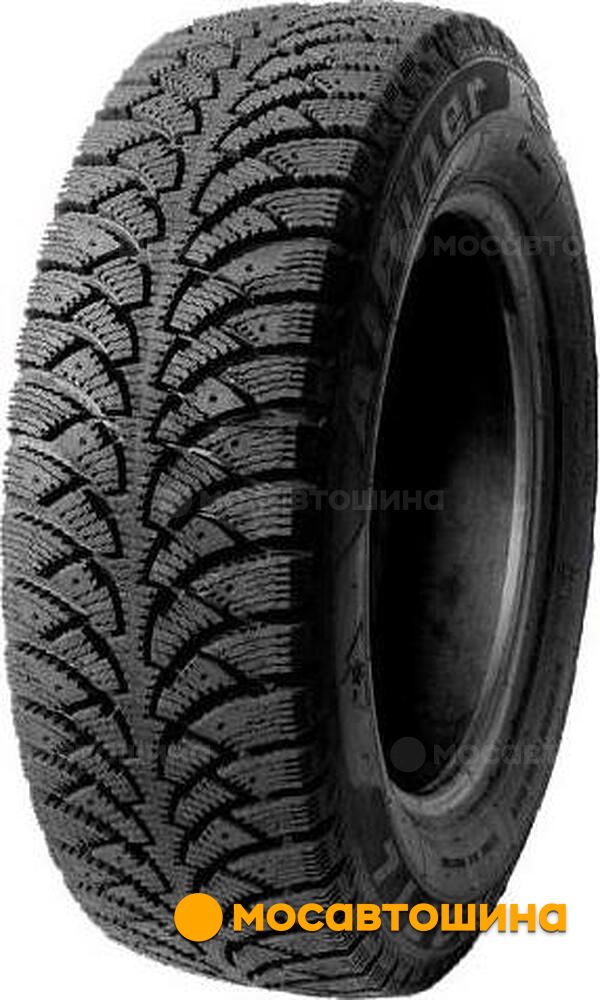
Before you is the Profil ALPINER in a non-studded version. It was designed to maximize its traction properties on slippery surfaces, similar to studded tires, but radically reduce noise and vibration levels. The result is confident movement without the usual winter "hum".
Tread and its specifications
The classic directional design was taken as the basis, which for decades has proven its effectiveness on snowy and icy roads. The key solution is the characteristic arrangement of tread blocks, in which long V-shaped edges are formed in the contact patch. On loose snow, they "scoop up" mass, providing traction. On packed snow and ice, they create additional points of mechanical grip. As a result, excellent directional stability is achieved, even in winter turns, when ordinary non-studded tires start to slip.
Lamellar "cutting"
The main engineering challenge of "ice tires" is their effectiveness on bare ice. In this model, it was solved through a dense network of highly active lamellas. The number of cuts in the blocks is selected so that at each point of contact, there are several sharp edges. When braking or accelerating on an icy surface, the lamellas open like blades, literally biting into the ice crust.
High silica content for frost elasticity
The tread pattern is only half the success. The second half is the compound. For the tire, a recipe with an increased silicon dioxide content was developed. Such a filler maintains the elasticity of molecular bonds even at -30°C. The rubber remains "soft" and sticky in the strongest frost, repeating the micro-roughness of the ice. Plus, rolling resistance is reduced.
Main features of Profil ALPINER:
- the tread with long V-shaped edges and a solid rib ensures effective acceleration, braking, and directional stability;
- the network of lamellas creates multiple sharp gripping edges, allowing confident movement on bare ice;
- the optimized profile expands the contact patch, improving handling and simultaneously reducing uneven tread wear;
- the rubber retains its softness and stickiness even in severe frost, improving traction where ordinary "ice tires" give up.
 Enlarge
  Enlarge