Tyres Neolin
- Origins: Китай
Not available
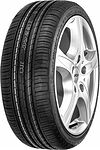
The Neolin trademark belongs to the Chinese company Yanchang Rubber, established in 2008 and part of the Shaanxi Yanchang Petroleum Group consortium. It represents a major industrial enterprise for the production of a wide range of automotive tires. The annual production volume is 2 million commercial and 8 million "passenger" tires. The enterprise uses modern equipment from leading companies in this field — Japanese KOBELCO, German Troester, American Battelle Memorial Institute, Italian Comerio ercole S.P.A, and Dutch VMI. The Neolin brand is used in the production of tires for passenger cars.
Currently, the brand offers several dozen models for passenger cars in the following categories:
- all-season tires;
- summer tires;
- winter tires.
The all-season tire line of the brand is the smallest in number. However, all models are distinguished by good traction properties on snowy surfaces. They feature "winter" tread patterns with blocks and lamellas, as well as compounds that are resistant to wear and elastic at low temperatures. The "borrowing" from summer tires is the construction of the carcass and sidewalls, the tire profile.
The most numerous is the line of Neolin summer tires. The diversity is due to the presence in it of models not only for passenger cars but also for SUVs and commercial vehicles. The "signature" feature of all tires is their durability. They use modern compounds that are characterized by increased resistance to abrasive wear, punctures, cracks, and the formation of small cracks. It should be noted that in the set of operational properties, the majority of "passenger" tires of the brand have a particularly emphasized comfort — the smoothness of the ride is often accompanied by predictable behavior in complex situations and reliable traction.
In the segment of winter tires, the brand is represented by three lines, one of which is designed for commercial vehicles of small capacity. All tires are designed for use in regions with a very cold climate. They are distinguished by "Scandinavian" tread patterns with a characteristic V-shaped arrangement of elements and dense lamella cutting. Another feature is the use of special rubber compounds with a high content of "silica" and modern polymers. This preserves the elasticity of the tires at low temperatures, significantly strengthening traction on slippery winter roads.