
-
 Enlarge
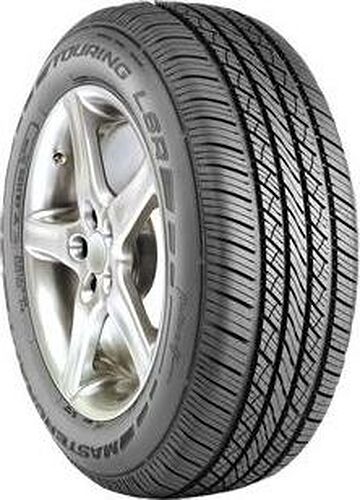
 Mastercraft Avenger Touring LSR
Description Mastercraft Avenger Touring LSR
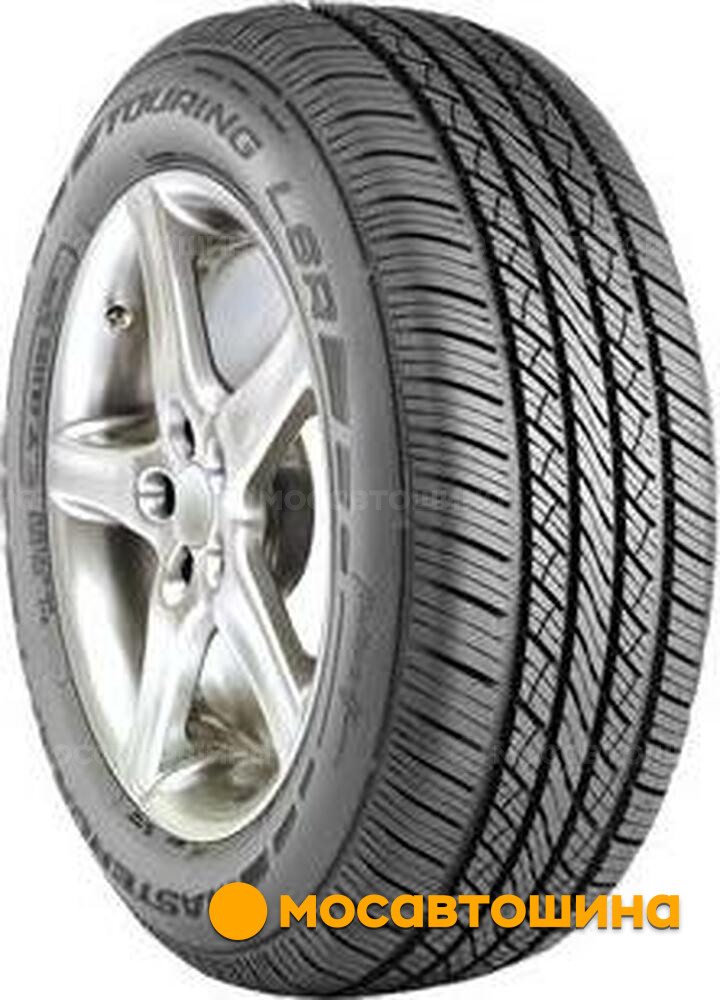
Mastercraft Avenger Touring LSR — a summer radial tire designed for use on passenger vehicles, including crossovers and premium minivans. The design provides an optimal combination of operational characteristics.
The model is released in 29 sizes with rim diameters from 15 to 20 inches, providing wide compatibility with various classes of vehicles. The profile is designed with requirements for stability and fuel efficiency in mind.
A key feature of the design is the directional tread pattern with four longitudinal water-draining channels up to 8 mm deep, connected by a system of transverse lamellae. This configuration provides a water draining capacity of up to 25 liters/second at a speed of 80 km/h, which significantly reduces the risk of hydroplaning.
The reinforced carcass with a double steel belt and polymeric reinforcing elements in the sidewalls provides resistance to lateral drift during maneuvers, stability of shape at various speed modes, as well as increased impact resistance.
The rubber compound based on modified styrene-butadiene rubber with the addition of dispersed silica and technical carbon provides minimization of the friction coefficient, improved wear resistance, and a shorter braking distance. The combination of these factors guarantees a resource of 65,000 km with full preservation of working properties.
The tire is certified to many standards and meets noise requirements (external noise level 71 dB). The design has passed bench tests for fatigue strength equivalent to 100,000 km of mileage. This factor is direct evidence of the quality of the tire.
Key features of Mastercraft Avenger Touring LSR:
- wide range of applications due to the variability of sizes;
- directional stability and minimization of lateral displacements due to three wide rib structures in the central part of the tread;
- developed network of channels, contributing to effective protection against hydroplaning;
- minimization of noise and vibrations, due to the optimization of block placement and the use of a special compound.