Goodyear Ice Navi 8 — a winter tire for passenger cars that intentionally combines two seemingly incompatible properties: aggressive traction on snowy and icy surfaces and comfortable low noise during urban operation. The model shows stable acceleration and braking characteristics in real winter conditions: from loose snow to ice and wet slush.
Tread specification
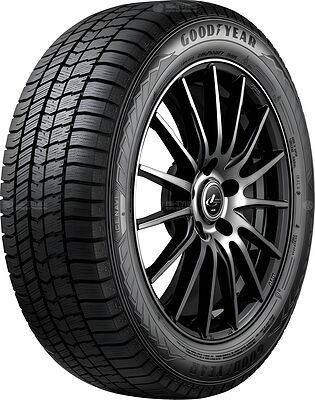
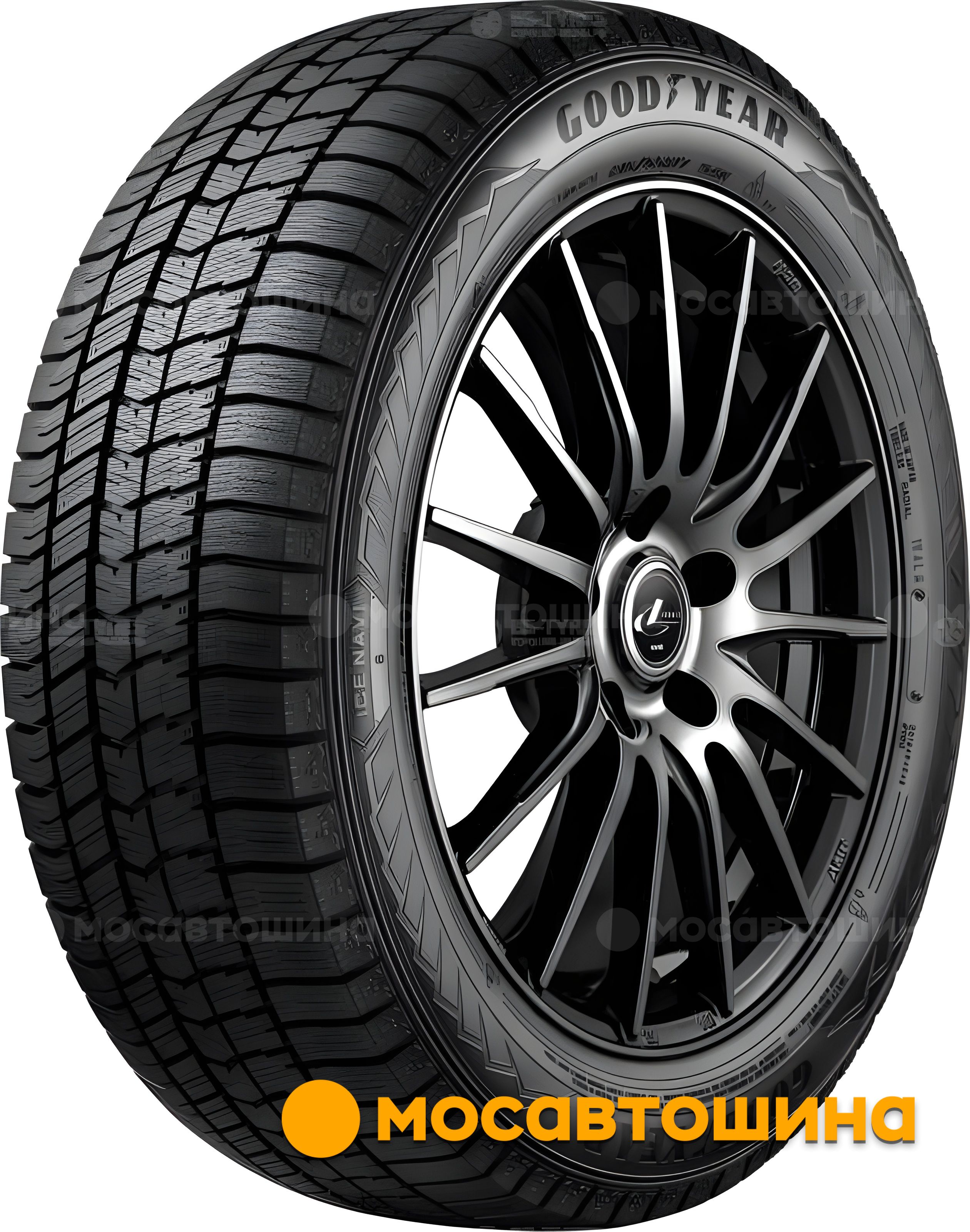
The model uses a non-directional asymmetric pattern. This structure provides:
- maximum evacuation of snow and water from the center of the contact patch;
- equally effective braking and acceleration on any winter surface;
- resistance to aquaplaning.
Note that per square centimeter, there is a dense grid of blocks and numerous lamellas. The latter work like additional traction edges: when braking, they "bite" into ice and compacted snow, and when starting, they prevent wheelspin. This gives confidence during overtaking and entering turns on a snowy road.
Cleanliness of the contact area
The circumferential grooves and transverse grooves are designed to actively remove water and slush. Their depth and angle of inclination are calculated for speeds up to 90–100 km/h. As a result, the tire maintains its course even when abruptly entering puddles, without "floating".
Low noise without compromise
The classic problem of winter tires is the hum on dry asphalt. It was solved due to the optimized block pitch in the circumferential direction. The blocks are arranged at different intervals, which destroys the resonant frequencies of air waves. Additionally, the block shape is rounded. As a result, the noise level in the cabin is comparable to summer tires.
Plasticity at frost and resistance to wear
The rubber compound contains an increased proportion of silica in combination with functional polymers. Silica does not allow the tire to become "stiff" at negative temperatures and improves traction on wet ice due to the micro-abrasive structure of the surface.
Key features of Goodyear Ice Navi 8:
- optimized for intense operation on snowy, icy, and chemically treated roads, as well as on clean asphalt;
- non-directional asymmetric tread with numerous blocks and lamellas provides confident acceleration and short braking;
- variable block spacing and rounded edges significantly reduce aerodynamic and vibrational noise;
- high silica content maintains rubber elasticity at low temperatures, ensuring stable traction properties.
 Enlarge
 Enlarge