
-
 Enlarge
 Deestone D312
Description Deestone D312
The Deestone D312 cargo tire is designed for compact wheel loaders that operate mainly on loose, unstable surfaces. It is favorably distinguished by the presence of a large number of powerful lugs, excellent resistance to any external aggressive influences, as well as a very long service life.
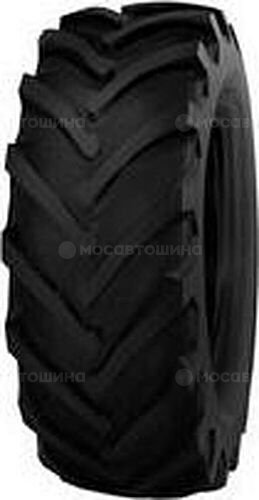
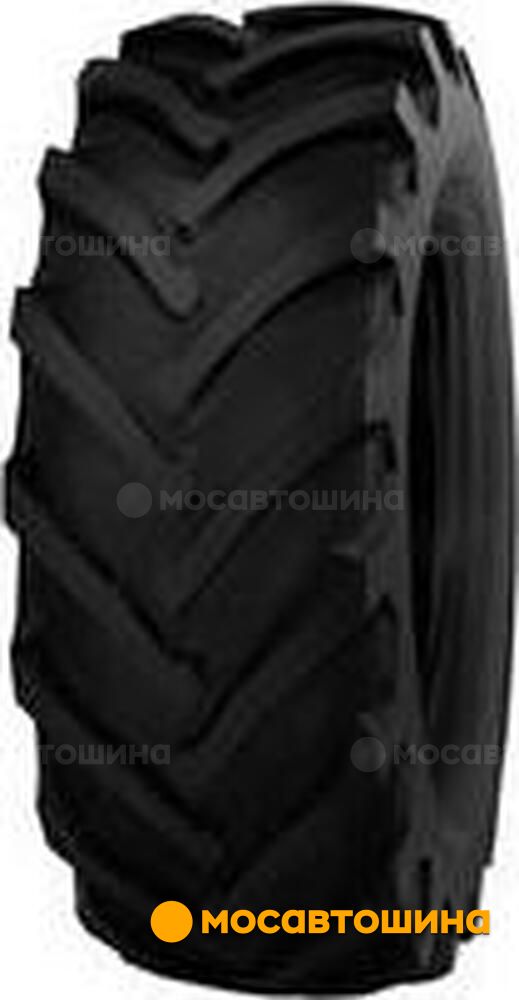
Original directional tread pattern
In the development of this model, the main attention of Thai tire makers was paid to ensuring maximum traction properties on earthy types of surfaces. This can be judged by the tread pattern, which is distinguished by a symmetrical directional V-shaped design. It is formed by numerous tread blocks that start in the shoulder zones and end in the central part, being arranged at a significant angle to the direction of movement.
Speaking about the advantages of such a design, it is impossible not to mention the relatively low rolling resistance. It was possible to reduce it due to the arrangement of most of the traction edges at a significant angle, as well as a relatively small distance between the blocks in the central part of the tread.
Another undeniable advantage of such a tread pattern is exceptionally high traction properties in the longitudinal direction. They are provided due to the presence of a large number of very long traction edges, and are enhanced by the significant height of the tread blocks. In essence, the design features of these elements turn them into full-fledged lugs, allowing the tire to easily overcome even the most difficult sandy and earthy areas.
Main features of Deestone D312
- the tire is designed for compact front wheel loaders with side steering;
- the original V-shaped design of the symmetrical directional tread pattern is optimized for operation on sandy and earthy soils;
- a significant distance between the tread blocks in the shoulder zones improves the self-cleaning indicators of the tread, thereby increasing the passability;
- low rolling resistance, low level of resonant noise and vibration due to the small distance between the blocks in the central part and their arrangement in a checkerboard pattern relative to each other.