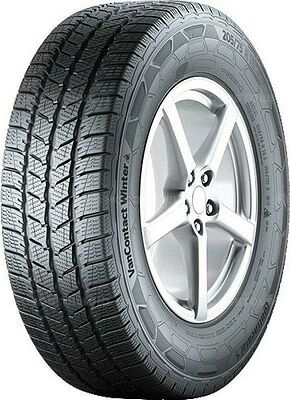
The Continental ContiVanContact Winter winter tire for light commercial vehicles is a fourth-generation model, the first of which appeared as far back as 1998. Compared to its predecessors, this tire has undergone a number of significant changes, which have made it possible to significantly improve all operational characteristics, first and foremost, the traction properties on snowy and icy roads, service life, and fuel efficiency.
Many of the advantages of this model are due to the tread lamination scheme. It involves the use of two types of lamellas. In the central part of the tread, sinusoidal lamellas are used, which, on the one hand, increase the traction properties on rolled snow and ice, and on the other hand, provide good directional stability and handling. In the shoulder areas, lamellas with a "broken" design are located. These tread elements reduce the braking distance and improve traction when maneuvering.
In addition, the shoulder areas have so-called "snow pockets". These tread elements work in conjunction with longitudinal drainage grooves. By retaining and compacting snow, they increase the tire's traction properties.
Main features of the Continental ContiVanContact Winter tire
- sinusoidal lamellas in the central part of the tread improve traction, directional stability, and handling;
- lamellas with a "broken" design in the shoulder areas reduce the braking distance, increase traction when maneuvering;
- "snow pockets" improve the tire's performance on snowy surfaces;
- rigid bridges between the blocks make the distribution of external load on the contact patch more even, increasing the service life of the tread.
 Enlarge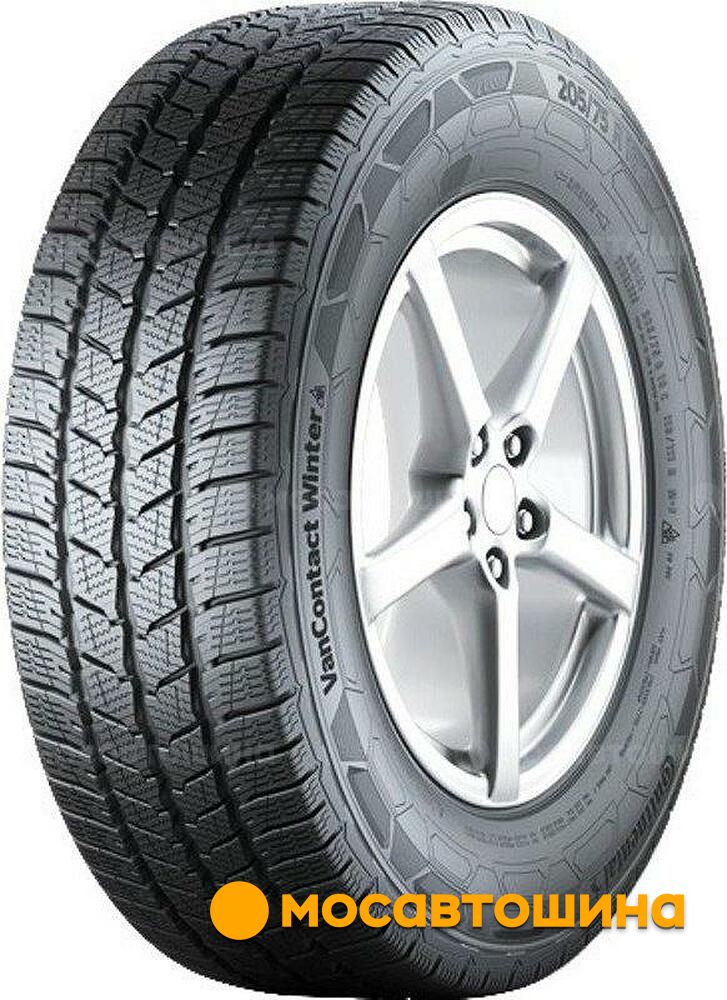
 Россия
 Чехия
Чехия