
-
 Enlarge
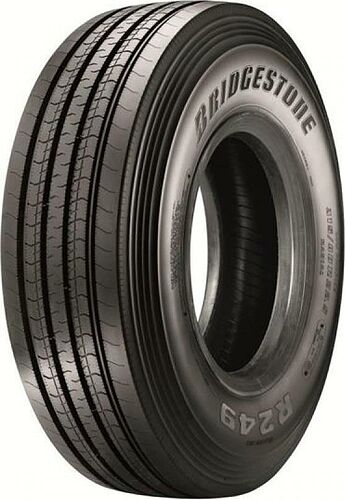
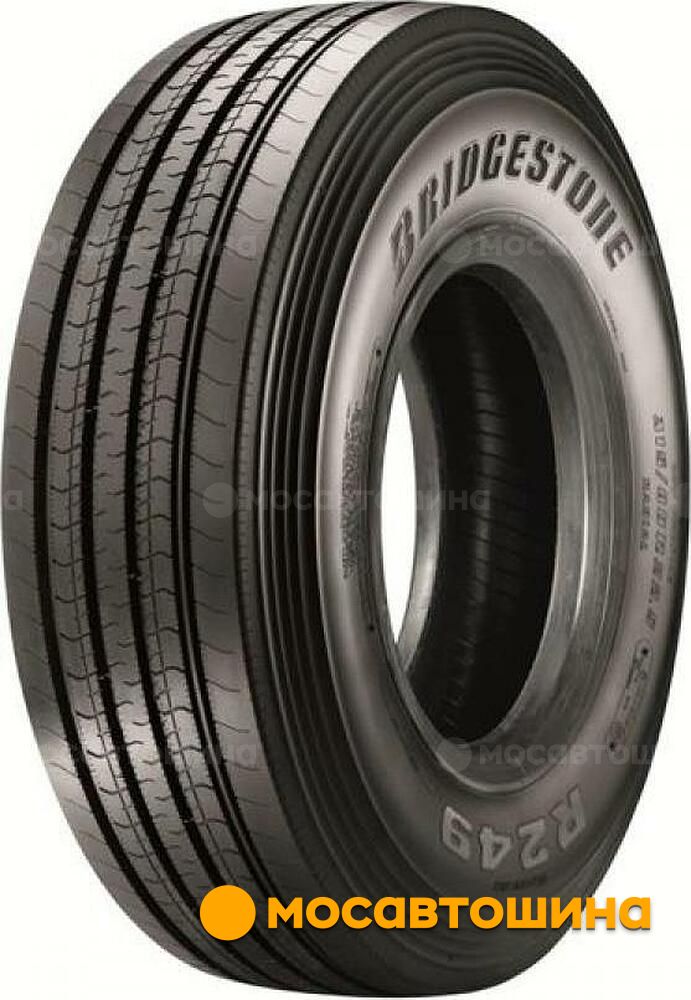
 Bridgestone R249 Eco
Description Bridgestone R249 Eco
The Bridgestone R249 Eco commercial tire is installed on the steering axle of large-capacity trucks. The manufacturer allows the use of this model on any axle of buses. It is adapted for use in regional and highway transportation. It is characterized by reduced rolling resistance and increased mileage with stable traction in any road conditions.
The tire's tread is made from a rubber compound called NanoPro-Tech. A significant part of the composition is represented by fine silica and carbon black particles. These components provide the tire with stable traction on wet surfaces, high resistance to abrasive wear, and strength against cracking and stretching. The use of components in the form of particles, the size of which is measured in nanometers, in the compound allows for high uniformity of the mixture, which significantly improves the basic operational properties of the tire as a whole.
An important feature of this model is the design of the carcass and breaker. The winding of the cords in these structural elements is done in such a way that the steel and textile threads are arranged in a wavy pattern. This significantly increases their stiffness and resistance to shock loads. As a result, the traction properties become stable, ensuring excellent reliability in the most difficult operating conditions. It is worth noting the presence of a rigid connection with the cord of the sidewalls. As a result, they take a significant part of the shock load that occurs when driving over road irregularities.
The longitudinal drainage grooves have a narrowing shape towards the bottom. This simple solution allowed for a significant reduction in noise levels. There are special protrusions on the bottom of the drainage grooves. They prevent stones and other objects from getting stuck in the tread, pushing them outwards.
Key Features of Bridgestone R249 Eco
- a tread pattern with 5 rigid ribs provides quick and accurate handling, reduces rolling resistance and wear, and improves directional stability;
- numerous lamellas reduce the braking distance on wet surfaces;
- a rubber compound with fine carbon black and silica particles improves traction on wet surfaces, ensures reliability and wear resistance on poor roads;
- drainage grooves with a narrowing shape towards the bottom and protrusions on the bottom reduce noise and increase reliability.