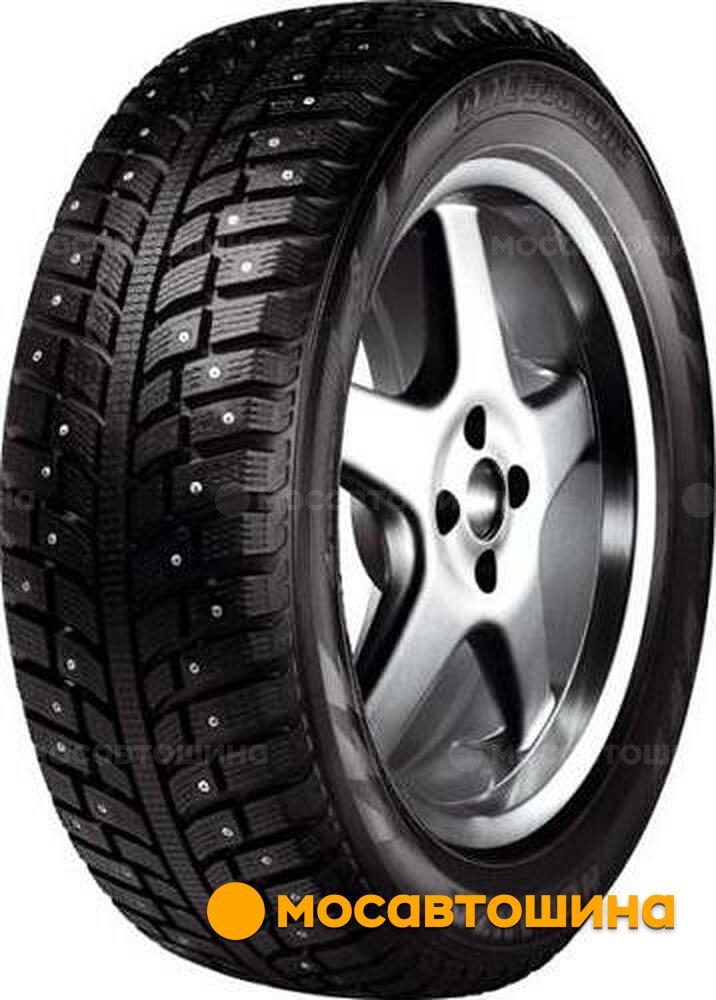
The Bridgestone Noranza winter tire was specifically designed for the Scandinavian market. This model was not officially supplied to our country, as the marketers of the Japanese company were afraid of "cannibalism" on the part of the popular IceCruiser model among domestic car enthusiasts. The reasons for this were more than substantial, since Noranza was significantly superior in terms of a number of operational properties. This was mainly due to a number of design features, which will be discussed below.
Interlocking lamellas
One of them was the design of the tread lamellas. Thanks to this, they could be blocked between themselves, which allowed increasing the stiffness of the entire tread block as a whole when contacting the road. This, on the one hand, made it possible to increase the number of lamellas, and therefore the grip on ice, and on the other hand, the handling on dry coatings.
Reliable ice grip throughout the life cycle
Another feature of this tire was the studding system. It is distinguished by the arrangement of the studs, which form 14 so-called "anti-skid chains". At the same time, the installation sites are distinguished by a reinforced design, which prevents their premature loss. This allows the tire to provide reliable ice grip throughout its entire service life.
Solid longitudinal rib in the center
Like most other modern tires, the tread pattern of this model has a wide continuous rib in the central part. But in addition to the massive size and lack of breaks throughout its length, this element is distinguished by the presence of many wavy-shaped lamellas, which significantly expands its functional capabilities. In addition to providing good directional stability and handling, such a tread rib also improves traction properties on ice.
Main features of the Bridgestone Noranza tire
- Interlocking lamellas increase grip on ice;
- 14 rows of studs give the tire confident behavior on any icy roads;
- A wide continuous rib in the center of the tread with numerous lamellas improves not only directional stability and handling, but also traction properties on ice.
 Enlarge