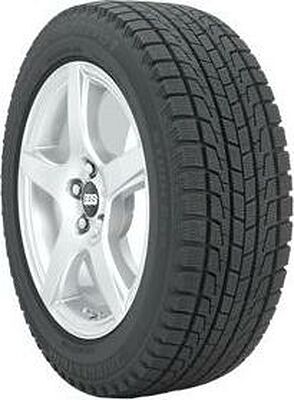
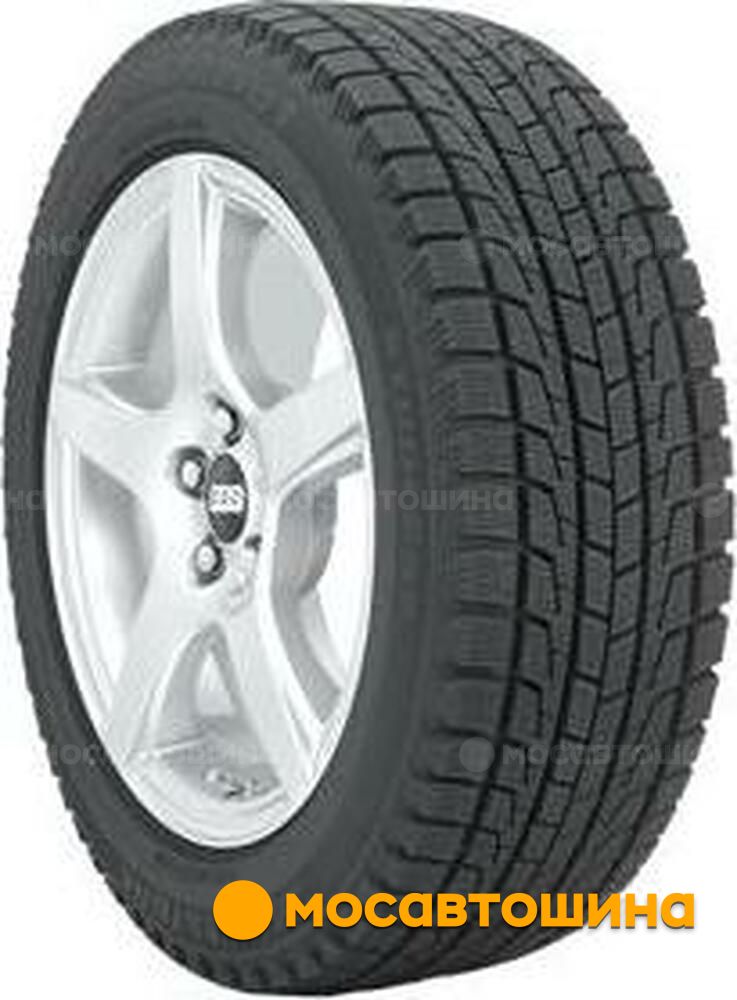
Winter tire for passenger cars Bridgestone Blizzak Revo was created taking into account the peculiarities of operation in the countries of Northern Europe, Scandinavia and Russia, where the climate is quite specific. The use of a whole range of innovative technologies allowed the Japanese manufacturer to create a tire that provides incredible traction on ice, while not using studs. In addition, on asphalt surfaces, it demonstrates a high level of comfort and excellent handling.
Two versions of execution
This model is offered in two versions. They differ from each other in the design of the tread pattern. Depending on the size, it can be a symmetric non-directional or V-shaped directional. In addition, Bridgestone Blizzak REVO (SR01) tires with a directional tread pattern have higher speed ratings.
Rubber compound with porous structure
One of the innovative technologies used in this model is a compound with a porous structure. The tread rubber compound has a multitude of microscopic pores of a droplet shape. When in contact with an icy surface, they dry it, providing more reliable traction. Due to the fact that these pores are very evenly distributed in the compound, this ability of the tread remains unchanged throughout the life of the tire.
Elimination of "weak points" at the design stage
During the development of this model, three-dimensional modeling technologies were actively used. They replaced a significant part of the full-scale tests, during which not all tire defects can be identified. The use of these technologies made it possible to eliminate them at the design stage. As a result, buyers received a very balanced tire without any "weak points".
Short braking distance on ice
In addition to microscopic pores, traction on ice is provided by numerous lamellas. The total number of engagement edges they form exceeds several thousand. At the same time, their height is more than sufficient to provide reliable traction on ice.
Main features of the Bridgestone Blizzak REVO (SR01) tire
- two versions of execution - with V-shaped directional and symmetric non-directional tread pattern (depending on the size);
- excellent balance and lack of "weak points" due to the use of three-dimensional modeling technologies during development;
- countless microscopic pores in the rubber compound improve traction on ice;
- several thousand transverse lamellas reduce the braking distance, especially on ice and wet roads.
 Enlarge
 Enlarge