
-
 Enlarge
 Aufine GF868
Description Aufine GF868
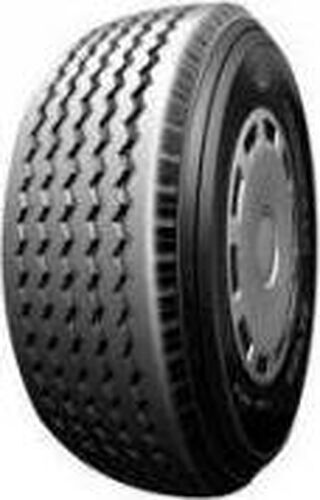
The Aufine GF868 truck tire is one of the novelties in the domestic tire market for highway tractors, which does not prevent it from being very popular among commercial carriers. This is due, first and foremost, to a very attractive price-quality ratio. This model, with a very humane cost, has low operating costs, which are due to excellent fuel efficiency and increased tread depth.
Multi-rib tread pattern
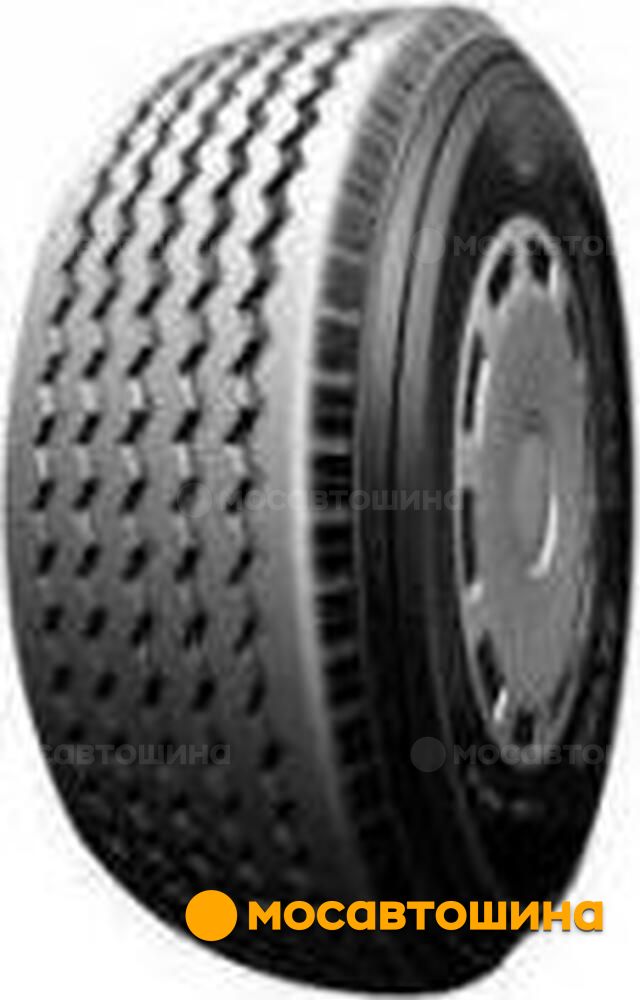
A significant part of the above-mentioned advantages of the Aufine GF868 model is provided by a symmetrical non-directional tread pattern, which has a rather original design. Its characteristic feature is the presence of an increased number of longitudinal ribs, seven in total, five of which form the central part, and two more are shoulder zones. This arrangement gave the tire excellent stability and resistance to lateral skidding when moving at any speed.
Fuel efficiency
When talking about the increased number of tread ribs, it is impossible not to mention their very rigid construction, devoid of any constituent parts. Thanks to this, the tire demonstrates very low rolling resistance, which has a very favorable effect on fuel efficiency indicators.
Excellent traction properties
The absence of separate blocks in no way affected the traction properties of this model, which are at a very high level. The fact is that the necessary traction edges are formed due to the numerous corners and protrusions of the longitudinal ribs, which, for the sake of low noise and rolling resistance, were smoothed and rounded.
Key features of the Aufine GF868 tire
- the tire is designed for the driving axles of highway tractors;
- excellent fuel efficiency, excellent directional stability thanks to the rigid construction of seven longitudinal tread ribs;
- reinforced shoulder zones due to the optimization of external pressure distribution over the contact patch increase the carrying capacity and resistance of the tread to uneven wear;
- excellent traction properties in the longitudinal direction are provided by numerous protrusions and corners of the longitudinal tread ribs.