
-
 Enlarge
 Antyre TB877
Description Antyre TB877
The Antyre TB877 truck tire may evoke a sense of déjà vu among professionals, as this tread pattern can be found in several dozen models released by leading Chinese manufacturers today. This should not be considered a disadvantage. On the contrary, the presence of such a large number of "clones" should be recognized as a merit, as it once again testifies to the successful design of this particular model. This is largely due to the rare, even by today's standards, versatility of application, which is ensured by the possibility of operation on any axles of modern trucks and tourist buses.
"Non-original" tread pattern
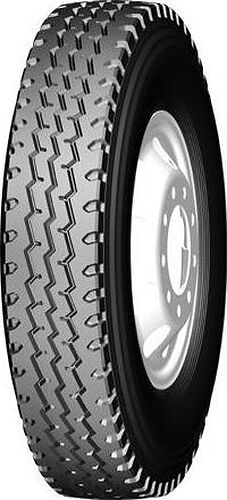
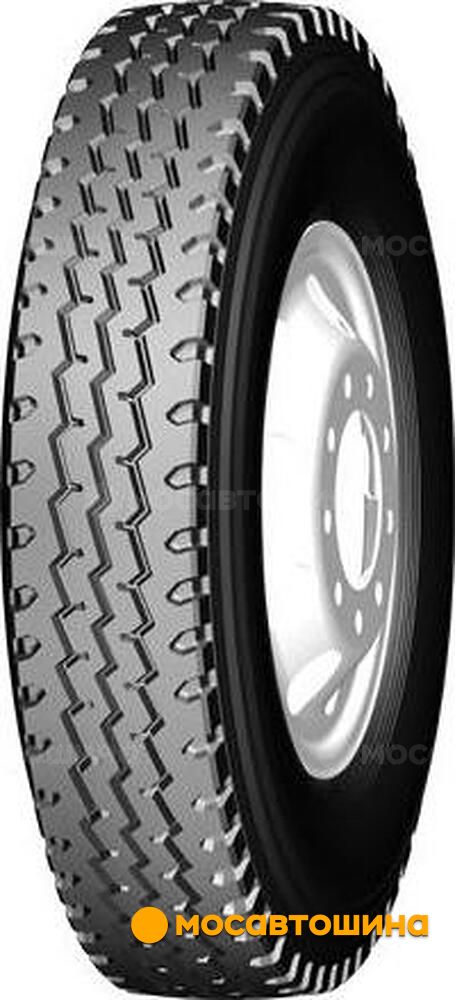
A significant part of the universal properties of this model was achieved due to the tread pattern, which demonstrates excellent performance in a variety of operating conditions. Its design with a symmetrical non-directional arrangement of elements contains only four longitudinal ribs, two of which form the central part, and the other two are the shoulder zones of the tread. Such a scheme of arrangement can be found very often today, especially among modern tire products from China.
Excellent directional stability and fuel efficiency
One of the key features of all four longitudinal ribs is the absence of any breaks or composite elements in each of them. Due to this, they are distinguished by a very rigid structure, which strongly resists any deformative changes. As a result, the tire demonstrates not only excellent stability and reliability at any speed, but also excellent fuel efficiency, which was achieved due to a significant reduction in rolling resistance.
Main features of the Antyre TB877 tire
- versatility due to the possibility of operation on all axles, both trucks and buses;
- symmetrical non-directional pattern, the design of which is optimized for various operating conditions;
- low rolling resistance, excellent directional stability due to the excellent resistance of all four longitudinal ribs to dynamic deformation;
- excellent braking and acceleration efficiency is provided due to the polygonal shape of the tread ribs, which form multiple edges of adhesion during movement.