Tyres and wheels for Pontiac Grand Prix, wheel size on Понтиак Гранд Прих
Подбор шин и дисков по автомобилю Понтиак Гранд Прих
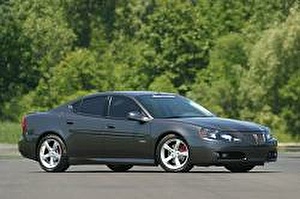
Другие модели Pontiac
Pontiac 1000, Pontiac 2000, Pontiac 6000, Pontiac Acadian, Pontiac Aztec, Pontiac Bonneville, Pontiac Catalina, Pontiac Fiero, Pontiac Fiero GT, Pontiac Firebird, Pontiac G3, Pontiac G4, Pontiac G5, Pontiac G5 Pursuit , Pontiac G6, Pontiac G8, Pontiac Grand AM, Pontiac Grand Prix, Pontiac Grand Prix GXP, Pontiac Grand Ville, Pontiac GTO, Pontiac Lemans, Pontiac Matiz, Pontiac Montana, Pontiac Montana SV6, Pontiac Phoenix, Pontiac Solstice, Pontiac Sunbird, Pontiac Sunfire, Pontiac Tempest, Pontiac Torrent, Pontiac Trans Sport, Pontiac Vibe,Параметры дисков на Понтиак Гранд Прих
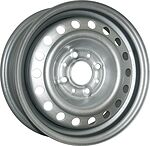
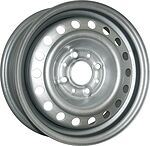
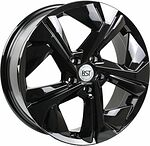
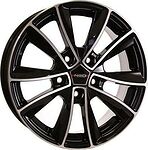
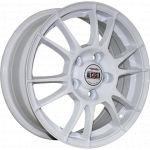
- PCD 5x115 диаметром от 16 до 17, шириной от 6.5 до 6.5 и профилем от ET52 до ET52как у Buick Terraza
Tires on Pontiac Grand Prix
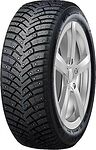
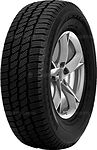
- Tyre size from R14 to R19, width from 195 to 265 and profile from 40 to 75S.
- Minimum tyre size: 195/70 R15, maximum: 265/40 R19






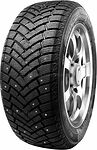
Tires on Pontiac Grand Prix (Понтиак)
The Pontiac Grand Prix line of passenger cars was produced from 1962 to 2008. Initially, the model was available as a coupe, but over time, it was also offered as a sedan, repeatedly changing its design and size, driven by the manufacturer's desire to increase its presence among luxury-class cars.First Generation
The car debuted in 1962, representing a Gran Tourer category coupe designed for high speeds and long-distance travel with a sense of comfort and luxury. The interior featured vinyl upholstery and bucket seats, as well as carpeted flooring. Technically, the car was distinguished by rear-wheel drive and transmission gear ratios chosen to provide the most intense acceleration. Accordingly, the "base" engine was a 6.4-liter V8 Bonneville gasoline engine with 303 horsepower, which worked in conjunction with a 3-speed manual or 3- and 4-range Hydra-Matic automatic transmissions. The installation of various Tri-Power carburetor options allowed the power to be increased to 318 and later to 348 horsepower. For the most daring buyers, the manufacturer offered a Bonneville with an increased working volume of up to 7 liters with two Tri-Power carburetors, which developed 405 horsepower.Second Generation
After a series of upgrades, the brand introduced the second generation of the model in 1965. It was distinguished by more rounded body lines, closed rear wheel arches, and a characteristic silhouette for North American coupes, as well as a noticeable increase in dimensions, which was also a general trend at the time. The interior was also completely redesigned, receiving a new dashboard and walnut trim, as well as air conditioning in the list of additional equipment. The engine range still consisted of V8s from the previous model, but all engines were thoroughly modernized, becoming even more powerful. This led to the replacement of gearboxes, especially for the most dynamic versions. In 1967, the car underwent a restyling, receiving hidden headlights with a horizontal arrangement, and the rear lights were covered with chromed "jalousie" of a similar design.Third Generation
The third-generation car appeared in 1969, becoming one of the stages of continuous modernization. It was created on the G-Body platform, an extended version of GM A, which was used in the Gran Prix starting from the spring of 1967. This time, the manufacturer decided to save time and development costs by using, in addition to the platform of the latest versions, the mechanical components of the Tempest, Le Mans, and GTO. The resources saved in this way were directed towards updating the exterior and interior design. The car, which previously looked like other Pontiac models, acquired a unique style, effectively emphasized by the longest hood in the brand's history.Fourth Generation
In 1972, the manufacturer introduced another major update. The car again increased in size and became even heavier, partly due to massive metal bumpers that preserved the body's integrity in collisions at speeds of up to 8 km/h. Another innovation, caused by the changed US legislative norms, was the roof, which received additional supporting "columns". The new laws also affected emissions standards, which led to the appearance in the engine range of V8s with volumes of 4.9 and 5.7 liters, with a power range from 230 horsepower. Nevertheless, the manufacturer found a technical possibility to make the coupe more sporty. The most dynamic versions had a 7.5-liter Bonneville, which were often equipped with a suspension with front and rear stabilizers and Pliaceli shock absorbers. In the initial and middle trim levels, the coupe had a chassis from the "soplatiform" Chevrolet Camaro and Pontiac Firebird.Fifth Generation
The development of the fifth-generation car took place against the backdrop of the fuel crisis that occurred in the early 1970s. The coupe, presented in 1978, was 0.3 meters shorter and 270 kg lighter than its predecessor. And for the first time, the standard trim level was not equipped with a gasoline V8. The base engine became a 3.8-liter V6 from Buick. 8-cylinder engines were offered in more expensive versions. Another sign of the standard trim level was a 3-speed manual transmission. An alternative to it was a 3-range automatic.Sixth Generation
The next major update of the model took place in the fall of 1987. For the first time in its history, the coupe received front-wheel drive. Regardless of the trim level, the car was equipped with a 2.8-liter V6 from GM, developing 130 horsepower and 230 Nm of torque, later replaced by a 3.1-liter V6. The power unit worked in conjunction with a 5-speed manual or 4-range automatic transmission. The only connection to the predecessors was the rich equipment, including a coded glove compartment lock.Seventh Generation
The development of the seventh-generation car began in 1990. The first concepts were presented in 1995, and the full premiere took place in August 1996. The car largely retained the effective appearance of the previous model, which largely determined its good sales. A much more important innovation was the expansion of the lineup due to the appearance of sedan modifications. In the engine range, the only engine taken from the predecessor was the 3.1-liter V6. More dynamic versions received an engine from Buick with a volume of 3.8 liters and 195 horsepower. Later, it received a mechanical supercharger, as a result of which it was possible to obtain 240 horsepower.Eighth Generation
In 2004, the manufacturer introduced the eighth iteration of the car. It was built on a modernized GM W platform. The model had the same concept as its predecessor, being executed in a similar style. The standard trim level assumed the use of a modernized V6 with 200 horsepower. In more expensive versions, it had an Eaton turbocharger, thanks to which it developed 260 horsepower and 380 Nm of torque. For them, the Comp-G package was also available, which included red-painted brake calipers, sports suspension, a 4-range automatic with paddle shifters, and a reduced gear ratio, as well as a stability control system. However, a much more significant innovation was the removal of the coupe version from the lineup. The manufacturer did not want to create internal competition with the newly introduced Pontiac GTO. In 2008, the car was discontinued. Nevertheless, even today, tires and wheels for it can be purchased at the "Mosavtoshina" online store.Advantages of selecting tires for the Pontiac Grand Prix on our website:
- a regularly updated catalog contains a large number of positions for sports sedans and coupes of North American brands;- a wide selection of wheels from domestic and foreign manufacturers offering exceptionally high-quality products;
- an automated search system uses only basic technical parameters or the name of the car brand and model for full-fledged operation;
- managers are always ready to help, eliminating any difficulties related to the search and selection of the most suitable wheels and tires for your car.