Tyres and wheels for Pontiac Firebird, wheel size on Понтиак Фиребирд
Подбор шин и дисков по автомобилю Понтиак Фиребирд
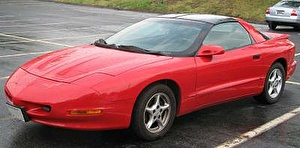
Другие модели Pontiac
Pontiac 1000, Pontiac 2000, Pontiac 6000, Pontiac Acadian, Pontiac Aztec, Pontiac Bonneville, Pontiac Catalina, Pontiac Fiero, Pontiac Fiero GT, Pontiac Firebird, Pontiac G3, Pontiac G4, Pontiac G5, Pontiac G5 Pursuit , Pontiac G6, Pontiac G8, Pontiac Grand AM, Pontiac Grand Prix, Pontiac Grand Prix GXP, Pontiac Grand Ville, Pontiac GTO, Pontiac Lemans, Pontiac Matiz, Pontiac Montana, Pontiac Montana SV6, Pontiac Phoenix, Pontiac Solstice, Pontiac Sunbird, Pontiac Sunfire, Pontiac Tempest, Pontiac Torrent, Pontiac Trans Sport, Pontiac Vibe,Параметры дисков на Понтиак Фиребирд
- PCD 5x120.65 диаметром от 14 до 16, шириной от 6 до 7.5 и профилем от ET12 до ET8
Tires on Pontiac Firebird
- Tyre size from R14 to R18, width from 195 to 275 and profile from 35 to 75S.
- Minimum tyre size: 195/75 R14, maximum: 275/40 R17






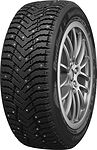


Tires on Pontiac Firebird (Понтиак)
The Pontiac Firebird belongs to the "pony-car" segment, compact sports cars of North American brands. It was produced from 1967 to 2002. The manufacturer positioned it as a competitor to the Ford Mustang and Mercury Cougar. The name was borrowed from General Motors' concepts of the 1950s.First Generation
The car, presented in 1967, although it had stylistic similarities with the brand's passenger cars of that time, differed significantly from them in terms of silhouette, somewhat similar to a bottle of soda water. Another feature was the integrated front bumper into the body, which gave the car a more streamlined look. The rear part, in turn, with narrow lights, repeated the design of the GTO and Grand Prix. Structurally, the coupe largely repeated the Chevrolet Camaro, being created on the same platform - F-body. In the standard configuration, the car was equipped with a 6-cylinder engine with a volume of 3.8 liters, developed on the basis of the Chevrolet engine, with a carburetor fuel system and a power of 165 horsepower. The most popular were modifications with a V8 volume of 5.3 liters and a power of 250 horsepower. For dynamic versions, the Ram Air package was available, which included a hood with a characteristic "bucket", more durable valve springs, and camshafts. These upgrades allowed the 6.6-liter engine to reach peak power and torque values at 5200 rpm.Second Generation
In the winter of 1970, the North American brand presented a car of the next generation. The convertible was withdrawn from the lineup, returning only in 1989. The coupe, in turn, changed significantly in its external appearance, which became more calm, while maintaining stylistic similarities with its predecessor. At the rear, the glass reached the edge of the trunk and was made flat, being covered by a wide pillar. Initially, it was planned to make the glass rounded and the pillar narrow, but problems with the window opening seal did not allow this to be done at the start of sales. As a result, only in 1975 did the car receive the design conceived earlier. In technical terms, the coupe was virtually unchanged from its predecessor, using the same platform and set of mechanical components. Perhaps the only difference, apart from the design, was the significant expansion of the modification lineup due to the inclusion of a larger number of versions, many of which offered an increased level of comfort and higher-quality finishing materials.Third Generation
In late 1981, a car of the third iteration was presented. Already at the start of sales, the model was offered in three trim levels, where Firebird was "base", S/E was "luxurious", and Trans Am was "sporty". Another important difference from the predecessor was the completely changed design with a windshield inclined at an impressive angle of 62 degrees. The external appearance was complemented by a wedge-shaped front and retractable headlights. Over the years, in terms of aerodynamics, the car continued to improve, becoming the most "streamlined" in the GM lineup in 1985 with a drag coefficient of 0.29. The model was offered with a different body type, becoming a hatchback. Technically, due to the use of a new platform, the car became smaller and lighter by 227 kg, becoming much closer to the very first Firebird, released in 1967. Another innovation was the appearance in the standard configuration of front brake mechanisms with a booster and discs with a diameter of 270 mm. The suspension changed completely. At the front, it was a classic "MacPherson", and at the rear - longitudinal levers with torsion bars, which replaced the archaic leaf springs. The engine lineup was somewhat controversial in this context, where the "base" was a 4-cylinder Iron Duke engine with a volume of 2.5 liters and a power of 90 horsepower. It was offered for several years of serial production and only in combination with a 5-speed manual transmission. The presence of this combination was due solely to the desire to expand the circle of buyers, offering a bright but economical coupe. The most dynamic versions were equipped with an engine from the Chevrolet Corvette - a V8 with a volume of 5.7 liters, developing 165 horsepower. Although the car cannot be called popular in our country, nevertheless, in the online store "Mosavtoshina" tires and wheels are offered for it, as well as for other legendary sports coupes of North American brands.Advantages of selecting tires for the Pontiac Firebird on our website:
- the catalog features a fairly large number of tires for North American "classics";- a wide selection of wheels, including those that precisely replicate the factory parameters;
- automated selection on our website will allow you to avoid errors in search and selection;
- managers will assist in selecting tires and wheels, providing the most complete information about each model that interests you.