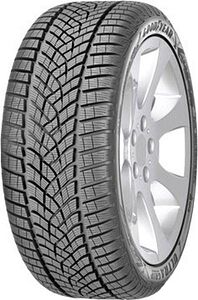
On a dry track, Goodyear is very efficient when starting to turn. In the longest turns, the front tires may slightly understeer, but the tires behave consistently and controllably. The only drawback is the loud noise in the cabin. In this discipline, Goodyear, along with Nokian, fell to the lower lines of the rating, but it's worth noting that the difference with the leaders was not so significant.
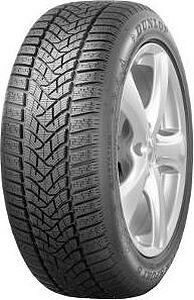
Dunlop performed well on the wet track, where they took third place three times. Some tires performed better, but the differences were small, and Dunlop behaved very confidently, holding the rear axle well and entering turns eagerly. In the dry braking test, the differences were also minor, and although Dunlop was the slowest on the dry track, it was only 1 second behind the leader.
Excellent aquaplaning resistance Characteristics on a snowy surface
Characteristics on other surfaces tire noise
Points: 99.2%
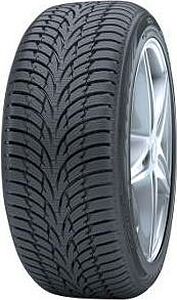
Nokian has excellent aquaplaning resistance, but there were some issues with handling on a wet surface due to weak grip. When cornering, you'll have to wait longer to accelerate, otherwise the tire will start to drift.
On a dry track, where the differences between the tires were smaller than on a wet one, Nokian approached the leaders. Nokian behaves stably and does not feel as soft as some of the other tires. However, this stiffness affected the noise level, and in this discipline, Nokian took last place. Nokian's fuel efficiency will be only 1% worse than that of the best tires in this test.
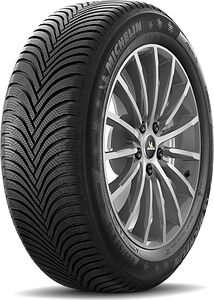
Michelin effectively brakes on all types of coverage, and on a dry track they took second place in this discipline. However, what Michelin shifted the focus on during the development of their tires became even more apparent in the rolling resistance test, where the tires, once leaders in this discipline, took only seventh place.
Impressive traction on wet surfaces Fuel efficiency
snow performance indicators
Scores: 99.2%
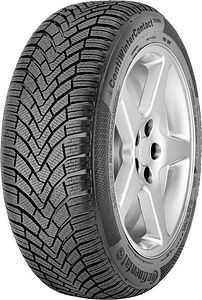
The tires took second place in tests for braking efficiency on dry and wet tracks, as well as handling on a dry track and noise level. Despite the smooth ride, the tires respond very quickly to steering wheel turns and hold their trajectory well in long corners under load.
In the wet handling test, Continental became the best, as they willingly "dive" into a turn and reliably maintain traction on the rear axle for precise following of the chosen course. When sharply accelerating, the tires skid, but Continental withstands greater loads than most competitors. Given this, it's no surprise that Continental won the test on the 60-meter circular track.
In addition to everything else, Continental also took third place in the rolling resistance tests, where they conceded only 3% to the completely new Dunlop. In the snow, the results of Continental were the weakest in the test, but the differences were again not so significant.
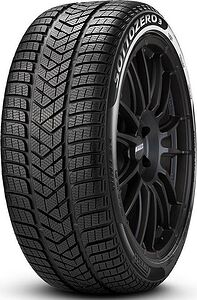
In traction and braking tests, Pirelli performed the worst, with a braking distance two meters longer than the leader. In fact, no measuring equipment was needed to determine this lack of grip, as the tires simply slid on the snow instead of gripping it.
Aqua planning is also not very good, especially in turns, but in other wet pavement tests, Pirelli performed significantly better. The tires have high traction on the front axle when entering a turn, and they allow earlier acceleration when exiting a turn, while keeping the rear wheels under control. Very efficient and safe.
Pirelli also stops the car quickly on dry track, although in terms of handling, they lost to some competitors, as the rear wheels were more prone to skidding. Fuel savings could also be higher, although Pirelli did not lag far behind the leaders.
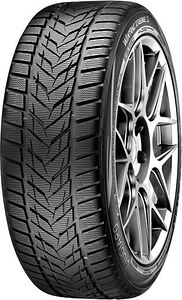
On a wet surface, Vredestein performed very poorly, particularly in aquaplaning resistance tests, where they twice took last place and significantly lagged behind the others, as their water-dispelling grooves deformed during cornering. Additionally, the braking distance of Vredestein was four meters longer than that of the leader, and in the handling test, the grip on the rear axle was weaker than that of the competitors.
On snow, Vredestein lacked sharpness of reaction and grip, and they performed approximately the same as Bridgestone, significantly lagging behind the best tires. The same situation was repeated on a dry track, where the rear wheels too easily went into skid. Like Bridgestone, Vredestein tires slow down the car on dry pavement, and in this discipline, they lost to Pirelli by almost three meters. Additionally, the economy of Vredestein is 2% worse than that of Dunlop. Vredestein performed best in noise level tests, and they also have high ride comfort.
increased fuel consumption notable lag behind competitors
Scores: 97.6%
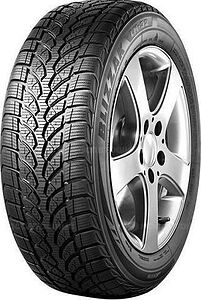
Bridgestone was the worst in the all-season tire AE test, and this time the tires from the world's largest tire manufacturer again occupy the last position. However, the differences were minimal, and it would be difficult to say which tires are preferable - Bridgestone, Pirelli or Vredestein.
On snow, Bridgestone and Vredestein showed almost identical results, and both tires were far from the leaders. Weak traction did not allow for quick cornering, but Bridgestone had a good balance of grip on the front and rear axles. In all snow tests, Bridgestone lagged behind the best tires by about 5%.
On a wet track, the tires were able to reduce the gap, they have sufficient resistance to aquaplaning, however, with braking, lateral stability and handling, serious difficulties arose again. The tires felt too soft and apathetic on turn entry, and also their braking distance was 4 meters longer than that of Pirelli.
On a dry track, Bridgestone was already closer to the leaders, but they again lacked grip on the front axle. Even more concern is their economy - Bridgestone will increase fuel consumption by 3% compared to Dunlop. Such a new model could have been expected to do more, especially considering Bridgestone's resources.