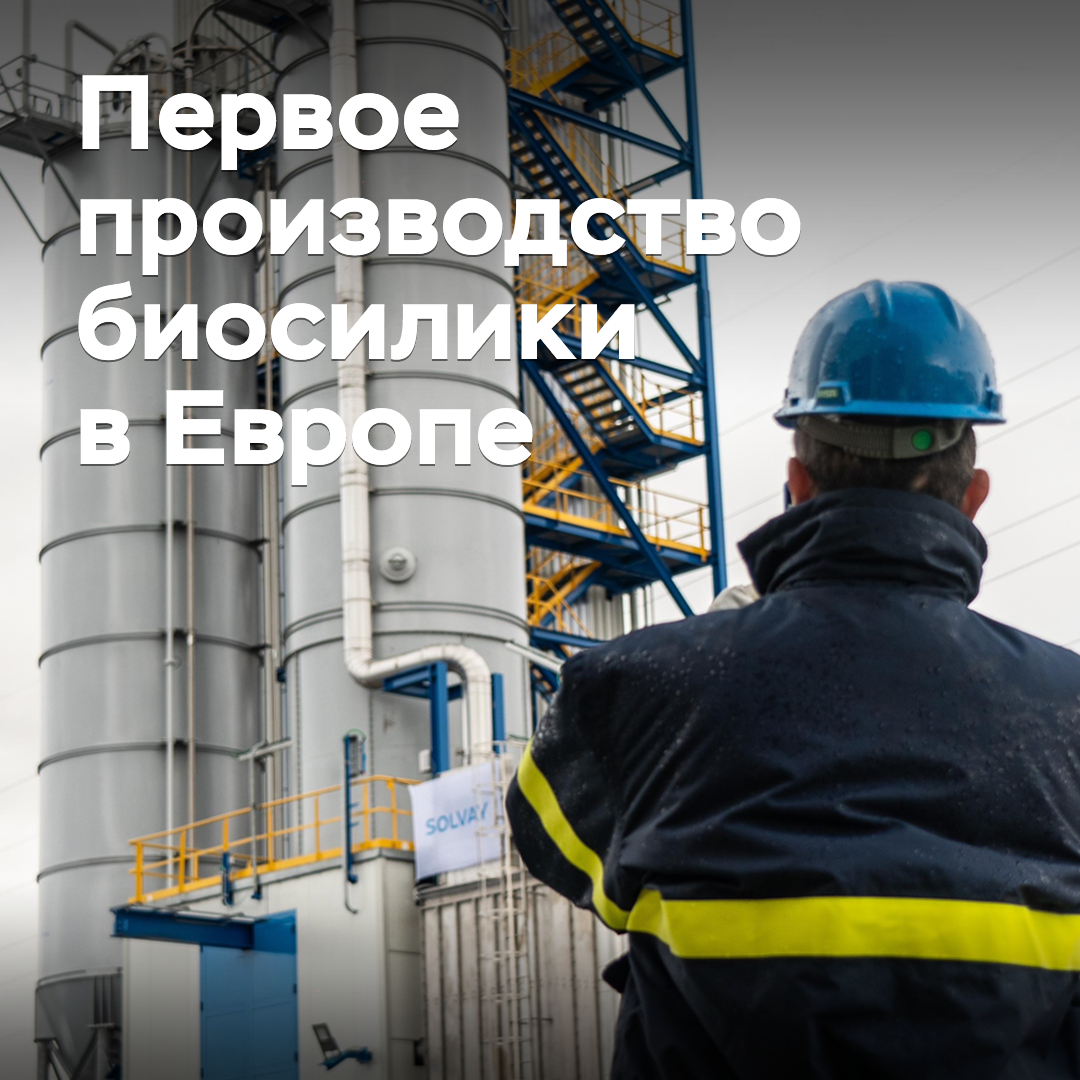
Launched the first production of biosilica in Europe
The Solvay company has launched Europe's first biosilica production at its plant in Livorno, Italy. High-dispersion silica (HDS) will be produced using sodium silicate obtained from rice husk ash, a by-product of agriculture, and will be used as a raw material in tire manufacturing. The new technology provides a 35% reduction in CO2 per ton of silica and, according to the company, will benefit both the agricultural sector and the tire industry.
"Solvay is already helping tire manufacturers prepare for future EU regulations and achieve their own sustainability goals," said Philippe Christophe, CEO of Solvay. "The Livorno project is a clear example of how we are implementing circular economy principles in industry, ensuring progress for future generations."
Solvay adds that the new investments confirm the company's commitment to contributing to the achievement of the European Green Deal (EGD) and the EU's Eco-Design for Sustainable Products Regulation (ESPR), and "strengthen Italy's role as a center for environmental innovation".
"Solvay has managed to convert a by-product of agriculture into a high-performance material and put it into industrial production," noted Jana Stritzel, Director of Purchasing for the Tire Division of Continental. "We look forward to expanding the use of rice husk ash silica as recycled raw materials in tire production, and we are fully satisfied with its characteristics. We are interested in implementing innovative renewable and recycled materials, as this contributes to the implementation of our ambitious sustainability program."
As part of Solvay's strategy, by 2026, the company's silica production plants in various countries will switch to eco-friendly raw materials certified to the ISCC Plus standard. Meanwhile, the Livorno site has become the first to use rice husk ash, while other enterprises will use other types of waste as raw materials. According to the company's estimates, thanks to biosilica, manufacturers can already increase the share of "green" raw materials in their tires to 15%.
Silica is used in the production of energy-efficient tires, helping to reduce rolling resistance and improve fuel efficiency.