
Winter Tire Test by Auto Zeitung — 2024
The German magazine Auto Zeitung conducted tests of seven sets of winter tires from Bridgestone, Continental, Goodyear, Hankook, Michelin, Pirelli, and Vredestein in the 215/55 R17 size, and since all-season tires are becoming increasingly popular on the European market, three models from this category (from Bridgestone, Continental, and Goodyear) were also additionally tested.
According to experts, in recent years, "all-season" and European-type winter tires have become more and more similar, and in both segments, the most in-demand has become the V-shaped tread pattern, and the most noticeable visual difference is the number of lamellas that increase grip on slippery surfaces and snow, which is greater in winter tires.
The test included winter tires Bridgestone Blizzak LM005, Continental WinterContact TS 870 P, Goodyear UltraGrip Performance 3, Hankook Winter i*cept RS3, Michelin Alpin 6, Pirelli Cinturato Winter 2, and Vredestein Wintrac Pro, as well as all-season Bridgestone Turanza All Season 6, Continental AllSeasonContact 2, and Goodyear Vector 4Seasons Gen-3.
All tests on a snowy surface were conducted in March 2024 at the Sottozero test site of Pirelli in northern Sweden, about 100 km beyond the Arctic Circle, and since it is difficult to obtain reproducible results during the day due to sunlight and snow melting, the tires were tested at night at a temperature of -10 to -15°C.
On snow, braking efficiency, handling, traction, and lateral stability were evaluated, and the first place in terms of the total number of points was taken by Pirelli, which did not win in any discipline but also did not allow itself any weaknesses. Next are Goodyear and Michelin, and the main surprise was the all-season Continental, which scored more points on snow than the winter tires of the same brand, thanks to higher traction and lateral stability. The last line was taken by the all-season Bridgestone, which means they are not recommended for regions where it is often necessary to drive on snow in winter.
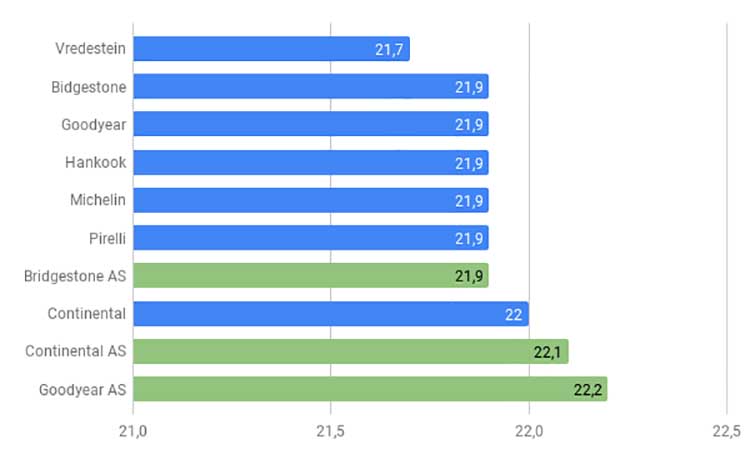
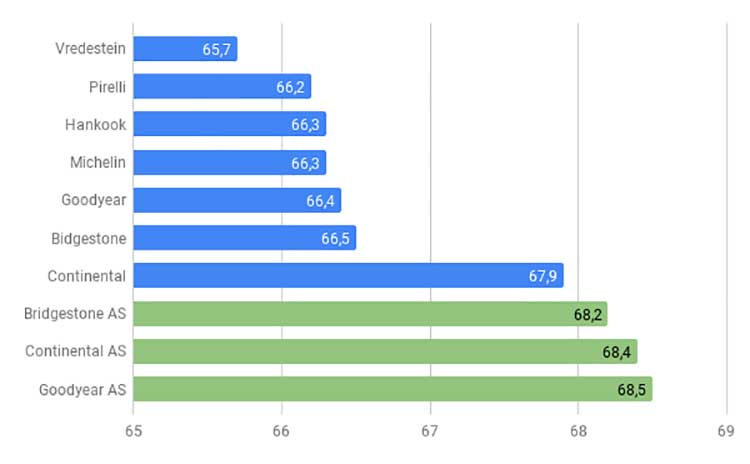
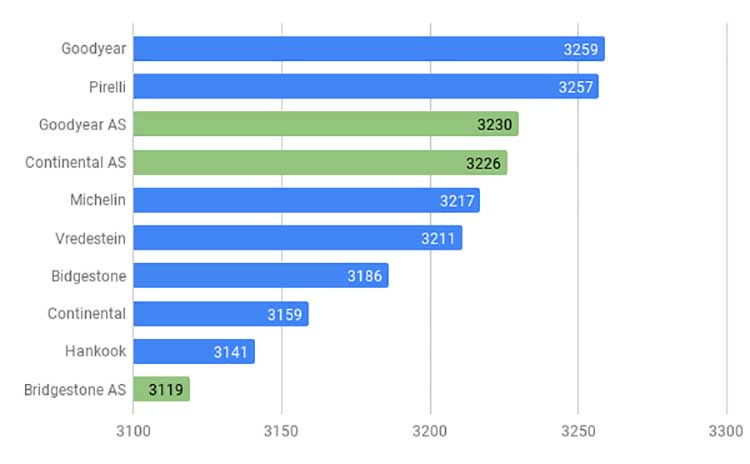
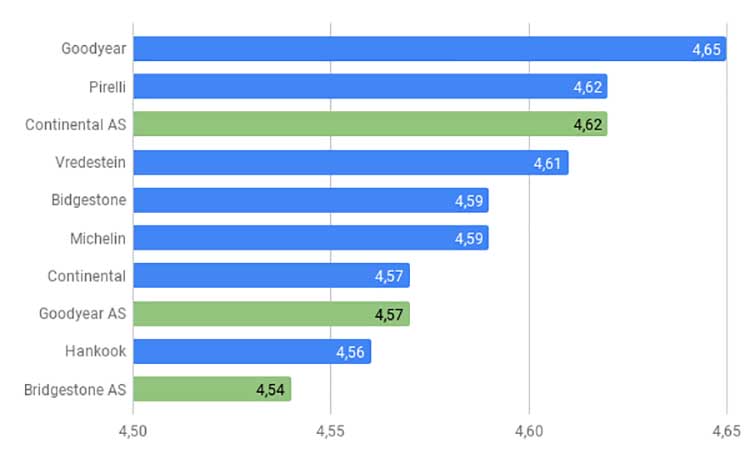
The tests on asphalt were carried out on the tracks of the Contidrom test site of Continental north of Hanover (Germany) in cool weather, and on wet pavement, the winter Bridgestone became the leader, which provides the highest level of safety in such conditions, while the Vredestein fell to the last place. At the same time, on dry pavement, all-season tires were clearly more efficient.
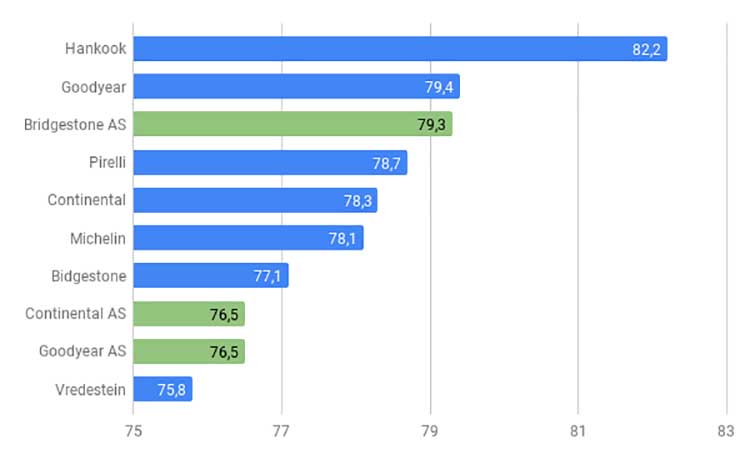
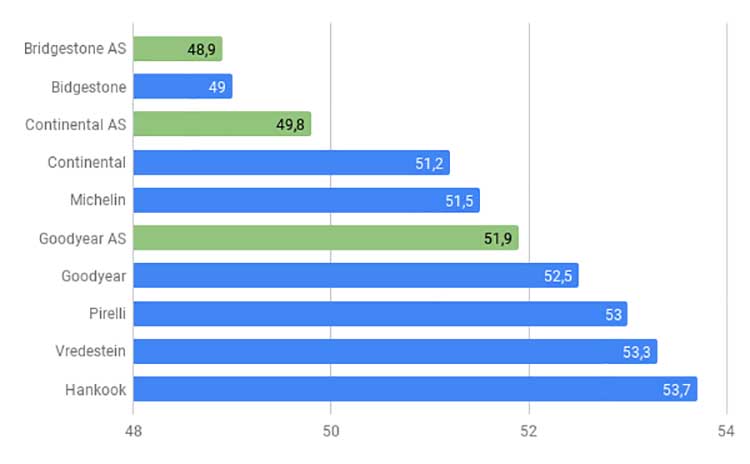
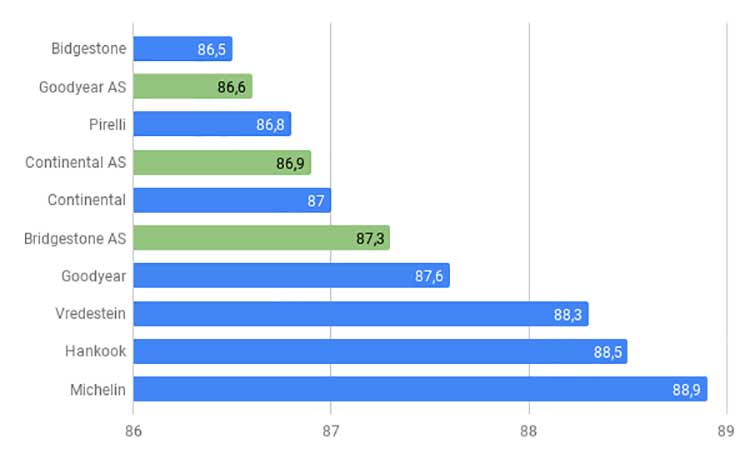
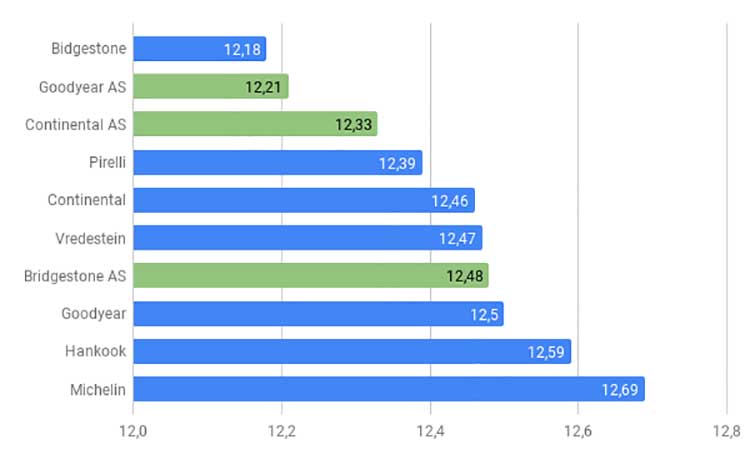
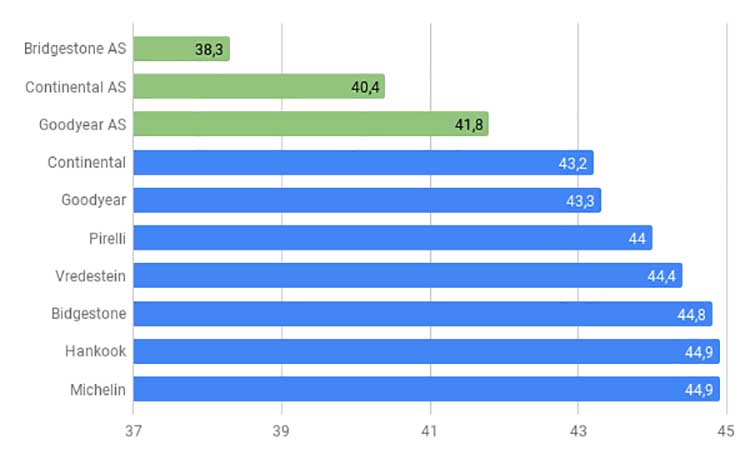
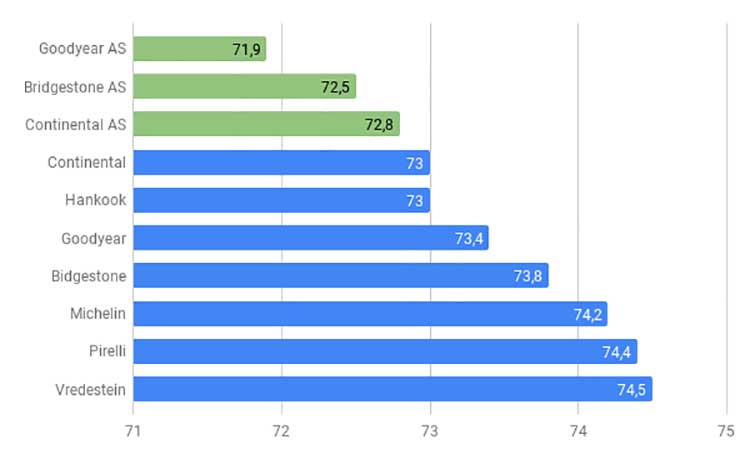
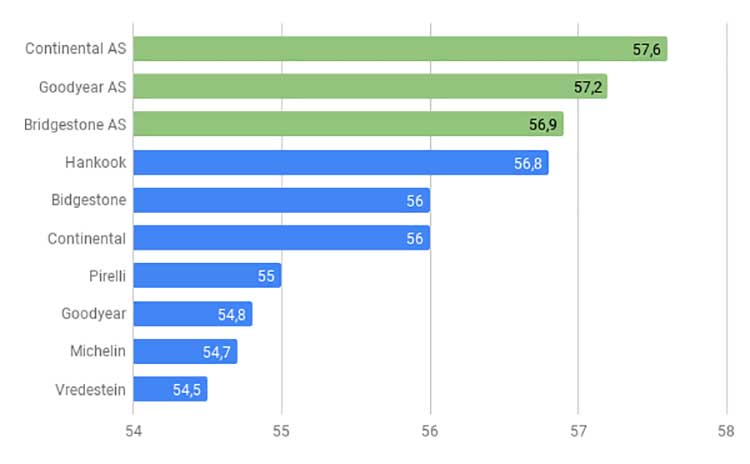
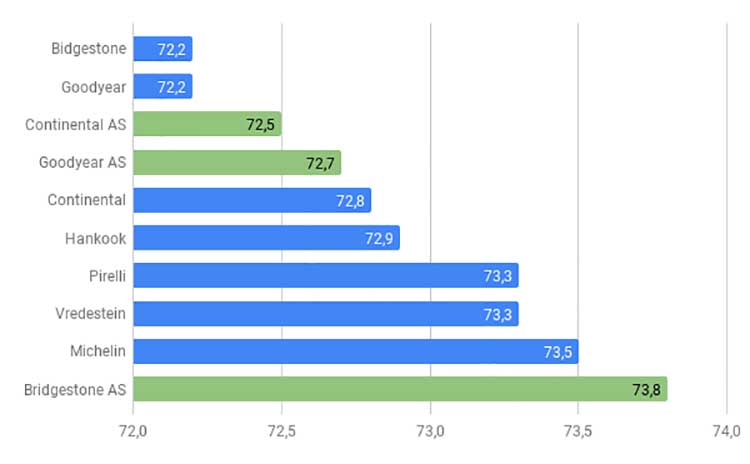
The all-season Continental and Goodyear were also the most economical, and the last place in this discipline was taken by the Bridgestone of the same category, which also turned out to be the noisiest.
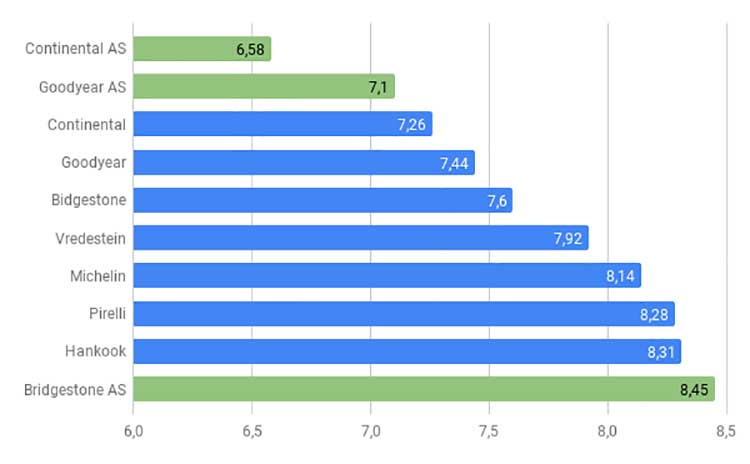
The first place in the overall ranking among winter tires was taken by Bridgestone Blizzak LM005, which have previously repeatedly won in various tests, and this time they excelled with excellent performance on wet asphalt. The second place went to Goodyear, which performed well in all disciplines, and the third place went to Continental, which did not perform very well on snow but was very effective on asphalt. Next are Pirelli, which work well on snowy surfaces, but, like Hankook and Vredestein, increase the braking distance on wet surfaces compared to Bridgestone. The Michelin tires had not the highest results on dry asphalt, and the last place is taken by Vredestein, which were the worst in almost all disciplines on wet surfaces.
As for all-season tires, they significantly surpass winter tires on dry asphalt, while on snow, they were able to overtake some specialized tires for the cold season. In general, since on snow, wet, and dry surfaces, tires could get the same number of points, if a general rating were compiled, then it is the all-season tires that would take all the first three places.
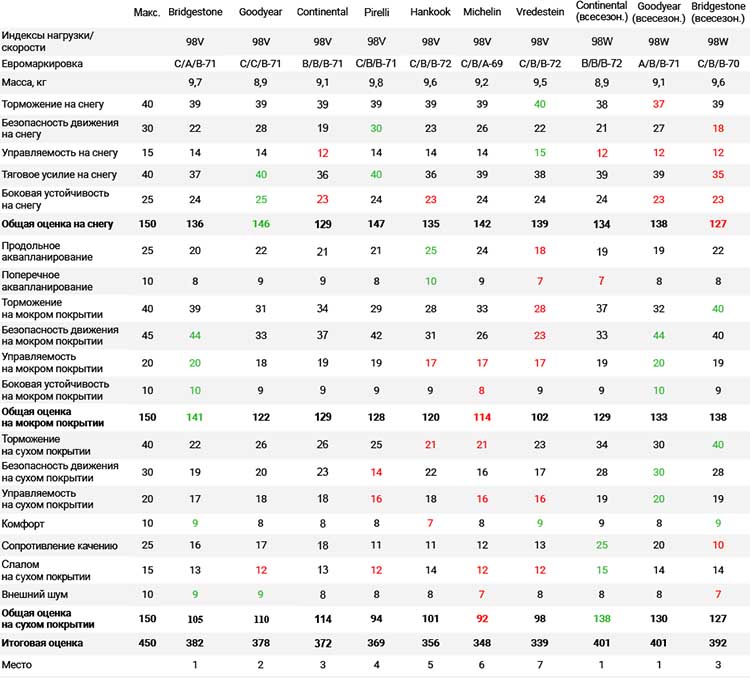
Source: Auto Zeitung.