Summer tire test from Vi Bilägare — 2026
Although there is a trend towards larger car tires on the European market, for their latest test, the magazine decided to choose the 205/55 R16 size, which still retains popularity. Tires from all price segments were selected, which the Swedes tested according to the standard methodology at a polygon near Madrid in cool weather at 10-15°C.
Participant list:
Nokian Hakka Blue 3 (available in Russia as Ikon Autograph Aqua 3)
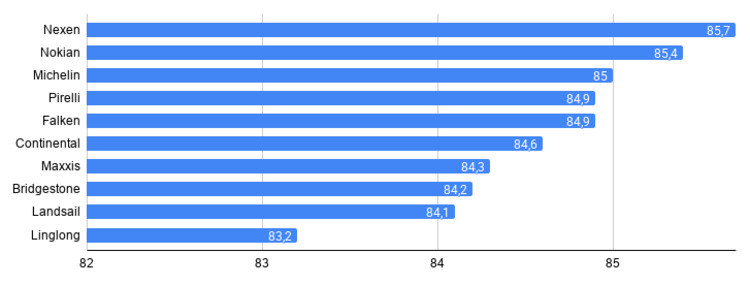
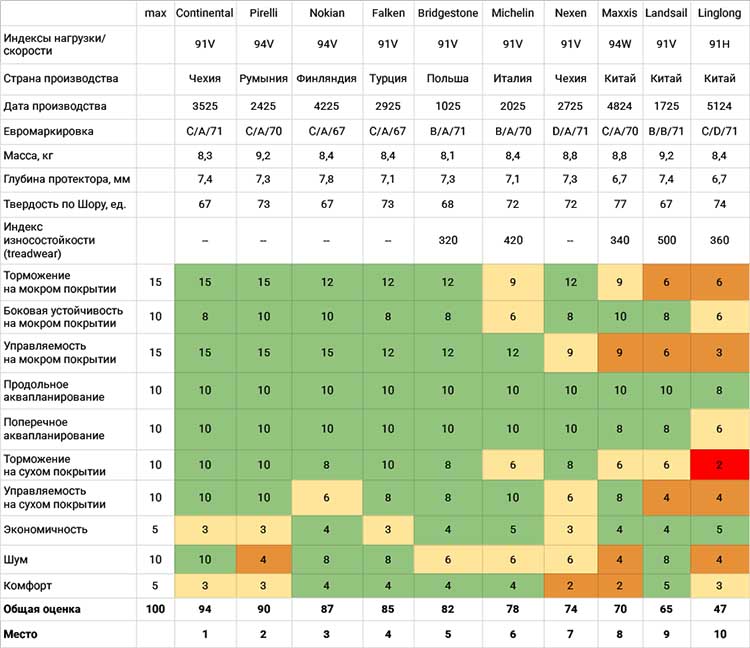
On the wet track, Pirelli showed the best time, with excellent stability in turns, followed by Continental and Nokian, which behave stably at the limit of adhesion, while Linglong has a tendency to skid.
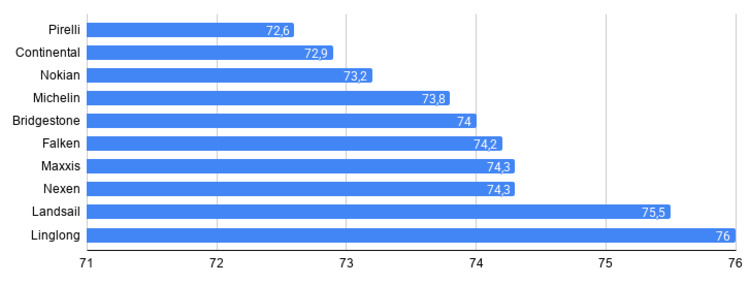
Pirelli also performed well in terms of braking efficiency in the rain, but in this discipline, Continental was the best, with Linglong having a braking distance almost 20% longer.
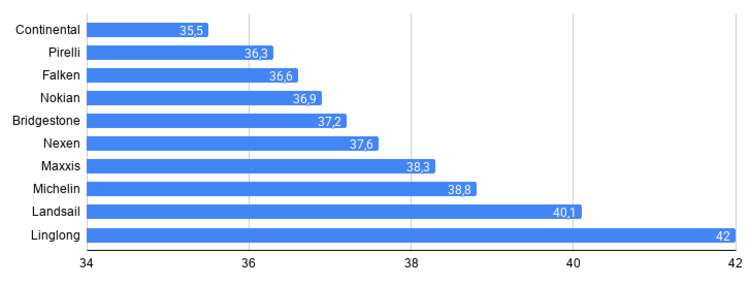
On the circular irrigated track, where transverse adhesion was evaluated, Pirelli regained the lead, and Maxxis tires from Taiwan also showed a very high result. Linglong was again at the bottom of the ranking, and Michelin unexpectedly joined them at the bottom.
In the aquaplaning resistance test on a straight road, the results of the tires differed very slightly, and all participants received a "Good" rating. In a similar test in a turn, Linglong failed to keep up with the others. Nexen took first place in both cases, effectively draining water from the contact patch with the road.
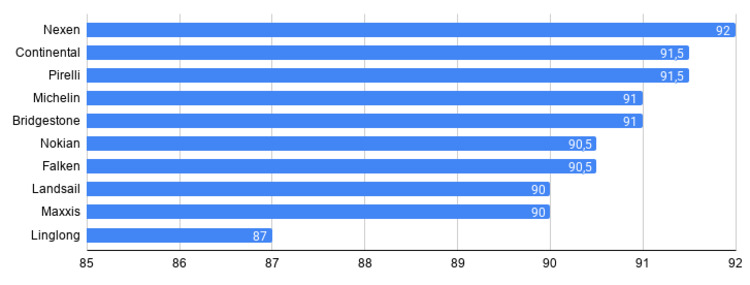
Handling on dry pavement was evaluated subjectively, and Continental, Michelin, and Pirelli were considered the best. While the first two tires received praise for their stable and predictable behavior, Pirelli has a more sporty character, reflected in the sharpness of reactions to driver actions.
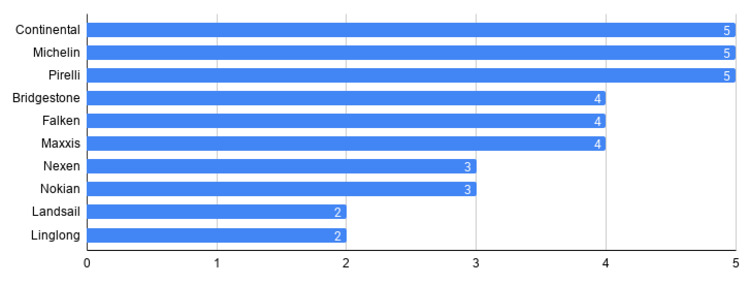
In all tests, only Linglong received a "Poor" rating, with a very long braking distance on dry asphalt. The Continental tires stopped the car the fastest in similar conditions.
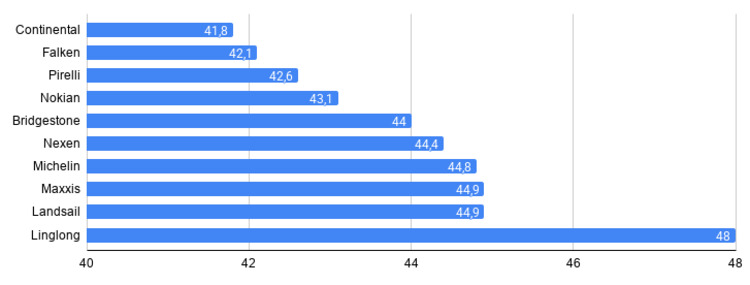
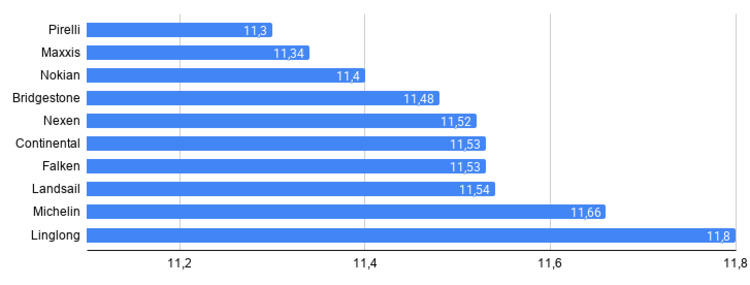
The Linglong tires had the best fuel economy among the tested tires, demonstrating how complex it can be to combine low rolling resistance and high adhesion on wet surfaces for "green" tire developers.
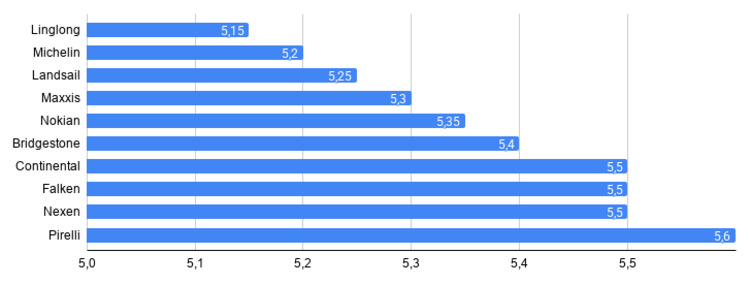
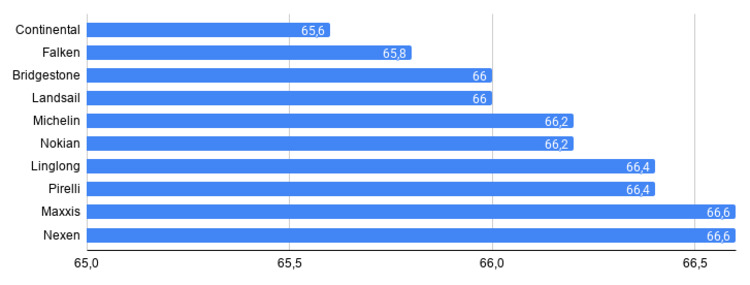
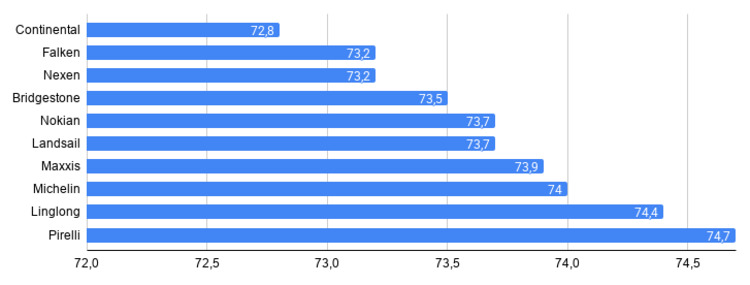
Noise was measured when driving on smooth and rough asphalt, and Continental was the quietest in both cases, also receiving a high subjective rating for acoustic comfort.
Verdict
Continental PremiumContact 7 took first place in terms of overall score, demonstrating the best balance of characteristics and always behaving stably, including during emergency maneuvers, as well as having the shortest braking distance on both dry and wet surfaces. Additionally, Continental was also the best in terms of noise, with the only drawback being a slightly stiff ride.
Pirelli Cinturato of the third generation also provided reliable adhesion in any conditions, earning them a silver medal. On dry pavement, the tires stood out for their sharp reactions to steering wheel movements, and this sportiness affected the level of comfort, and Pirelli also had the highest rolling resistance among the tested tires.
Nokian Hakka Blue 3, currently offered to Russian motorists as Ikon Autograph Aqua 3, demonstrated their strengths on wet surfaces, where they confidently handle emergency situations. The braking distance is short on both wet and dry surfaces, and the noise and smoothness of the ride are also in order, making them comfortable tires that provide optimal safety, including in difficult weather conditions.
The fourth place went to Falken Ziex ZE320, which also combines a good level of comfort and safety. Compared to the ZE310 model, the braking qualities have improved, and the tires also allow for enjoyable driving due to their ease of handling. As drawbacks, one can mention the increased fuel consumption and not the best lateral stability on wet surfaces, but the car is well controlled at the limit of adhesion, and since Falken consistently performed well in all tests, this allowed them to closely approach the podium.
Regarding Bridgestone Turanza 6, experts noted that their character has changed significantly compared to Turanza T005, and they have become less sporty and more comfortable. At the same time, the informativeness and handling are still very good, and Bridgestone has no significant drawbacks, except for increased noise on rough surfaces.
Michelin Primacy 5 cannot boast of such a balance of parameters, and excellent handling and directional stability, as well as good smoothness of the ride and economy, are combined with average braking properties in any weather and relatively low lateral stability on wet roads.
Next were Nexen N'Fera Primus, which became the best in terms of resistance to aquaplaning, both longitudinal and transverse. In addition, the tires have decent lateral stability and acceptable braking efficiency, but the loss of adhesion can occur quite sharply, and the drawbacks also include a stiff ride and high fuel consumption.
Maxxis Premitra HP6 pleased with excellent stability during sharp maneuvers and very accurate reactions to steering wheel movements. At the same time, the behavior lacks the harmony characteristic of top premium tires, and Maxxis also has an obviously poor smoothness of the ride.
Although Landsail RapidDragon from the Chinese company Sentury took only ninth place, the testers noted that they actually performed much better than is often the case with economy-class tires, and among their advantages are high adhesion at the entrance to the turn and good resistance to aquaplaning. Problems arise when it is necessary to turn and brake at the same time, since under load, the tires worsen control over the car, and in addition, when performing emergency maneuvers, a strong tendency to skid is manifested.
Linglong Eco Master e confirmed the correctness of their name and demonstrated the best economy among the participants, but, alas, the advantages ended there. The tires have unsatisfactory braking properties on dry roads with a high probability of skidding in any conditions. In addition, Linglong reacts sluggishly to steering wheel movements at moderate speeds, and directional stability also leaves much to be desired, so the last place is well-deserved.
Source: Vi Bilägare