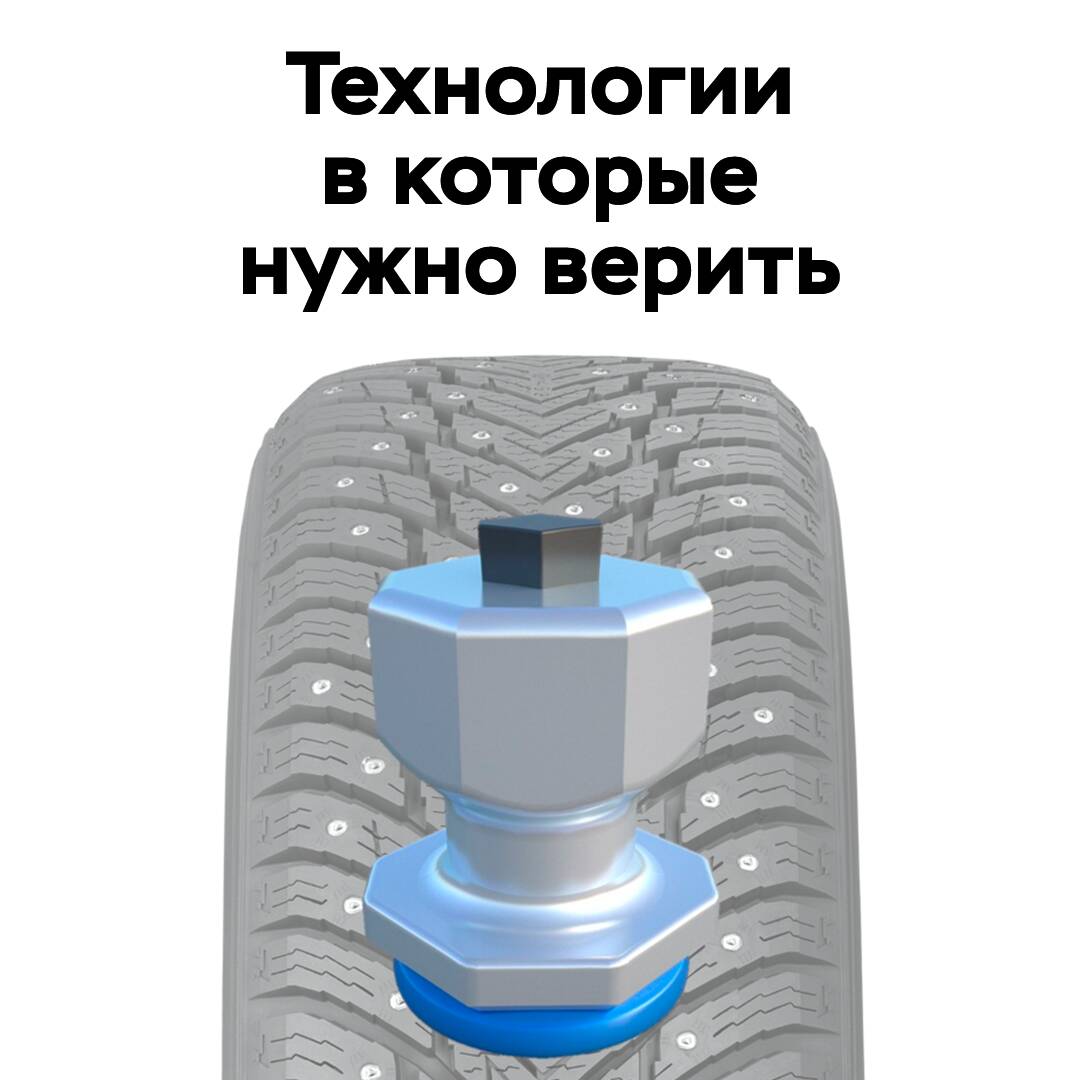
Technologies to believe in
The topic of tires, especially studded tires, is quite rich, so we will continue with the theme of the studded segment.
Today, an interesting topic of high technology. Stud pads - is this a real technology or a marketing ploy? In fact, the answer is not so straightforward.
Of course, there is no deception here, but there is also no special conveyor belt for stuffing pads under the studs. But our interest in this technology is not without reason. The fact is that winter tires have two, and sometimes (but rarely) more layers of rubber in the tread thickness. The main task, of course, lies with the outer layer, which comes into contact with the road surface. This is the most expensive rubber compound. It is elastic at low temperatures and often has additional polymer inclusions that improve traction on ice. At the same time, the lower layer of rubber, located below the permissible wear indicators of the tread, is more rigid and not so complex in composition, since it does not need to contact the road. Moreover, in studded tires, it needs to hold the base of the stud, so excessive elasticity is contraindicated for it.
Where do the pads come from?
The fact is that when baking a tire in a press mold, holes for studs are made by special elements resembling nails with the heads directed downwards. It is they who form T-shaped holes for fixing anti-skid studs. At the same time, these elements pass through all layers, literally pushing one into another. Thus, it turns out that less rigid rubber is in more rigid rubber. Here is your pad under the stud.
On the one hand, this is true, but on the other hand, all winter tires with more than one layer of rubber in the tread are endowed with these pads. Ploy or not, it's up to you to decide.