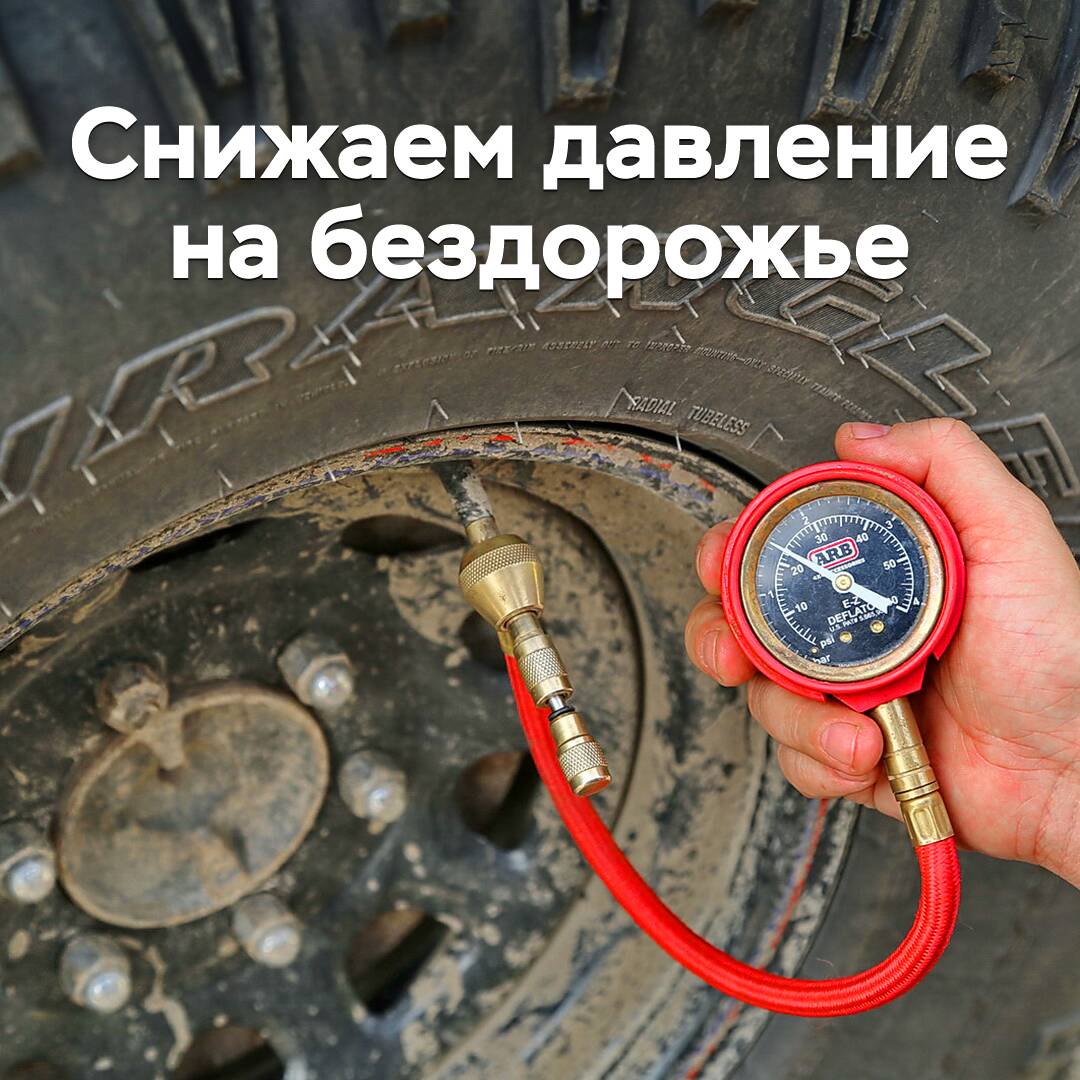
Lowering pressure off-road
Off-road has its own rules. Passability in these conditions is often extremely important. Therefore, it is important that your off-road vehicle is equipped with reliable tires. They must meet high requirements for sidewall strength. But in addition to this, some manufacturers build increased passability into their off-road tires. This is not the tread itself, but the ability of the tire to move on dirt roads at reduced pressure. Today, we will tell you how it works.
We often write about how important it is to follow the recommended pressure from the car manufacturer. But the recommended pressure off-road is not always effective. The fact is that the contact patch may be insufficient, and then the specific pressure on the contact patch area in loose soil can lead to deeper rutting.
When the pressure is reduced, some of the tread elements on the sidewalls of the tire enter the contact patch, the contact patch becomes larger, and therefore, the pressure is distributed more evenly. In fact, the tire becomes a bit more like a tractor's caterpillar.
It's easy to imagine the efficiency of a deflated tire by driving over an obstacle, such as a large stone or log. An inflated wheel will push it, while a wheel with reduced pressure will more likely overcome it by driving over it.
The question remains: can this be done with any tire?
No. Manufacturers understand the loads that will affect the tires in the event of reduced pressure and take this into account both in the design of the bead ring and in the number of layers of the carcass. Often, such tires have a double or even triple carcass. This allows not only to provide more efficient tire passability but also to maintain strength at a high level.
The main thing is to remember that even tires designed for pressure reduction only allow this off-road. When exiting to a road with stable coverage and a corresponding increase in speed, the pressure should be increased to the recommended level.